
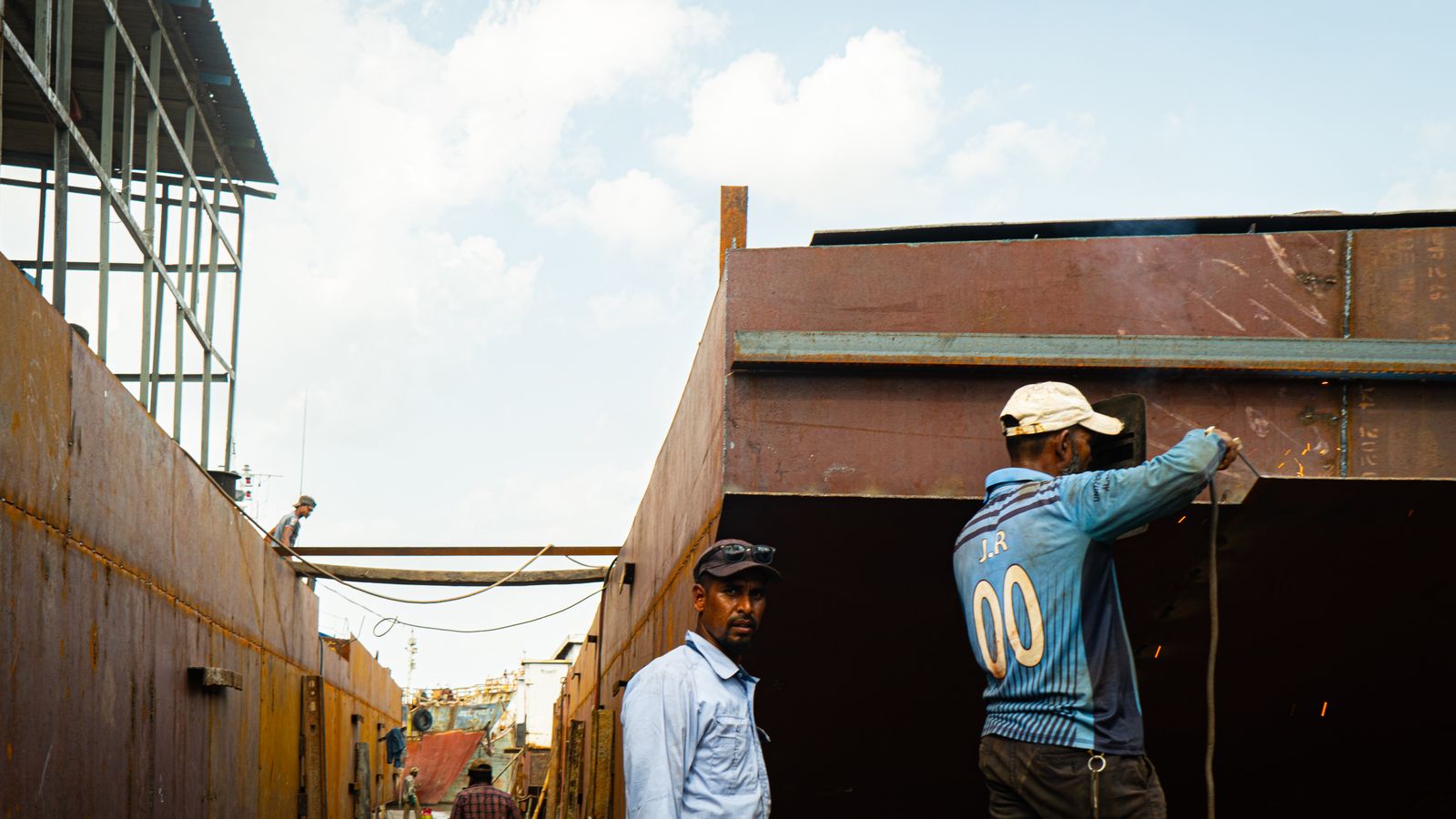
Why oxygen disappears even when the tank is empty
The ballast tank is a space where seawater is loaded and removed to control the ship's draft, stability, trim, and hull stress. Even if it looks empty after the water is discharged, it is not a place designed for people to stay, and entrances and exits are limited and natural ventilation is lacking. The International Maritime Organization (IMO) Resolution A.1050(27) specifies ballast tanks as a representative enclosed space on ships. The core risk does not arise only when ‘bad gas comes in’. In a state where air exchange with the outside is cut off, iron, moisture, salts, organic matter and microorganisms in the tank can consume the oxygen already contained.
Oxygen in the atmosphere is usually around 20.9%, but this value is not naturally maintained in closed tanks. The entire tank wall is a reaction surface, and wet sediment and piping recesses act as small reactors with continuous oxygen consumption. If ventilation is insufficient, there is no route to replenish the oxygen consumed. Because a drop in oxygen partial pressure cannot be detected by smell or the naked eye, the entire interior cannot be judged safe simply because the hatch is open or a normal value is measured at the top.
Oxidation of iron takes oxygen out of the tank atmosphere.
When a water film is formed on the surface of carbon steel, electrochemical reactions occur in different microscopic regions. The anode reaction, in which iron donates electrons to become iron ions, can be expressed as ‘Fe → Fe²⁺ + 2e⁻’. In other areas, the cathode reaction `O₂ + 2H₂O + 4e⁻ → 4OH⁻` occurs, in which dissolved oxygen receives electrons to create hydroxide ions. Afterwards, iron ions and hydroxide ions change through iron hydroxide into various iron oxides and hydrated iron oxides, a product we call rust. The important thing about the whole process is that free oxygen in the gas phase and in the water is reduced as oxygen molecules bind to the solid corrosion products.
Chlorides in seawater can activate corrosion cells by increasing the electrical conductivity of water and promoting local destruction of protective films. The reaction speed is not uniform at paint damage, welds, corners, behind reinforcement, and at the boundary where water and air meet. If moisture and salt remain even after emptying the tank, wetting and drying will repeat and corrosion will continue. Oxygen consumption may be concentrated locally in peeling areas and crevices that are smaller than the large surface where the paint appears to be intact.
The UK Marine Accident Investigation Branch (MAIB) accident investigation into the passenger ship Saga Rose demonstrates this principle in an actual accident. A sailor died after entering a nearly empty ballast tank, and investigators determined that corrosion of steel exposed to humid air for about three years had consumed oxygen and that a single natural vent provided minimal fresh air mixing. The estimated oxygen concentration was 6-8%. This is strong evidence that even an ‘empty tank without cargo’ can create an atmosphere that cannot support life through corrosion alone.
Conditions that govern the rate of oxygen consumption
Iron, water, and oxygen are required for iron to rust, but the actual tank rate varies depending on temperature, salinity, pH, film condition, moisture retention time, and oxygen movement. As the temperature rises, many reactions and diffusion can accelerate, and residual water with high salt content helps electrochemical reactions. On the other hand, at a certain point where oxygen is completely exhausted, the cathode reaction using oxygen may slow down. But that doesn't mean the danger ends. If oxygen is introduced from another area or the tank is re-wetted, the reaction may resume, leading to microbial reactions adapted to low-oxygen conditions and other forms of corrosion.
The size of the tank and the ratio of steel surface area to air volume are also important. Thin and complex double-bottom tanks have a large surface area due to reinforcement, frames, and piping, and air flow is easily interrupted. Even if the same amount of iron is oxidized, the change in oxygen concentration is greater when the air volume is small. This is why the amount of ventilation required cannot be calculated just by the time the hatch is open. Wind direction, duct placement, supply/exhaust location, internal structure, and remaining water level determine actual air exchange.
Microbial activity creates both oxygen deficiency and toxic gases.
Microorganisms and organic matter may be present in ballast water and residual water. In areas where oxygen remains, aerobic microorganisms decompose organic matter, use oxygen as an electron acceptor, and produce carbon dioxide, water, and biological materials. To simplify, organic matter can be viewed as `CH₂O` and expressed as `CH₂O + O₂ → CO₂ + H₂O`. If there is a lot of sediment, algae residue, organic matter from the port, washing residues, and stagnant water, the oxygen demand due to microbial respiration may increase.
Inside sediments where oxygen is depleted, anaerobic microorganisms such as sulfate-reducing bacteria can use sulfate in seawater to produce sulfide. When this sulfide is in equilibrium with hydrogen ions, hydrogen sulfide (H₂S) can be generated. The UK's HSE warns of cases where sulfate reducing bacteria produced high concentrations of H₂S in cargo and slop tanks with high water content. This does not mean that the same concentration will occur in all ballast tanks, but it does mean that microbial activity should not be viewed as a simple matter of oxygen levels. Because oxygen levels are low and acute toxic gases such as H₂S may be present, oxygen sensors cannot replace toxic gas sensors.
Disturbing the tank also changes the risk distribution. If you pump residual water, step on sediment, or spray wash water, gas in the water or sludge may be released. Normally oxygenated upper air may suddenly mix with oxygen-poor or H₂S lower pockets. Therefore, static pre-entry measurements do not automatically guarantee the atmosphere after dredging, cleaning, welding, paint stripping, or ballast operations.
Inerting and residues add risk through separate pathways
When nitrogen or other inert gases enter from adjacent tanks, pipes, or past operations, oxygen is diluted even though it is not chemically consumed. Nitrogen is colorless and odorless, so it cannot be distinguished by the human senses. IMO warns that nitrogen creates oxygen deficiency in tanks and void spaces and also poses a hazard around purge outlets. A space with a history of inerting should not be viewed as a ‘safe place because the gas does not react’ before it is ventilated and tested, but as an atmosphere intentionally made unbreathable.
Incomplete piping isolation, common vents, valve leaks, or micro-gaps can allow nitrogen, hydrocarbon vapors, or toxic gases to migrate from adjacent spaces. IMO requires that adjacent spaces connected to hazardous spaces be assessed separately. Even if the ballast tank itself is not normally subject to inerting, the inflow route should be checked based on the vessel type, piping configuration, previous cargo, and repair history.
Residue is another variable. Oils, cleaners, paints, solvents, cargo contaminants and corrosion deposits can consume oxygen, release vapors or interfere with sensor response. Freshly applied paint films release solvents during the curing process, and some oxidation-curing paints may consume oxygen. This is why IMO includes previous cargo, ventilation and tank coatings in the preliminary assessment and emphasizes that oxygen-deficient areas may remain due to internal structure, residues and coatings. A hazardous atmosphere cannot be ruled out by measuring only O₂ without checking the material's safety data and tank history.
Why one-point measurements aren't enough
Gases are often described as ‘heavy at the bottom, light at the top’, but the actual tank atmosphere is not that simple. Molecular diffusion acts towards mixing, but temperature differences, inlet location, discharge from still water surfaces, ventilation jets, hull motion and internal bulkheads create concentration gradients. H₂S or hydrocarbon vapors are likely to accumulate in lower areas, but may also be detected at other heights depending on eddy currents and temperature conditions. If nitrogen comes from a specific pipe, its location cannot be predicted based on density alone.
Double bottom frames, girders, manholes, stringers, and the bottom of stairs block air flow. Points close to the supply air duct may show normal oxygen, but pockets of oxygen deficiency may remain in opposite corners or behind reinforcement. IMO requires testing at as many heights as necessary to obtain representative samples and to suspect oxygen deficiency even after a safety determination is made where structures or residues block the ventilation path. ‘20.9% directly below the hatch’ is not the value for the tank floor and remote compartment.
The measurement plan should include at least the upper, middle, lower and remote areas where workers will travel. Depending on the shape of the tank, add the left and right compartments, behind the reinforcement, above the residual water, and around the sump and pipes. You must wait for the value to stabilize, and for pumped equipment, the sensor response time must be added to the transfer time resulting from the hose internal volume and pump flow rate. With longer hoses, impatience in reading the screen before the sample reaches the sensor can create false normal values. Condensate, leaks, kinked hoses and adsorption of reactive gases are also checked.
Remote sampling maps risks before entry
The IMO resolution proposes a method of sending flexible hoses or fixed sampling lines to remote locations for testing without anyone entering. This is the greatest value of remote sampling. First, check the area around the hatch with equipment that has been calibrated and functionally verified in a safe external location, move the probe step by step from the top to the bottom, and record the stable value at each point. Oxygen, flammable gases/vapors, and toxic gases identified in the preliminary evaluation must all be measured. The absence of H₂S or specific solvents cannot be assumed simply because oxygen or flammability indicators are normal.
It is best to link the sampling sequence and location to the tank drawing. Recording the point name, height, probe length, ventilation status, time, oxygen, flammable, and toxic gas values, equipment, and person performing the measurement increases reproducibility rather than a checkmark saying ‘measured.’ IMO recommends stopping ventilation and testing after the atmosphere has stabilized to determine accurately, but this does not mean entering without ventilation. After completing the steady-state pre-test, the required ventilation should be maintained according to the permit procedure and re-tested if there is any interruption or change in operation.
Remote sampling also has limitations. The bottom of stairs or blocked compartments that cannot be reached by the probe remain as unmeasured areas. Areas that could not be measured should not be considered safe and should be specified in the risk assessment. As access routes open, new pockets may emerge, requiring entrants to wear calibrated personal multi-gas monitors, along with an external attendant, communication, and rescue readiness.
Chemical reasons for continuous monitoring
Corrosion and microbial respiration do not stop once preliminary measurements have been completed. Cleaning, descaling, welding/cutting, painting, and sludge disturbance create new reactants and vapors, and ballast movements or changes in ship trim can transfer trapped atmosphere to work areas. A ventilation fan failure or duct dislodgement can suddenly cut off the oxygen supply. Therefore, a safe atmosphere is not a certificate received once, but a state that changes over time.
NIOSH's confined space standards document reported that in 28 of the 80 accidents investigated, toxic gases or oxygen deficiency were not present at the time of entry but were created during work or introduced unexpectedly. IMO also recommends testing the atmosphere frequently during occupancy, vacating immediately if conditions worsen, and increasing the frequency of testing when working conditions change. Continuous direct-reading monitors show these changes early, but alarm settings, measurement targets, sensor ranges and cross-sensitivities must match the risk.
Continuous monitoring can be performed through a combination of personal equipment in the entrant’s breathing zone and, if necessary, fixed or mobile equipment at various locations within the tank. Alarms must be set in a way that is audible and visible and shared with the external attendant. When a sensor exceeds its measurement range or reports a failure, low battery, or low flow rate, this should not be regarded as ‘no value’ but treated as an unknown atmosphere. If oxygen decreases, toxic gases increase, ventilation is lost, or communication fails during work, evacuate immediately and reassess according to procedures rather than going deeper to determine the cause.
Measurements are only one part of the entry permit
The IMO's example standard suggests a stable oxygen level of 21% by volume for entry purposes, adding that national requirements may set different safety ranges. These numbers should not be copied as a universal stand-alone passing line. The flag-State and port-State requirements, the company's safety management system, and work type and equipment guidelines must be applied together. Additionally, oxygen concentration does not indicate toxicity or flammability. Different risks require appropriate sensors and standards.
The ILO's Code of Practice for Preventing Accidents on Ships considers all confined spaces unsafe until safety is proven, and requires assessment by competent personnel, hazard identification, space preparation and isolation, atmospheric testing, work permits, entry procedures, and continuous ventilation. In other words, measuring instruments cannot compensate for unisolated valves, lack of rescue readiness, absence of an attendant, or insufficient communication. Even if a safe value is obtained, conditions must be reassessed if the permit validity period has passed or work, ventilation, and ballast conditions have changed.
This article is a technical guide to understanding corrosion and microbial reactions and developing a measurement plan. It does not replace the actual ballast tank entry permit, ship safety management system, statutory risk assessment, judgment of a competent person in charge, or isolation/ventilation/surveillance/communication/rescue plan. Untested spaces should be treated as unsafe, and even if you find an unconscious person, you should not follow them in without training and respirators.
Key points to remember in the field
Corrosion is an electrochemical reaction in which iron loses electrons and oxygen is reduced, and in a closed tank, this reaction can continuously reduce oxygen in the air.
Microbial respiration in residual water and organic matter consumes oxygen, and under anaerobic conditions, separate toxic hazards such as H₂S may arise.
Nitrogen inerting dilutes oxygen rather than removing it by reaction, but the result is the same: an unbreathable atmosphere. Adjacent spaces and piping inflow paths should also be evaluated.
Concentrations can be stratified and localized due to internal structures, residues, coatings and ventilation blind spots. The upper, middle, lower and remote work areas must be measured remotely.
Measurements taken before entry are instantaneous photographs. Continuous or sufficiently frequent monitoring during operation is necessary for corrosion, operation, residual water disturbance, ballast movement and ventilation failure.
Normal measurements do not replace an entry permit. Conditions for isolation, ventilation, an attendant, communication, rescue readiness, and re-testing must be met.
References
Revised Recommendations for Entering Enclosed Spaces Aboard Ships, Resolution A.1050(27).pdf) — International Maritime Organization (IMO), viewed 2026-09-09
Enclosed space ship safety rule enters into force— International Maritime Organization (IMO), viewed 2026-09-09
Accident prevention on board ship at sea and in port— International Labour Organization (ILO) Code of Practice, viewed 2026-09-09
Criteria for a Recommended Standard: Working in Confined Spaces— U.S. National Institute for Occupational Safety and Health (NIOSH), viewed 2026-09-09
Enclosed spaces on sea-going vessels— UK Maritime and Coastguard Agency (MCA), viewed 2026-09-09
Report on the investigation of the fatality in a ballast tank on Saga Rose— UK Marine Accident Investigation Branch (MAIB), viewed 2026-09-09
High concentration of hydrogen sulfide in cargo and slop tanks— UK Health and Safety Executive (HSE), viewed 2026-09-09