
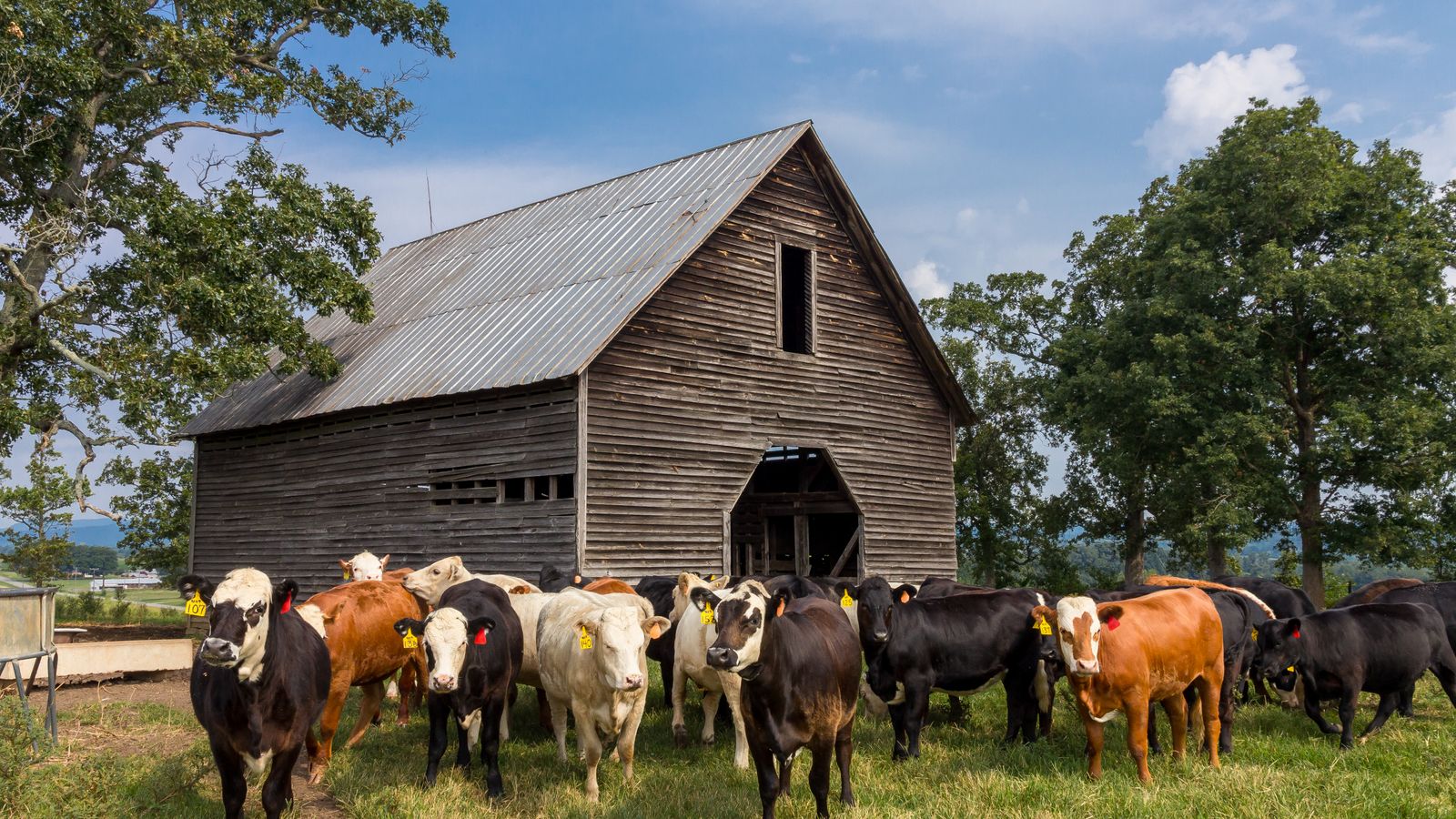
Suppose a final report states that “methane emissions decreased by 12%.” A reviewer will not ask only whether that number is correct. The reviewer will trace it back to which farms and barns were included, what feed was supplied and when and in what quantity, whether the raw data had missing-value or calibration problems, who changed the baseline and calculation formula and when, and who approved the final figure. This connection can be called the Evidence Chain.
An Evidence Chain is not the same as storing a large number of files. Field events and observations, quality decisions, calculation results, and claims must be connected through unique identifiers, timestamps, and versions. Data with broken links may be factually correct, but it is difficult to use as evidence that can reproduce a claim.
Design backward from the final claim
Collecting every available data point before looking for meaning is expensive and makes it easy to miss essential evidence. Define the unit of the claim first. For example, write the boundary, period, metric, and comparison condition in a statement such as how much kg CH₄ changed at a specified farm and barn over a defined period compared with a preregistered baseline. Carbon credits, customer reports, and internal operational improvements require different evidence and levels of conservativeness, so also specify the intended use.
Next, break down the calculation underlying the claim. If the reduction is baseline emissions − project emissions, both emission estimates require activity data, concentration and flow, emission factors, correction variables, and uncertainty. Linking each input to its raw data and field record defines the collection requirements. If this process reveals a variable that cannot be obtained, the measurement plan or the level of the claim must be adjusted.
First link: records proving that field activities actually occurred
The existence of the reduction activity itself must be demonstrated first. For feed, record the product and batch number, quantity received, mixing instructions, start and end of feeding, target dose, actual quantity fed and leftovers, and the animal population covered. For an operational change, retain the fan settings, equipment installation, manure-management method, and responsible person’s confirmation. A purchase receipt proves only that the product arrived at the site; it is not the complete evidence that the target animals actually consumed it.
Field records must include the time and the person responsible. Data entered in a batch later from memory have a different evidentiary value from data recorded immediately after an event. Even in an offline environment, store records locally and preserve both the original creation time and upload time when connectivity is restored. Photos can serve as supporting evidence, but their time, subject, and scope of consent must be confirmed, and personal information must be protected.
Second link: raw sensor data and device status
Raw data consist of the values and metadata first generated by the device. Preserve the device ID, sensor channel, unit, timestamp, location, firmware, calibration coefficient, and diagnostic status together. Instead of putting only a date in a CSV filename, use unique IDs for the farm, barn, device, and measurement session so the file can be connected easily to other records.
Do not modify raw data. Even if an incorrect unit or time zone is discovered, create a separate correction table and transformation history. Assigning a hash to a file or batch helps confirm its identity later. A hash, however, does not guarantee that the data are accurate; it only indicates whether the file has changed. Device calibration and the representativeness of its installation require separate evidence.
Third link: QA/QC and exception decisions
Automated quality rules flag collection rate, out-of-range values, fixed values, abrupt changes, clock errors, and possible drift. A person compares these with field logs, calibration records, and adjacent sensors to decide whether each case is a real event or a device problem. Record the flag, decision-maker, decision time, supporting evidence, and disposition. For later review, it is more useful to assign statuses such as use, conditional use, and exclude and manage reason codes for exclusions than simply to delete values.
The U.S. EPA’s Inventory Management Plan guidance identifies boundaries, quantification methods, data sources and collection and quality assurance, base-year adjustments, roles and file management, auditing and verification, and corrective actions as major elements of a management plan. The GHG Protocol likewise recommends performing quality management at multiple levels from data collection through final approval, establishing documentation and retention procedures, and maintaining feedback loops.
Fourth link: calculation lineage and reproducibility
Version every step that turns cleaned data into a result. Record formulas, unit conversions, the source and version of emission factors, the baseline model, missing-data substitution, aggregation period, and rounding rules. Connect every calculation run to the input-data version, code or spreadsheet version, execution time, and operator.
Even when spreadsheets are used, it is possible to retain an original template, lock formula cells, validate inputs, keep a change log, and establish an independent recalculation procedure. When a software API is used, record the request and response schemas, calculation-engine version, and reprocessing of failures. What matters is not the particular technology, but whether the same result can be reproduced with the same inputs and versions.
When a result changes, publish a new version instead of overwriting the previous value. Indicate whether the reason was a sensor calibration, correction to activity data, revision of an emission factor, or boundary change, and calculate the impact. The result version used must be fixed in the final claim.
Fifth link: review, approval, and external reporting
Separating the roles of author, reviewer, and approver reduces the risk of self-review. Technical review examines the boundary and method, units, calculations, and uncertainty. Management approval confirms that there is authority for disclosure and that the wording does not go beyond the scope of the evidence. Where 3rd-party verification is required, provide a read-only package that allows the verifier to trace the raw data, samples, and calculations.
The EPA Greenhouse Gas Reporting Program applies electronic verification checks to submitted data and requires reporters to explain, correct, or resubmit information when a potential error is found. Automated verification is useful, but it does not establish field facts by itself. The Evidence Chain also includes responses to warnings, corrections, and renewed approvals.
A final report should not state only the reduction percentage. It should also present the project boundary, period, baseline, measurement and estimation methods, data availability, material exclusions, uncertainty, level of review, and limitations on the claim. “Measured,” “verified,” “certified,” and “credits issued” are different statuses, so describe only the stages that have actually been completed.
Minimum data structure
When implementing an Evidence Chain, it is useful to separate the following entities. site and barn define spatial boundaries; animal_group identifies the population covered; intervention_event records the reduction activity; device and calibration describe device status; observation_batch contains raw data; quality_review records quality decisions; calculation_run identifies the calculation version; claim contains the final statement; and approval records review and disclosure authority.
Each entity should have a unique ID, creation and modification times, an owner, a status, and a link to its previous version. It must be possible to navigate from a claim record to the calculation run, from the calculation run to input batches and quality reviews, and from the inputs to field activities and device calibrations. Tracing must also work in the opposite direction so that a particular calibration error can be linked to every report and claim it affected.
Divide access rights by role and purpose. Farmers’ personal information and raw operational data, materials for verification bodies, and publicly released versions are not the same. Protect the audit log itself and define retention periods and deletion policies. A particular technology such as blockchain is optional; first implement identifiers, permissions, versions, backups, and recovery correctly.
Implementation checklist
Specify the boundary, period, metric, baseline, and intended use in the final claim.
Break the claim calculation down to its input variables and identify the owner of each variable’s raw data.
Collect records of the batch, dose, target population, time, and person responsible for each field activity.
Preserve raw data immutably and keep corrections, exclusions, and aggregated results separate.
Link the device ID, location, calibration, firmware, and observation batch on the same timeline.
Retain QA/QC flags, human decisions, supporting evidence, and corrective actions.
Make calculations reproducible through the versions of inputs, code, factors, and models.
Separate technical and management reviews from disclosure approval, and fix the claim version.
Show data availability, uncertainty, limitations, and verification status in external reports.
When an error is found, trace the affected calculations and claims backward and reissue them.
Conclusion
Confidence in carbon-reduction data depends less on the number of decimal places in the final figure than on the connections that lead to it. It must be possible to trace, in both directions, whether the field activity actually occurred, the condition in which the device generated the value, which data were excluded and why, which formula and version produced the result, and who reviewed and approved what. An Evidence Chain is not a mechanism that automatically passes verification; it is an operating structure that makes errors discoverable, explainable, and correctable. With that structure in place, field records can finally support responsible carbon-reduction claims.