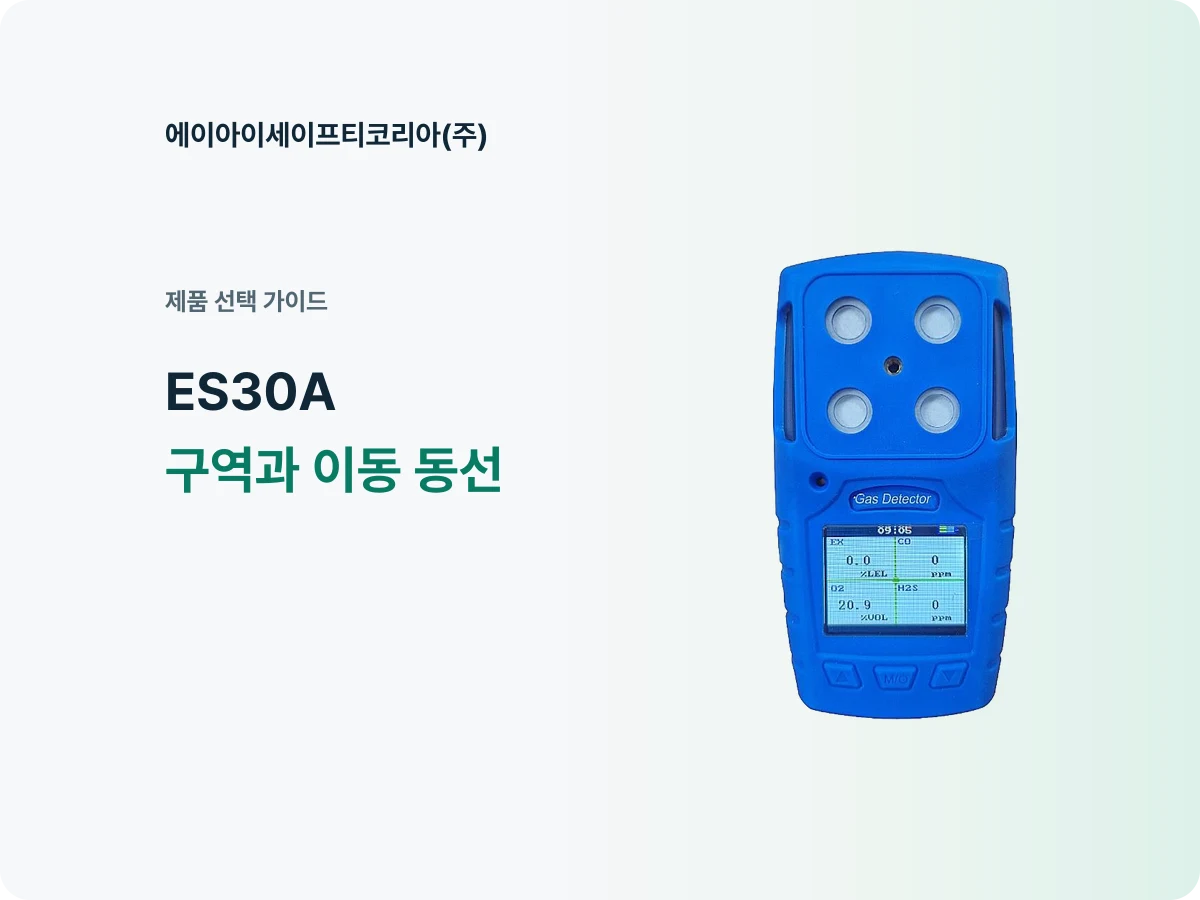
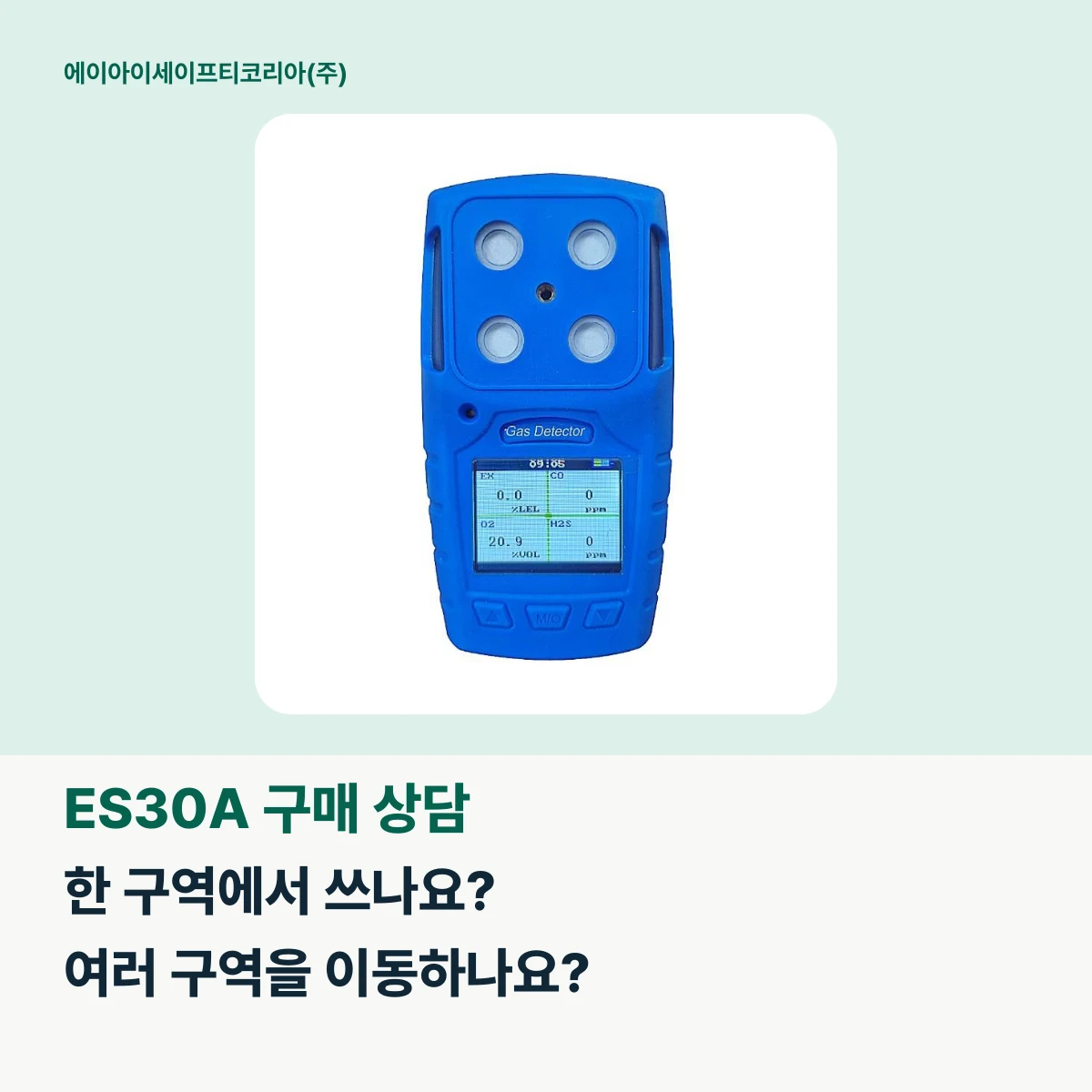
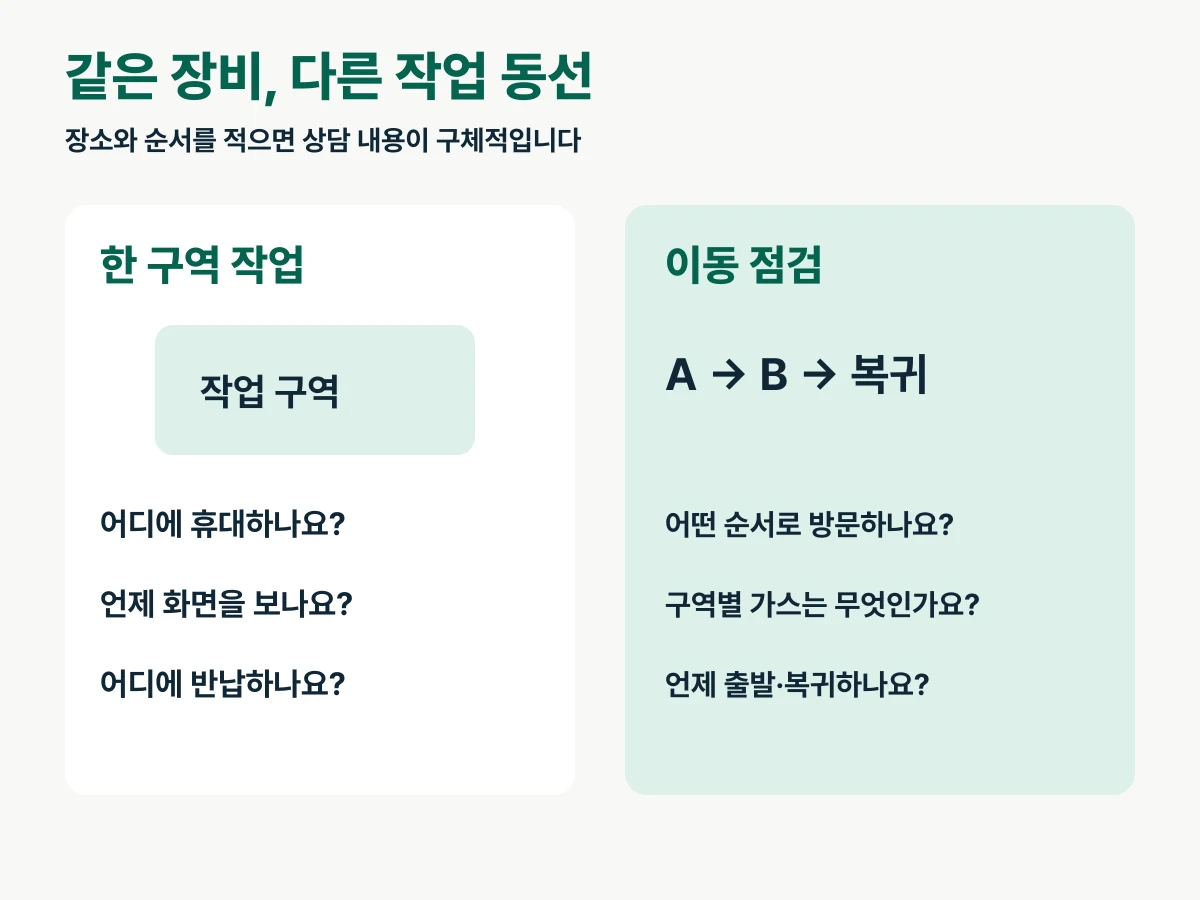
Before asking “Which model is best?” when looking for a gas detector, there is a useful question to answer first: Will the worker stay in one zone or move through several zones in sequence? Recording this distinction lets you discuss carrying arrangements, gas configuration and the operating schedule as one connected workflow.
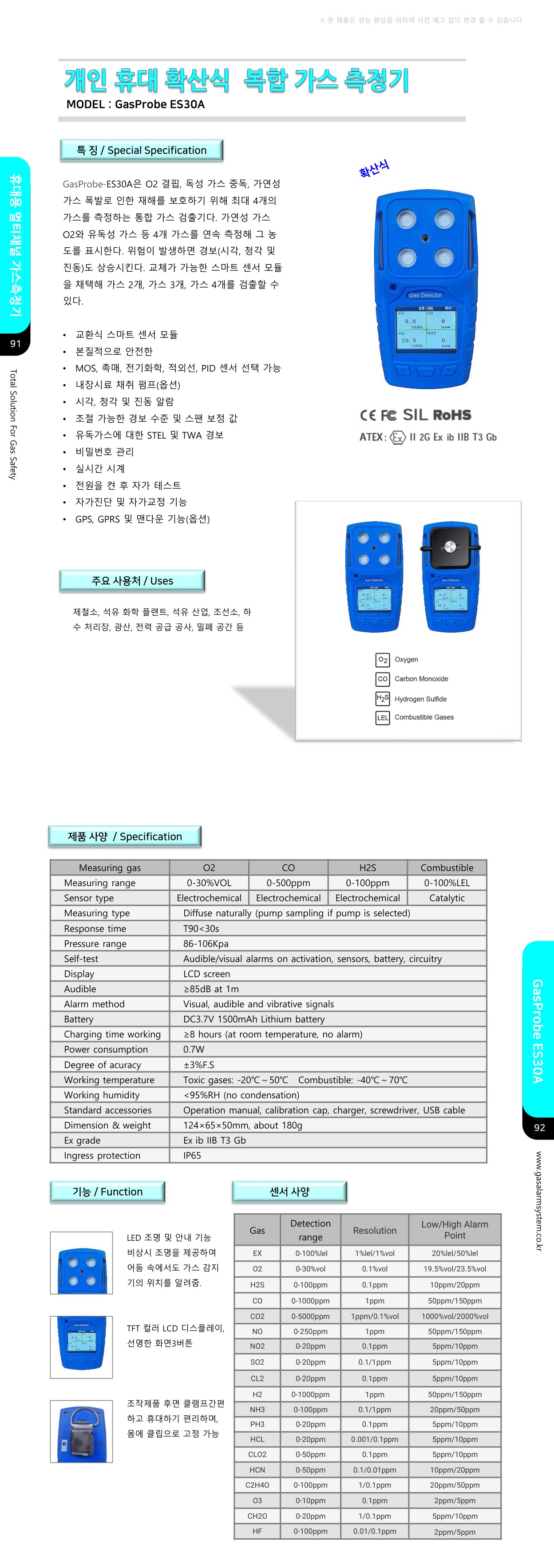
The GasProbe ES30A is a portable multi-gas detector carried by the worker. It measures up to 4 gases simultaneously, with diffusion sampling as standard and an optional built-in sampling pump. When considering a purchase, put your actual work route alongside the product specifications.
Where Will You Carry It Within a Single Zone?
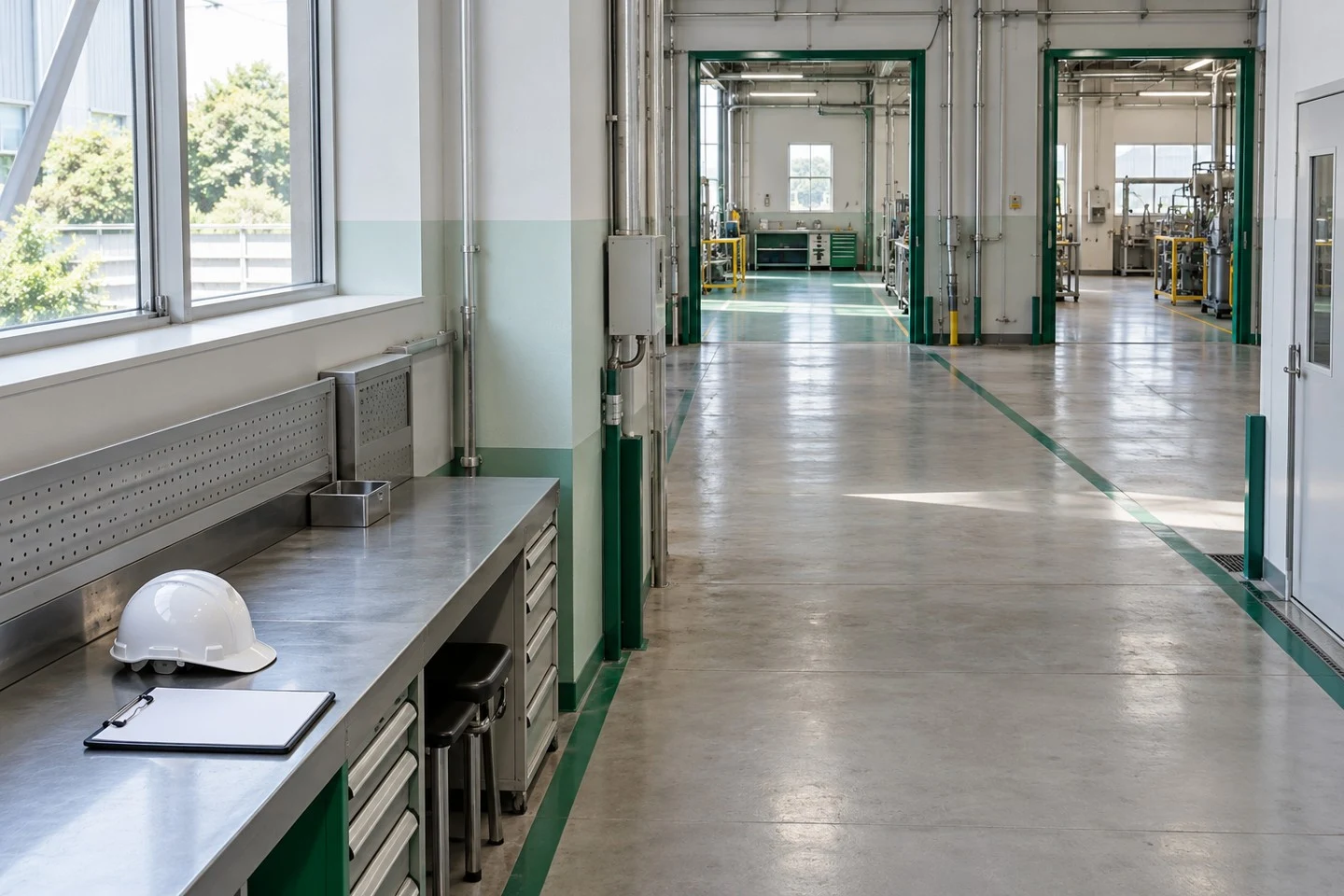
If the work location is fixed, start by describing how the detector will be carried and checked there. Even within the same work zone, the route you need to explain differs depending on whether the worker remains standing in one place or moves around equipment.
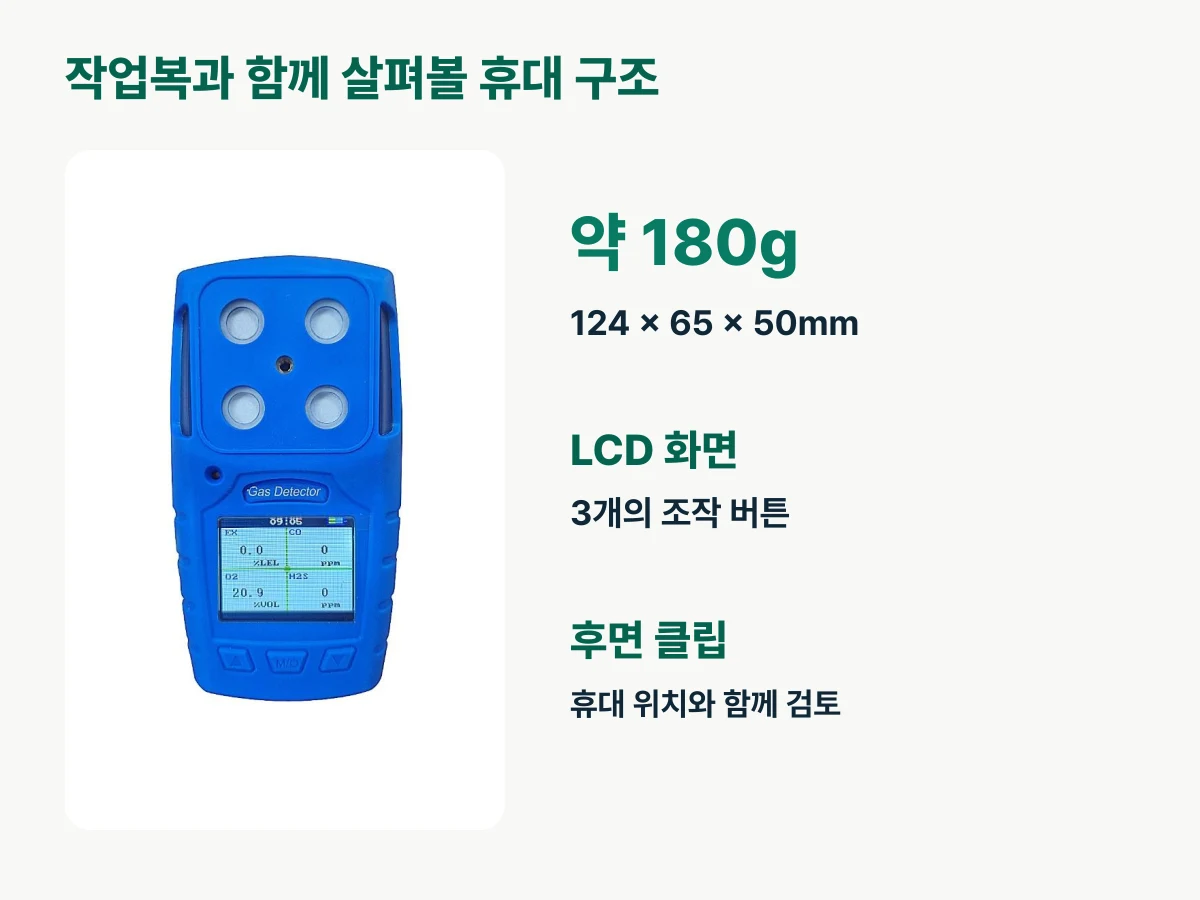
The ES30A has a rear clip, an LCD screen and 3 operating buttons. For a purchasing consultation, provide the carrying position on work clothing, the moments when the screen is checked, and the locations where equipment is issued and returned. Placing equipment and workwear photos side by side also makes size comparisons easier.
For example, instead of writing only “Used in the inspection room,” explain: “Carried while moving around equipment inside the inspection room, collected at the start of work and returned to a storage cabinet afterward.” This makes it clear who uses the product, where and how.
If You Move Between Zones, Sketch the Visit Sequence
For work that involves inspecting several places in sequence, draw a simple route from the starting point to the final return location. A detailed floor plan is unnecessary: arrows connecting “Preparation room → Zone A → Zone B → Preparation room” are enough.
Add the gases to check and the time spent in each zone alongside the route. If different zones request different measurement items, this makes equipment-configuration questions more specific. Whether the worker uses stairs or corridors, and how often their hands are occupied, are also useful details when discussing carrying arrangements.
Also explain whether one person follows the same route or several people take separate routes. Recording the number of locations, simultaneous users and operating time periods separately makes the required equipment configuration easier to discuss.
How Consultation Details Differ Between Single-Zone Work and Mobile Inspections
In both cases, the key is the situation in which the user actually operates the detector. Start filling in the side of the following table that best matches your work.
Consultation item | Carried within one zone | Moving through several zones in sequence |
|---|---|---|
Work location | The zone occupied and movement around equipment | Zones to visit and their sequence |
Measurement items | Gases to check in that zone | Gases to check in each zone |
Carrying arrangement | Position on workwear and screen checks | Carrying position while moving and work movements |
Operating schedule | Time from issue to return | Departure, time in each zone and return |
User information | Number of people using equipment at the same time | Simultaneous users on each route |
If your operations already combine both approaches, divide them by time, such as “one zone in the morning, inspection rounds in the afternoon.” Distinguishing the actual situations in which equipment is used makes consultation material easier to prepare than grouping several situations under one job name.
Which ES30A Specifications Should You Review Together?
The ES30A measures 124 × 65 × 50mm and weighs approximately 180g. When selecting a product, consider these figures against workwear and carrying positions. The rear clip, LCD screen and 3 buttons also help you picture its actual use.
Gas configurations of up to 4 gases can be considered using replaceable smart sensor modules. First collect a gas list for each zone, then distinguish items needed everywhere from additional items required in individual zones. That list provides a basis for discussing the product configuration.
It is also useful to clarify the sampling method. The ES30A uses diffusion sampling as standard; the built-in sampling pump is optional. Explaining both where the worker carries the detector and where measurements are needed makes the options discussion more specific. Rather than listing desired feature names, show the measurement location in a photo or simple sketch.
A One-Page Route Is Enough to Start a Purchase Inquiry
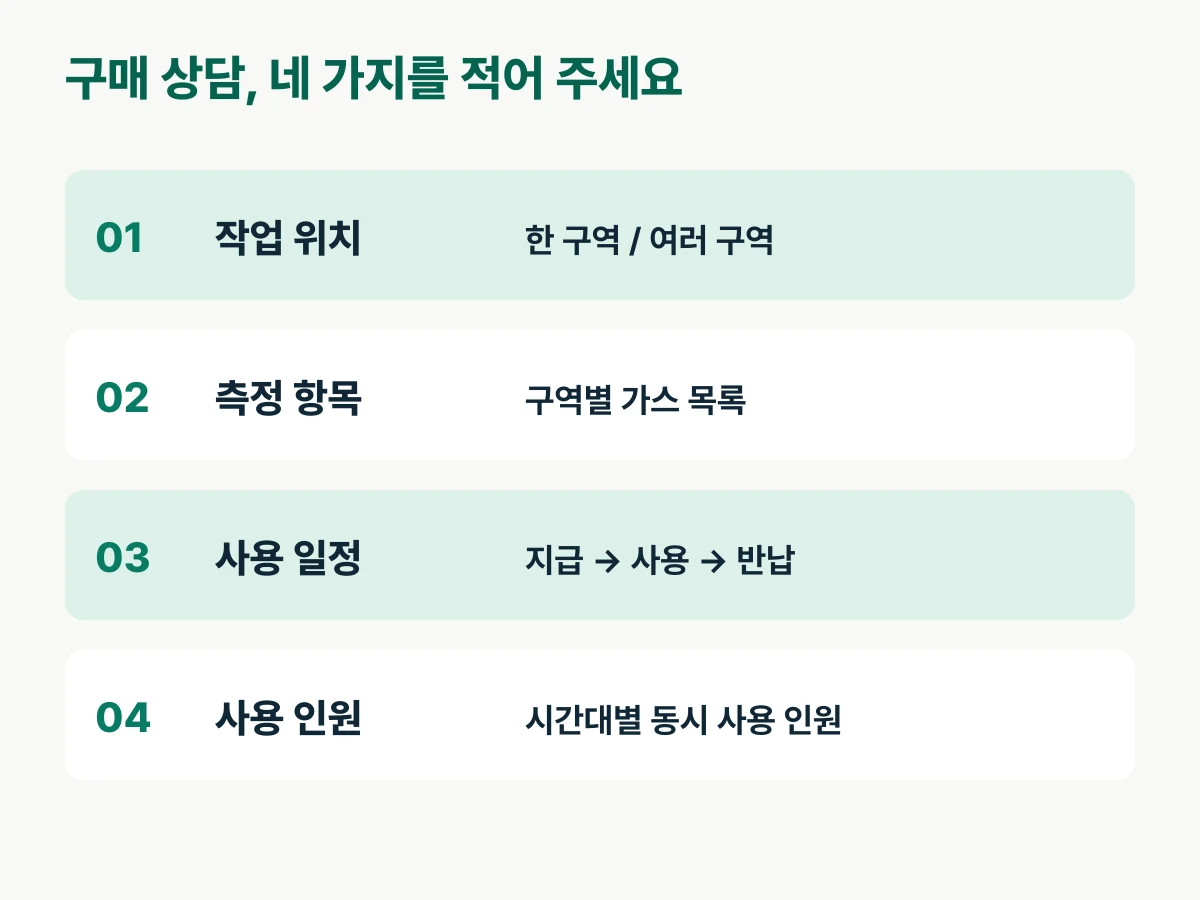
There is no need to prepare lengthy inquiry material. Put the work sequence and required items together on one page. If you include site photos, choose images that clearly show what you want to explain: workwear carrying positions, corridors along the route or equipment storage locations.
Work location: Whether the task stays within one zone or moves between several
Measurement items: Gases to check in each zone and existing request documents
Operating schedule: Equipment issue, start of use, return to base and equipment return times
Users: Simultaneous users by time period and route
If equipment is already in use, add its model name and one inconvenience. Specific experiences such as “We often take it out to check the screen” or “We manage requests from different zones separately” provide a useful starting point for the consultation.
After making the inquiry, review the proposed sensor configuration and options alongside the route you first prepared. With work locations, measurement items and the operating schedule gathered in one document, internal purchasing discussions become easier to explain.
Review the ES30A Against Your Actual Work Route
Whether work stays in one zone or moves between several, the actual work sequence is a good starting point. Write down who checks what, where, and when the equipment is returned. Then connect that workflow to the ES30A’s carrying design, gas configuration and options to make purchasing questions much clearer.
Tell AI Safety Korea Co., Ltd. your work zones, visit sequence and gases to measure. Discuss the ES30A configuration using the route you have prepared.