When annual budgets are compiled, several departments may submit the same request: “We need gas detectors.” What you need to prepare depends on whether the equipment is for new work, replacement of an existing unit, or use while another unit is away for inspection.
Put the reason for the purchase in the first column of your annual plan and the actual start-of-use date in the next. Separate new uses, replacements and inspections, then work backward from that date through receipt and site allocation, internal approval and supply scheduling. This makes each purchasing request much more specific.

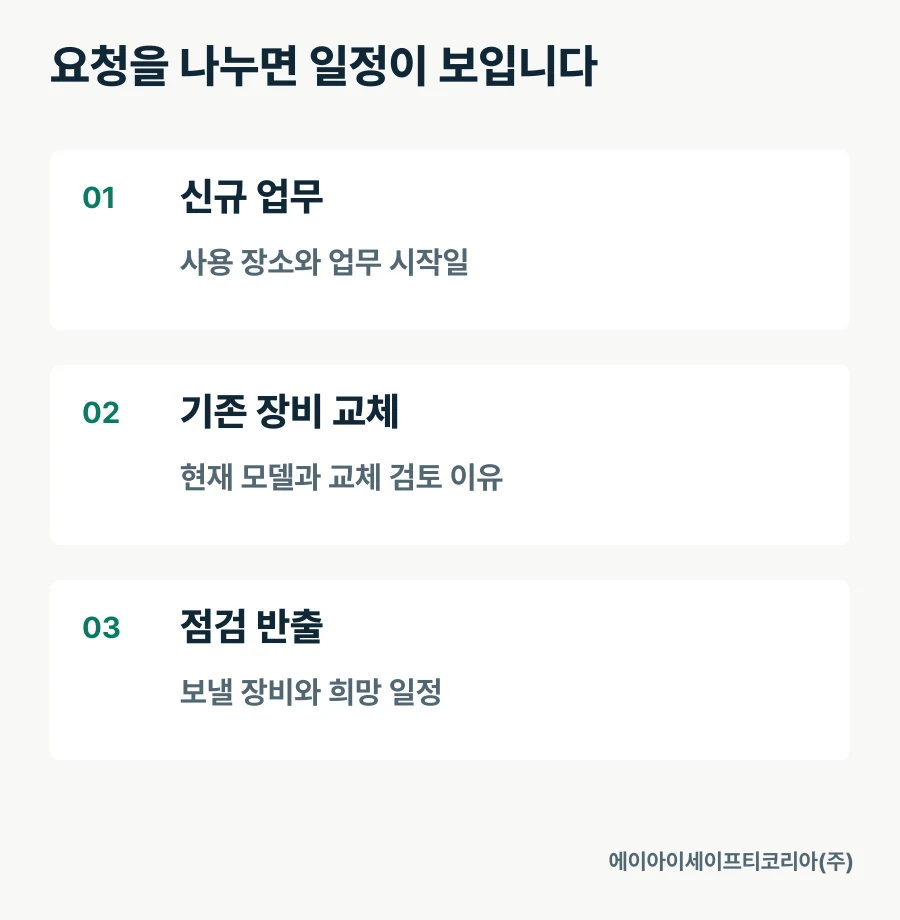
Divide purchasing requests into three rows to see the schedule
Even requests for the same model may have different deadlines. A new process starts with its work commencement date. A replacement purchase starts with the condition of the current equipment and the functions to be changed. For equipment sent away for inspection, consider both its dispatch date and the date it will be allocated again after return.
First, classify departmental requests into the following three groups. Using this table as the opening view of your annual plan also shows which information you still need to collect.
Category | Information that starts the plan | Details to organize alongside it |
|---|---|---|
New work | Place of use and work start date | Gases to measure, users or teams, required configuration |
Replacement of existing equipment | Current model and reason for considering replacement | Equipment condition, functions to retain and functions to add |
Equipment sent for inspection | Units to send and preferred timing | Current assignments, usage plan during absence and return schedule |
If there are two reasons for purchasing, separate the requests. For example, putting equipment for new work and replacements in different rows lets you track one request unchanged even if the schedule of the other changes.
For new work, list the gases to measure before the product name
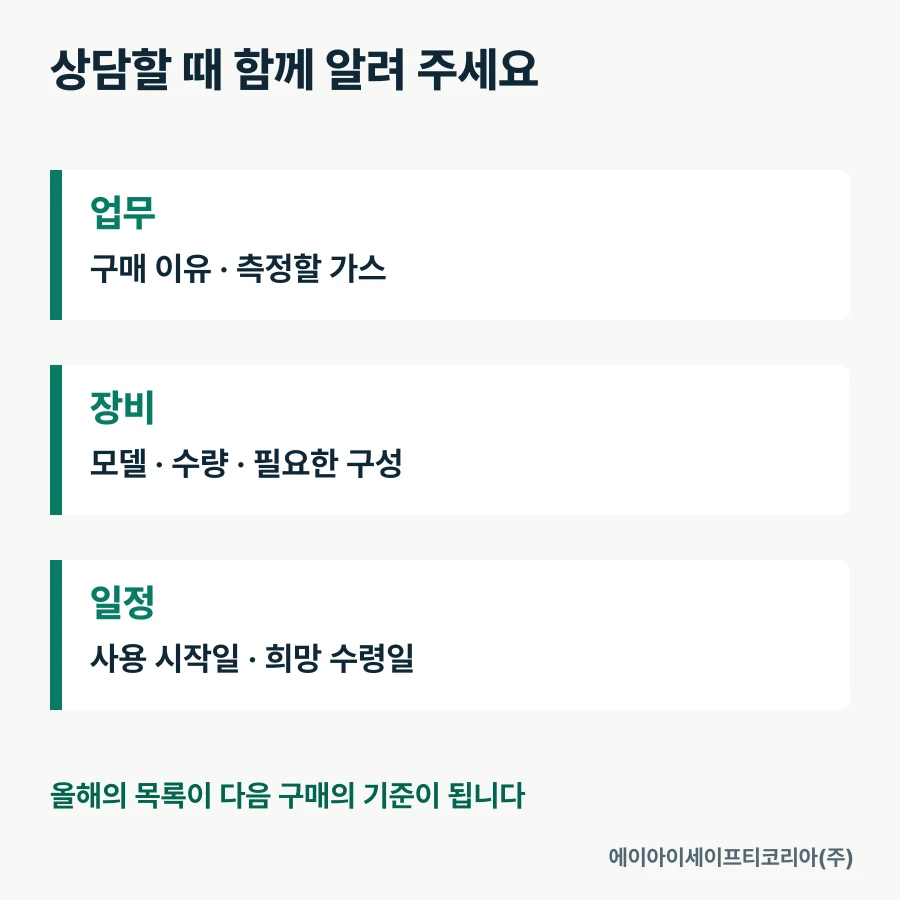
For equipment to be used in a new location, first organize the measurement targets and how it will be used. When the responsible department provides its list of required gases, the purchaser can compare that list directly with product specifications. Include the location and work start date in the same request.
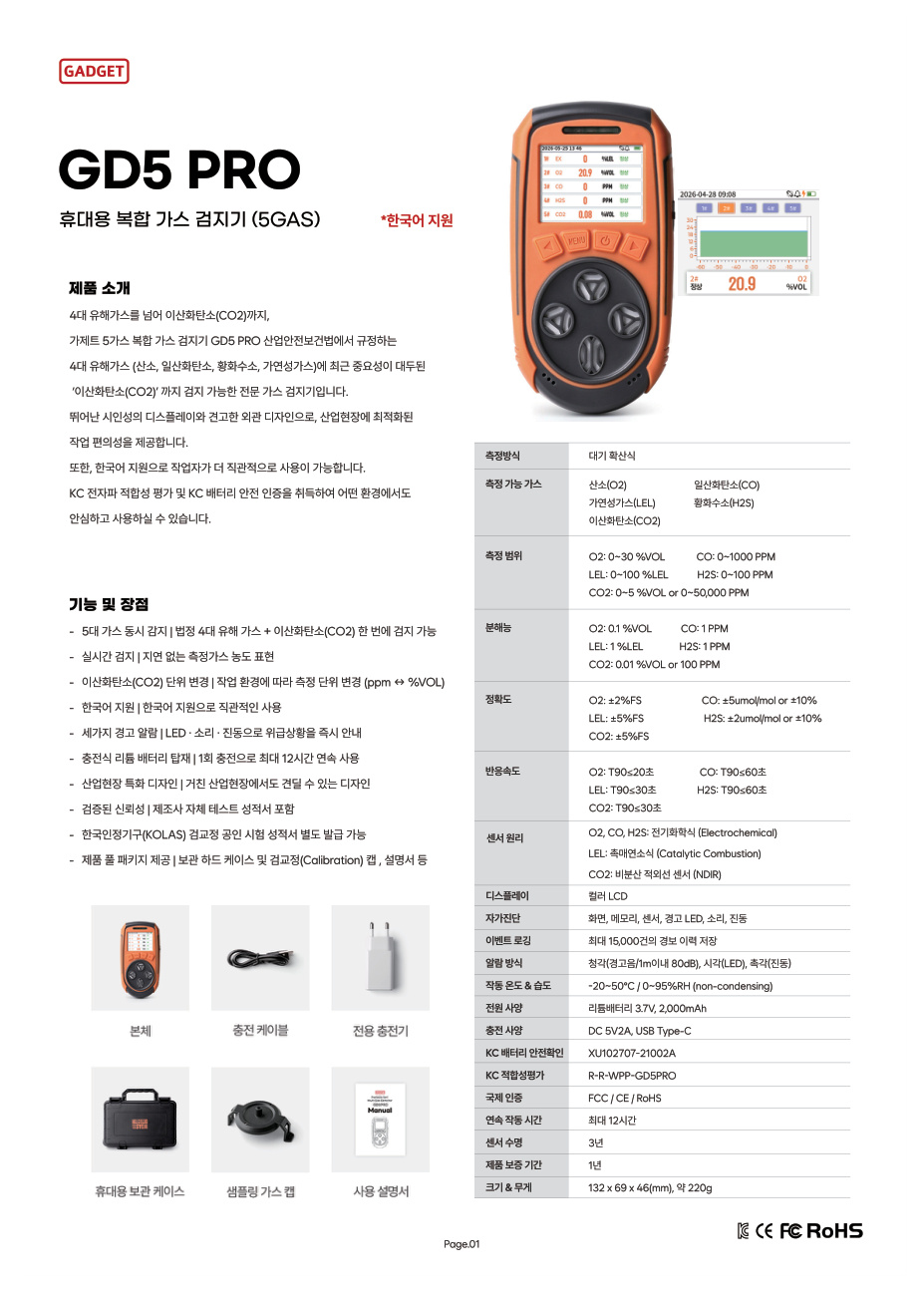
For example, GD5 PRO is a multi-gas detector that measures O₂, CO, H₂S, LEL and CO₂. It can be considered for work that needs to check these five items together. A clear list of required gases makes model comparisons and quotation enquiries simpler.
The catalogue also lists a charging cable, dedicated charger, portable storage case and user manual. Recording charging and storage preparations at the receiving location helps reduce the need to search for additional items after the unit arrives.
Explore GD5 PRO and its configuration
Include the current equipment condition in your replacement list
For a replacement request, enter the existing model and equipment identification number, followed by one line explaining why you are considering a new unit. The next questions will differ depending on whether the unit is under inspection for a fault, the work now requires different gas measurements, or you want to standardize equipment management.
Attach any inspection results or repair quotations you have received. The person reviewing purchase approval can then see both the current condition and the functions needed in the new product in one place. Start with information already available, such as the year of purchase, most recent inspection date and department holding the equipment.
Once replacement is decided, schedule receipt of the new unit, user guidance and collection of the old equipment together. Organizing the allocated model and its manual also helps the receiving person quickly understand what is changing.

Include periods away for inspection in the annual calendar
In your inspection plan, link each equipment name to the work it currently handles. Recording which department uses it and which gases it checks makes it easier to find the work that needs coordinating when a unit is selected for dispatch.
If preferred inspection dates for several units overlap, show the dispatch sequence and usage plans for those periods on one screen. Update the relevant calendar row when you receive the intake and return schedule for each unit. You can then see how far each purchasing and inspection request has progressed.
After inspection, record the return date, supporting documents and the department to which the unit is reassigned. This helps you find the same unit’s history when preparing the next plan and pass both the calendar and equipment list to a new person in charge.
Work backward from actual use to organize the ordering sequence
Instead of starting with when to place an order, first ask, “When must the equipment be ready on site?” Place receipt confirmation, user allocation, internal approval and quotation response stages before that date to make the preparation process visible.
It is useful to put the preferred receipt date in the request field and the schedule confirmed with the supplier in the response field. You can update the plan using both dates when approval is completed or the configuration changes.
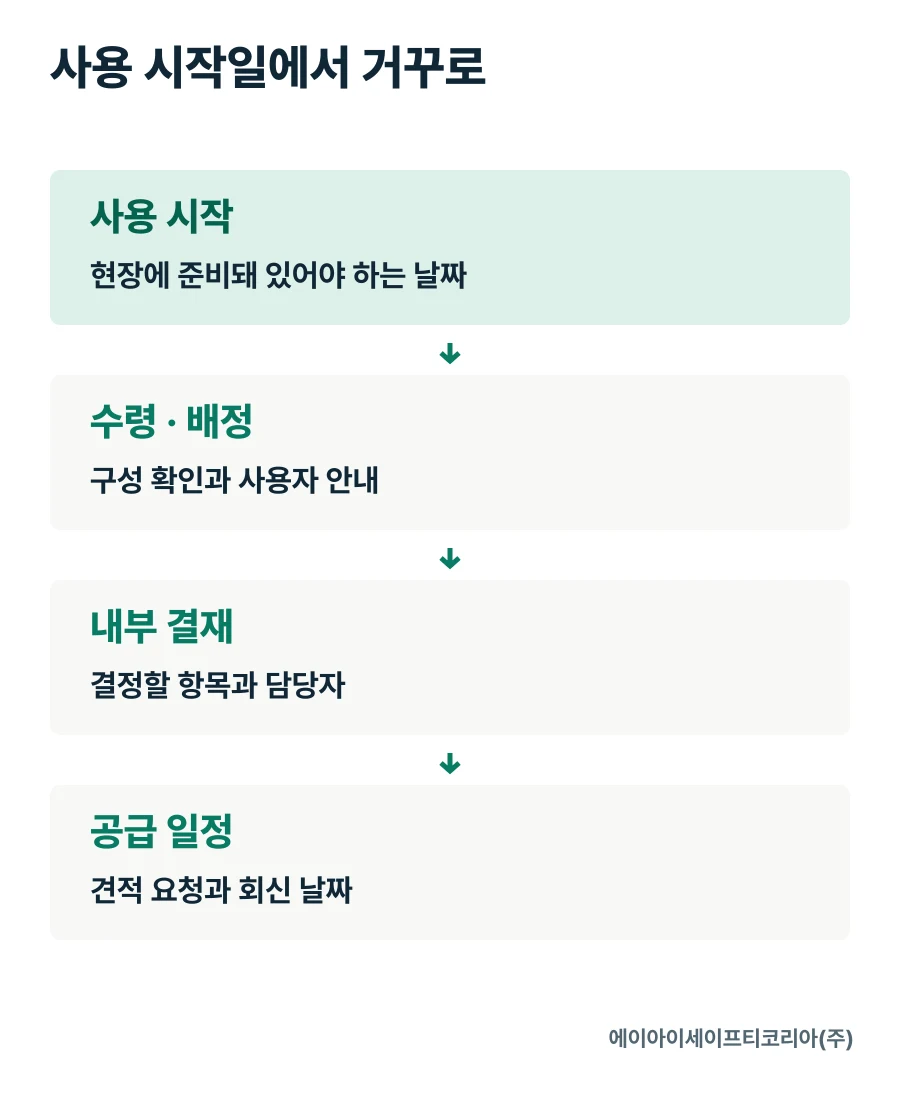
Name the person responsible at each stage too. For example, the using department handles the start date and measurement targets, purchasing handles quotations and orders, and the equipment manager handles receipt confirmation and allocation. Knowing who will provide each answer helps identify where requests stall between departments.
Six items to retain in your annual planning table
The table does not need to be complicated. Group the following items in one row and record the revision date whenever a request changes.
Purchase category: Is this for new work, replacement or equipment sent for inspection?
Usage details: Which department will check which gases, and where?
Equipment details: What are the current and proposed models, and how many units are needed?
Configuration details: Which charging and storage items and documents should be prepared together?
Schedule details: What are the first-use date, preferred receipt date and schedule received in response?
Progress details: Who handles the next check, and which questions remain?
At each quarterly review, first reflect changed work start dates, additional measurement targets and inspection responses. Separating requests already ordered from those still under consideration helps you explain current needs accurately in the next consultation.
Send the required dates together with your equipment list
An annual purchasing plan turns “We need more gas detectors” into information explaining for which work, in which configuration and by when. The people comparing products and those using them can discuss the request in the same sequence.
Tell AI Safety Korea Co., Ltd. your list divided into new uses, replacements and inspections, the required gases and the work start dates. We will review suitable products and configurations with you.
Discuss your annual equipment acquisition plan