“Please get a quote for a gas detector.” The request reaching purchasing is brief, but more questions appear when the supplier is contacted. Both sides need to explain which gases will be measured, where the equipment will be placed and whether it will supplement existing units.
Sort the site team’s comments into purpose, place and time, then send photos and the purchasing schedule as one package. You can start a consultation even before choosing a product name. This article shows how a purchasing coordinator can have a short conversation with the site team and turn it into useful information for a supplier.
Before asking for a model, ask how this purchase will change the work
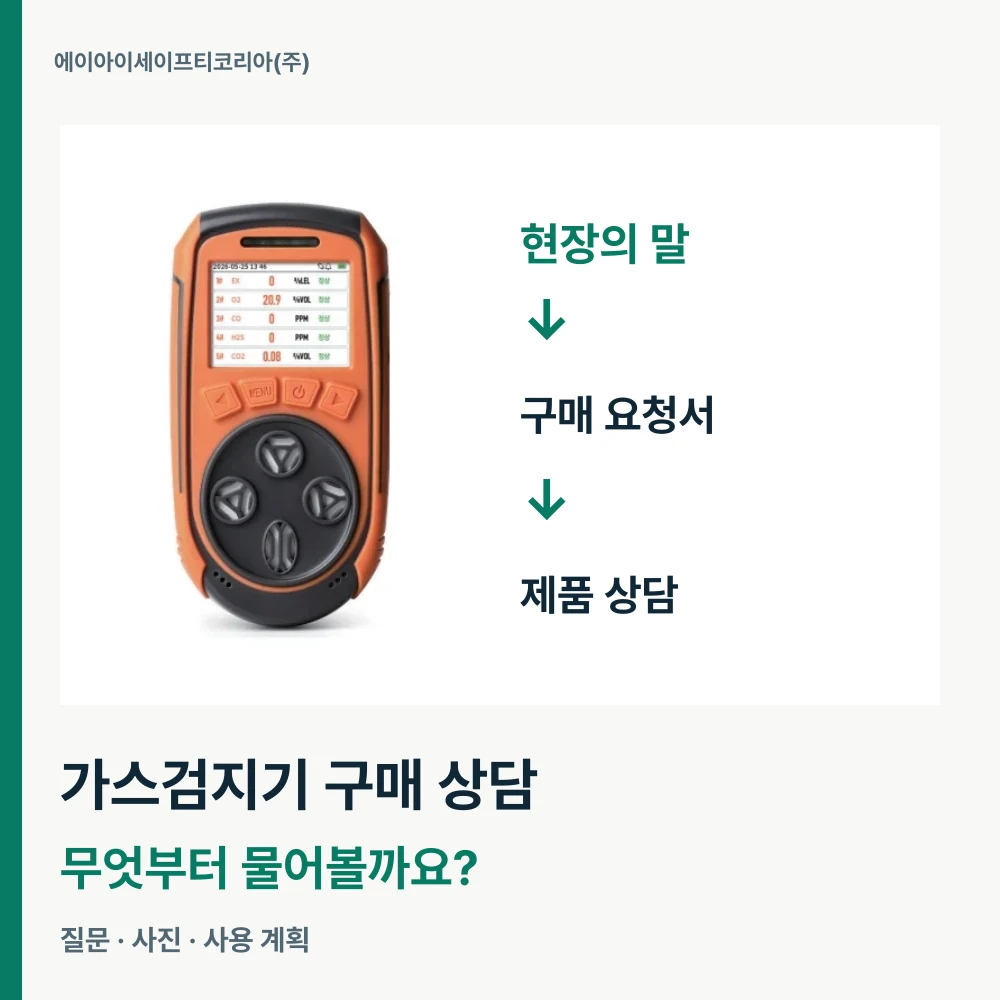
If the site team asks for “something similar to what we used before,” first ask why they are buying. The products and information to review will vary depending on whether they are adding equipment for the same work, using it in a new location or measuring more gases.
Short questions are easier to answer. Start with, “Who will do what when this equipment arrives?” Follow with, “What equipment do you use now?” and “What will be different?” If the model name is unknown, obtain photos of the front and product label and attach them to the request.
Purchasing staff should record the answers as concrete descriptions of work rather than immediately translating them into product features. “We plan to add equipment for the existing team and deploy units in a new work area” makes the next question easier to identify than “We need a good detector.” It also helps the supplier review existing arrangements and new requirements separately.

Unpack brief site comments with three types of questions
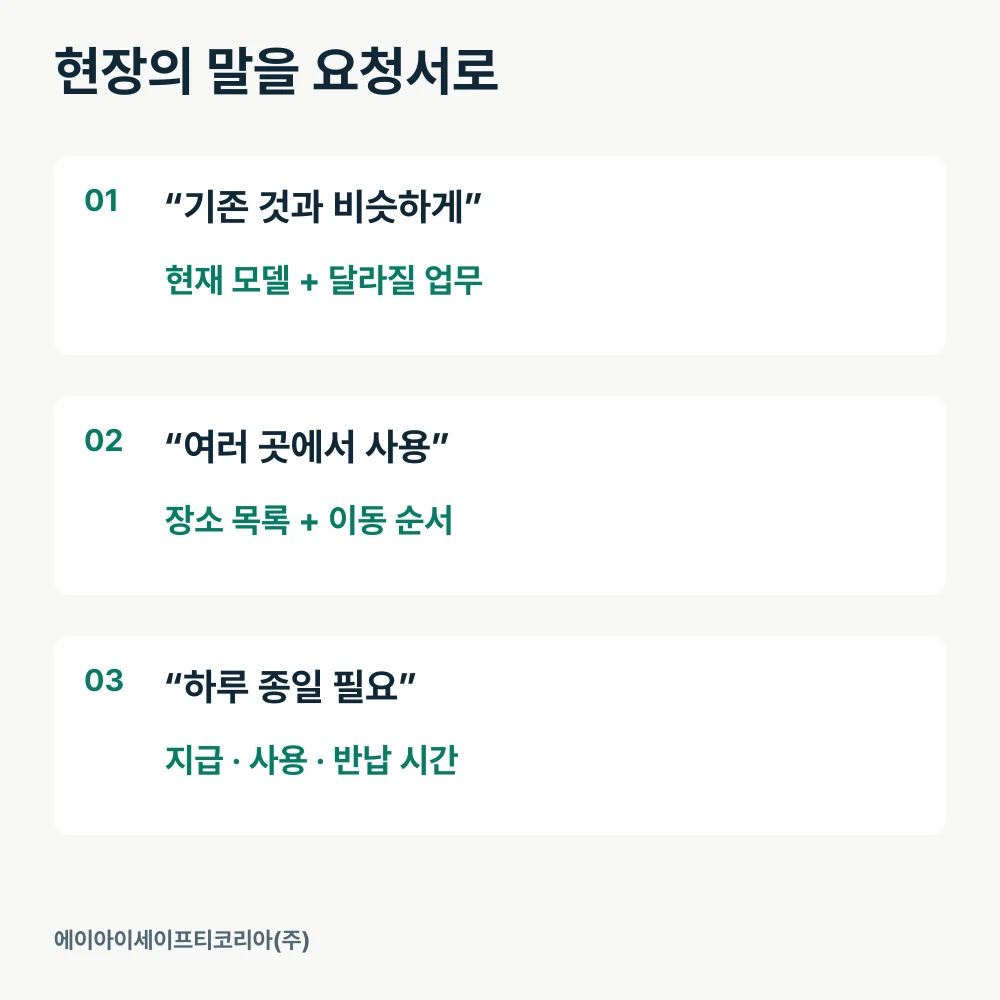
If someone says, “We use it all day,” ask when the equipment is issued and when it is returned. Include any periods available for storage or charging to show the daily operating plan. For “We move between several places,” add the destinations and the order of travel.
Ask for the gases by name. Rather than only giving a gas count, list the required items, such as oxygen, carbon monoxide, hydrogen sulfide, combustible gas and carbon dioxide. If an existing site work document contains the list, review that section together.
What the site team says | Purchasing’s follow-up question | What to record in the request |
|---|---|---|
Something like the current unit is fine | What is the current model, and how will the work change? | Model photos and purchasing purpose |
We use it in several places | Where will it be used, and in what order? | Location list and a simple layout drawing |
We need it all day | When is it issued, used and returned? | Operating periods and charging opportunities |
We check several gases | Could you tell us the gas names? | The complete list of required measurements |
At the end of the conversation, read your summary back to the site contact. This can reveal a missing location or a changed gas requirement more quickly than a lengthy explanation of terminology. Checking a sentence together improves the request’s accuracy.
When considering the GD5 PRO, put required gases beside its specifications
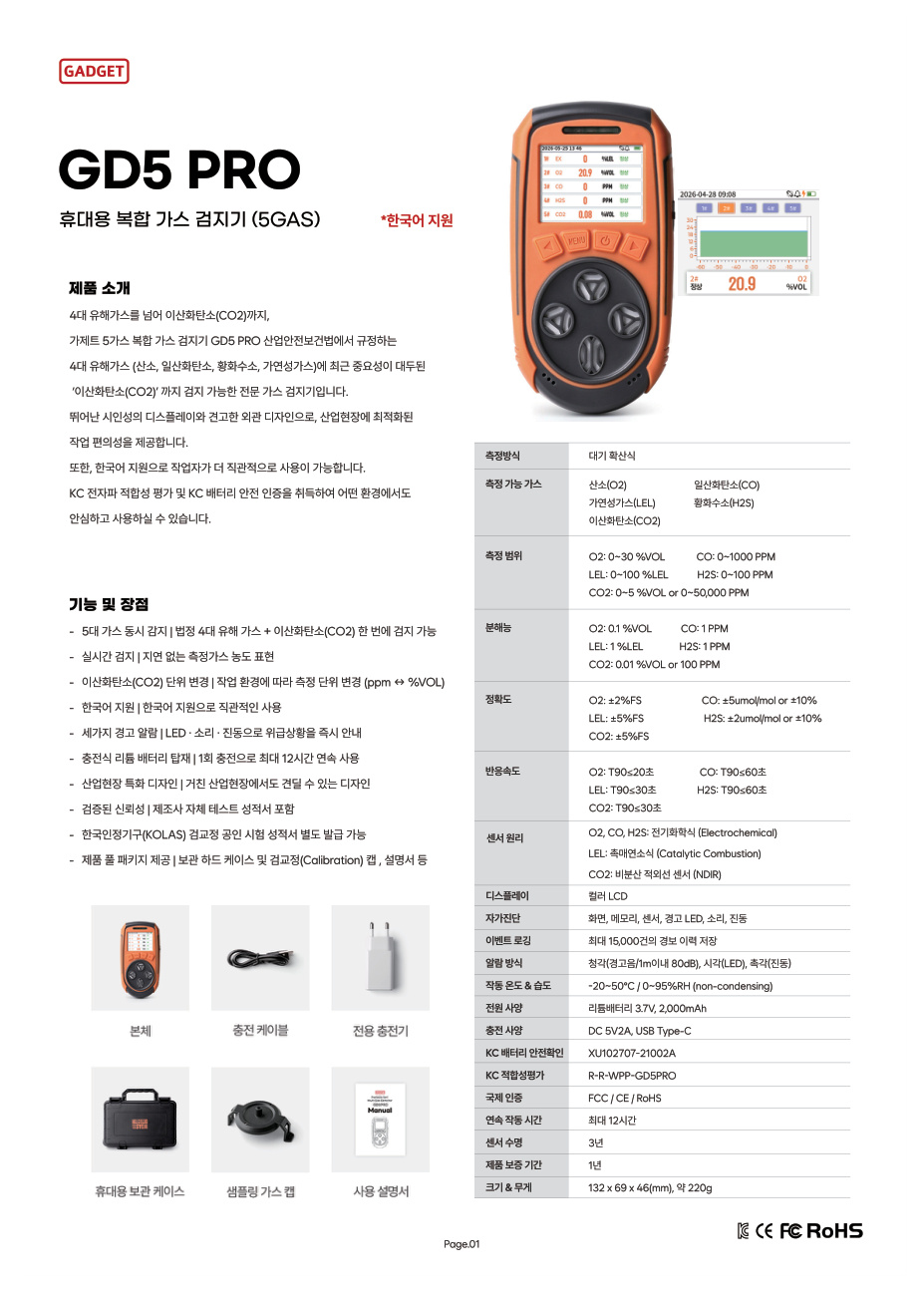
If the site team is looking for a multi-gas instrument, place its target gas list alongside the product information. The GD5 PRO is a portable multi-gas detector measuring O₂, CO, H₂S, LEL and CO₂. Comparing the required gases with these five items gives the product review a clear starting point.
Connect the operating plan as well. The GD5 PRO offers up to 12 hours of continuous operation per charge, a color LCD and Korean language support. Teams reviewing operating duration can send their timetable; teams with many new users can include guidance materials and training preparations. Product features then connect with practical introduction tasks.
View GD5 PRO product details and resources
It is useful to split the model field in the request into “currently used model” and “model under consideration.” This reduces the chance of an old model name carrying straight into the new order and clarifies what is being compared. When reviewing several candidates, add one sentence explaining why each was selected.
Keep the request short and send supporting information together
Aim to make the supplier’s first document one page. Put the purchasing purpose and user team at the top, gases, locations and operating periods in the middle, and desired quantity and introduction schedule at the end. If quantity is still being discussed, include current equipment and the deployment plan as a question for consultation.
Use filenames to identify the purpose of each photo. Names such as “ExistingUnit_Front,” “ExistingUnit_Label” and “UseLocation_Layout” make it easy to find the same material during the discussion. Consistent A/B labels for the equipment and locations shown in the files also help during a phone call.
AI Safety Korea Co., Ltd.’s contact page lets you choose product purchase/quotation or technical review and send your message with attached files. If you need both a main unit and advice on the connected configuration, list these separately in the message. This makes the purpose of the consultation clear.
Prepare an opening sentence for the consultation
If the first sentence takes time to write, fill in this template. A short description accompanied by photos and a list makes the site situation easier to explain.
“We currently use [existing model] and are reviewing equipment because [reason for additional purchase]. The required gases are [gas list], and we plan to use it at [location] during [operating period]. We have attached photos of the current unit and the operating plan. We would like to discuss [product configuration, documents and introduction schedule].”
Then distinguish the person who should receive the reply from the person who can answer site questions. A clear contact for each kind of question helps the conversation move forward, instead of routing every technical question back through purchasing. Include available contact times to make scheduling easier.
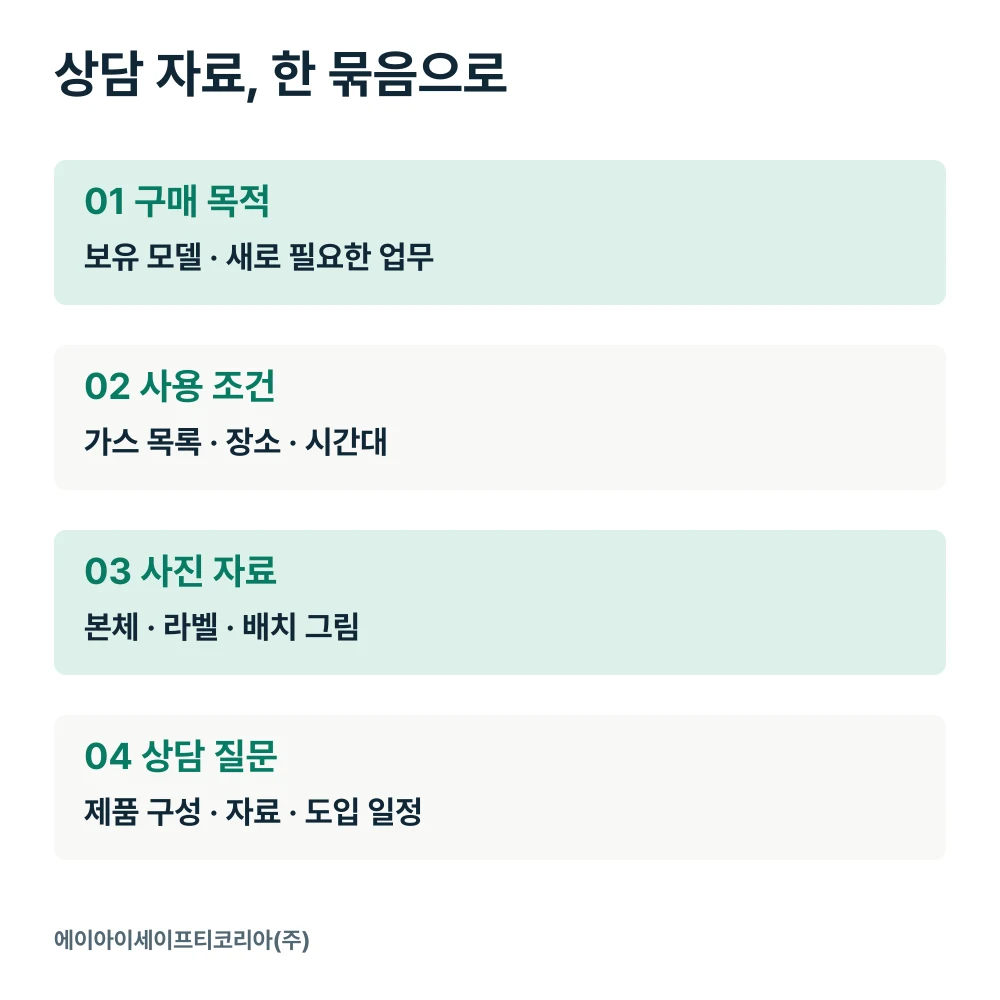
Prepare a first consultation that makes product selection easier
A useful purchasing request is a document that clearly explains who will use what, where and for how long. Connecting the site team’s words with a gas list, operating plan and photos makes it easier to examine product candidates and required configurations.
Tell AI Safety Korea Co., Ltd. about your current equipment and the new work you need to support. Start a consultation based on your prepared request, from product review to the information and configuration you need.
Discuss gas detector products and technical requirements