
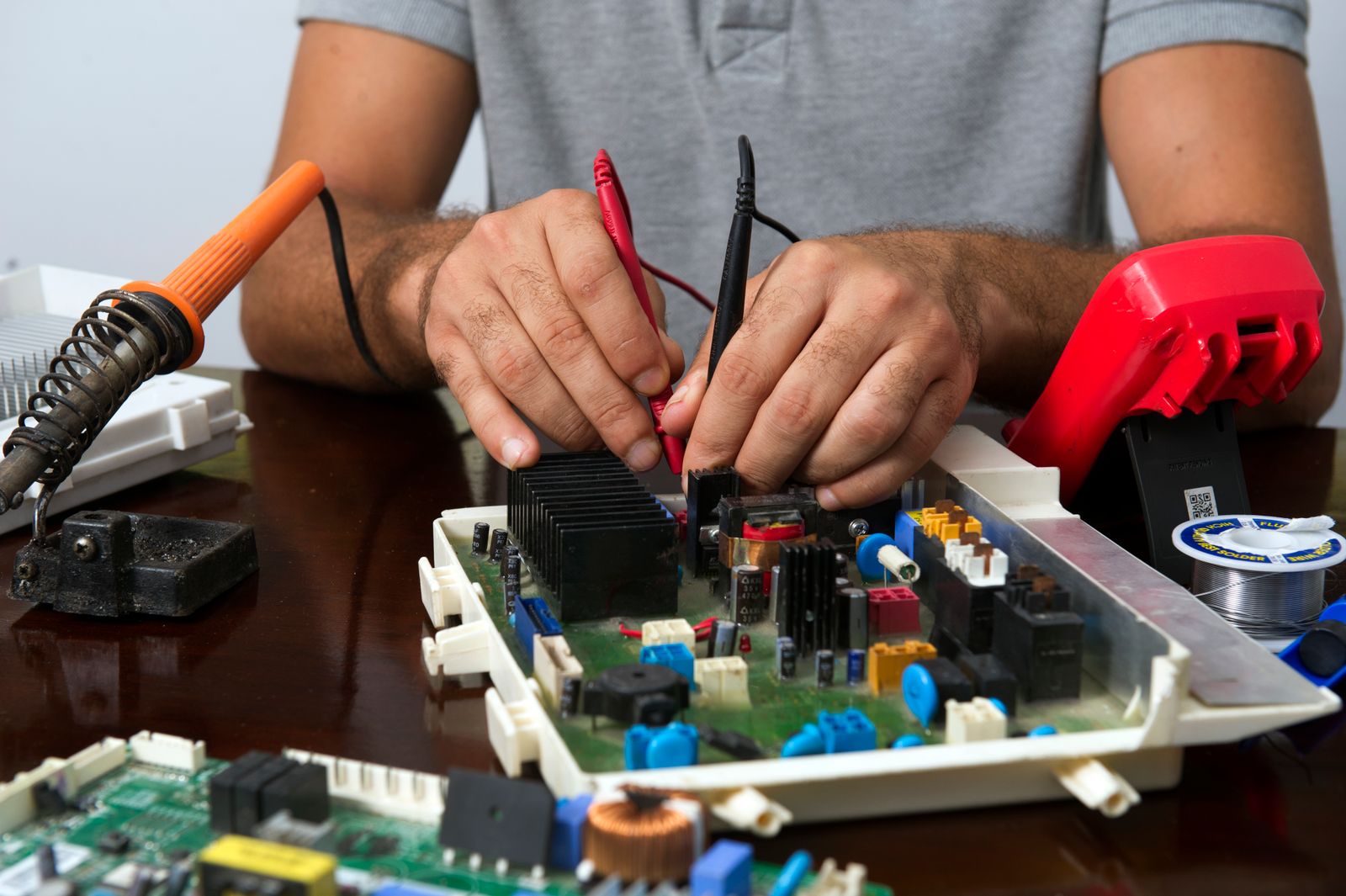
When a charging problem and a sensor error appear at the same time, it is easy to think of them as one fault. But the power system runs the instrument, while the sensor system measures gas, so their causes cannot be assumed to be the same. For a pumped instrument, the path that delivers the sample to the sensor also needs to be considered separately. Understanding which stage shows the symptom can help you interpret an inspection more accurately.
Power problems and measurement problems can appear differently
A charging-system problem may first show up in power status: the instrument may not turn on, a charging indicator may not appear, or power may not remain on after charging. A sensor-related condition, on the other hand, may appear in a particular measurement channel or alarm after the body is powered on. These are hypothetical examples to explain the systems; they do not mean that icons or error messages have the same meaning across products.
A screen turning on when a charger is plugged in does not by itself prove that the battery is healthy, and the body turning on does not prove that every sensor is measuring normally. The instrument goes through different stages, such as power supply, self-check, and sensor response, to perform measurement. Recording at which stage the symptom recurs can help the service provider separate the conditions.
A pumped instrument has an additional sample path
In a pumped configuration, air travels to the sensor through a hose and connectors. Even if the pump operates, a blocked hose or leaking connection may prevent air from the intended point from reaching the sensor properly. A reading may then differ from what is expected, but that alone cannot establish a specific sensor failure or the cause of a code. Similarly, a pump warning does not mean that the body and sensors are all normal.
For example, if the instrument remains powered but one channel shows an error, the power and measurement-channel conditions can be considered separately. If the symptom occurs only when the pump and hose are connected, information about the sample path may also help the inspection. Observing what changes before and after connecting the pump, together with the symptom, can help distinguish power status from sample movement. This observation alone does not confirm that a particular component has failed.
Calibration, adjustment, and repair produce different outcomes
Calibration checks the relationship between a measurement standard’s value and the instrument’s indication. Adjustment changes the indication, while repair restores a nonworking component or function. A charging failure may require inspection or repair of the power system. If a sensor result does not agree with a reference, a calibration result may lead to consideration of a separate action such as adjustment. Calibration alone should not be assumed to fix charging or connection problems.
If the instrument is in an error state or cannot make a normal measurement at the site, do not treat its value as normal; follow site procedures and product instructions. Before an inspection, it is difficult to establish the cause or required replacement work in advance.
Distinguish symptom patterns from a diagnosis of the cause
The conditions under which a symptom repeats can be clues, but they are not a confirmed diagnosis. For example, an observation that the instrument stays on while connected to power but turns off when disconnected is a reason to check power status. If the body remains powered but only one gas channel displays an error, that is a clue to also examine the measurement channel. If the reading stops changing only when a pump is connected, the sample path may also need to be checked. These examples indicate systems to consider; they do not confirm the failure of a specific component.
Check the meaning of an error code or icon on the display in the manual for that product. Similar indications may require different actions on different models, so do not assume that clearing a code or pressing a button has restored normal operation. When requesting an inspection, report the observed symptom and when it occurred; that can help the service provider understand the conditions needed to reproduce it. The fault cause is not determined from symptom notes alone; it is confirmed along with the actual condition of the instrument.
Because power is the basis for the other systems to produce results, distinguish a display going off when power repeatedly cuts out from an error limited to a particular channel. A screen going off after power loss does not establish sensor failure, and an error remaining on one channel while the display stays on does not prove that only that sensor has failed. These patterns can suggest where an inspection might start; the actual cause and required repair are determined after the instrument is checked. This distinction is useful when understanding an inspection result that relates to the symptom.
It is more accurate to record what you observe—for example, “Power remains on, and an error appears on the CO channel”—than to write a conclusion such as “the sensor has failed.” Such a record does not replace the model-specific meaning of the error, but it helps the inspector consider power and measurement-channel issues separately.
Tell AI Safety Korea Co., Ltd. the model, display indication, and when and under what conditions the symptom appears, and we can discuss an inspection approach that distinguishes the power, sensor, and pump systems.
Ask about an Instrument Symptom Inspection