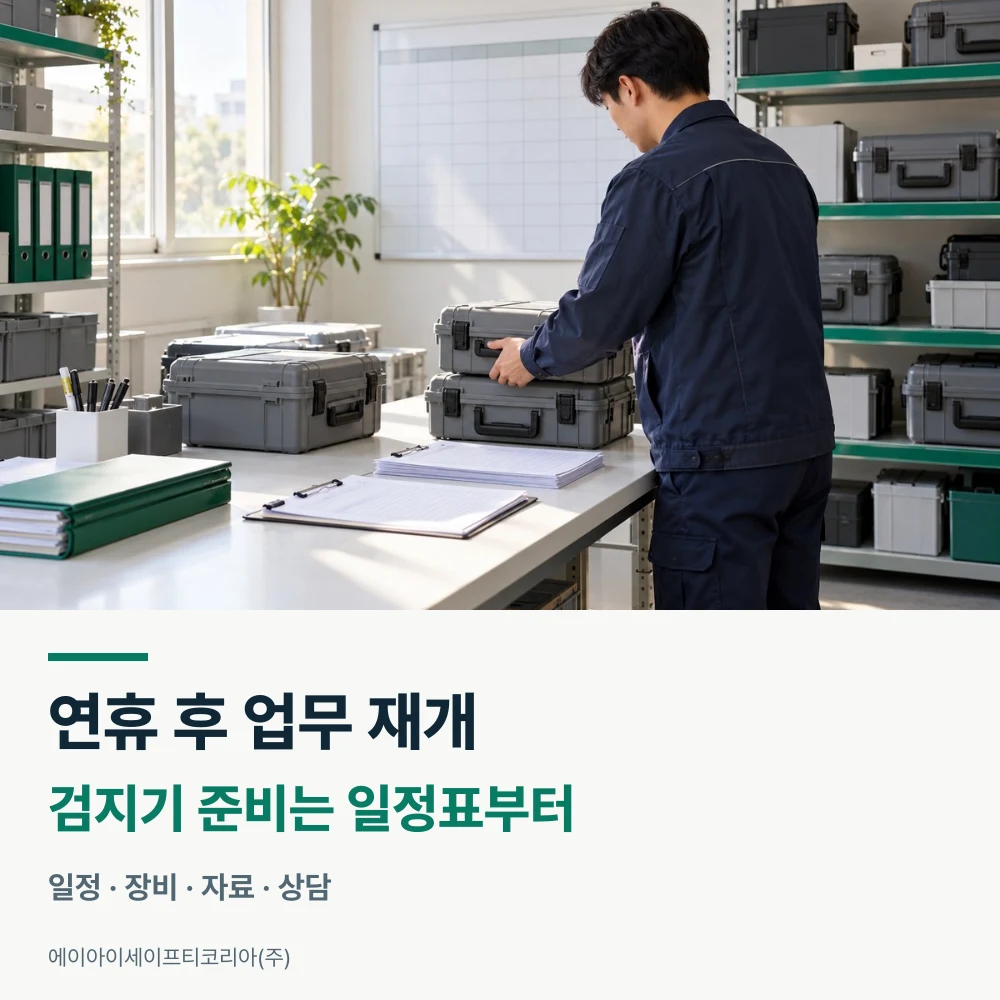
On the day a holiday ends, several departments look for gas detectors at once. You need to check which unit is in which case, which team uses it first and which instruments need an inspection enquiry. Connecting the usage schedule with your equipment list first makes the preparation sequence clear.
As work resumes, organize four things alongside taking the instruments out: usage dates, each unit’s storage location, documents to hand over and questions for consultation. Linking these four items lets site staff and purchasing staff prepare from the same list.
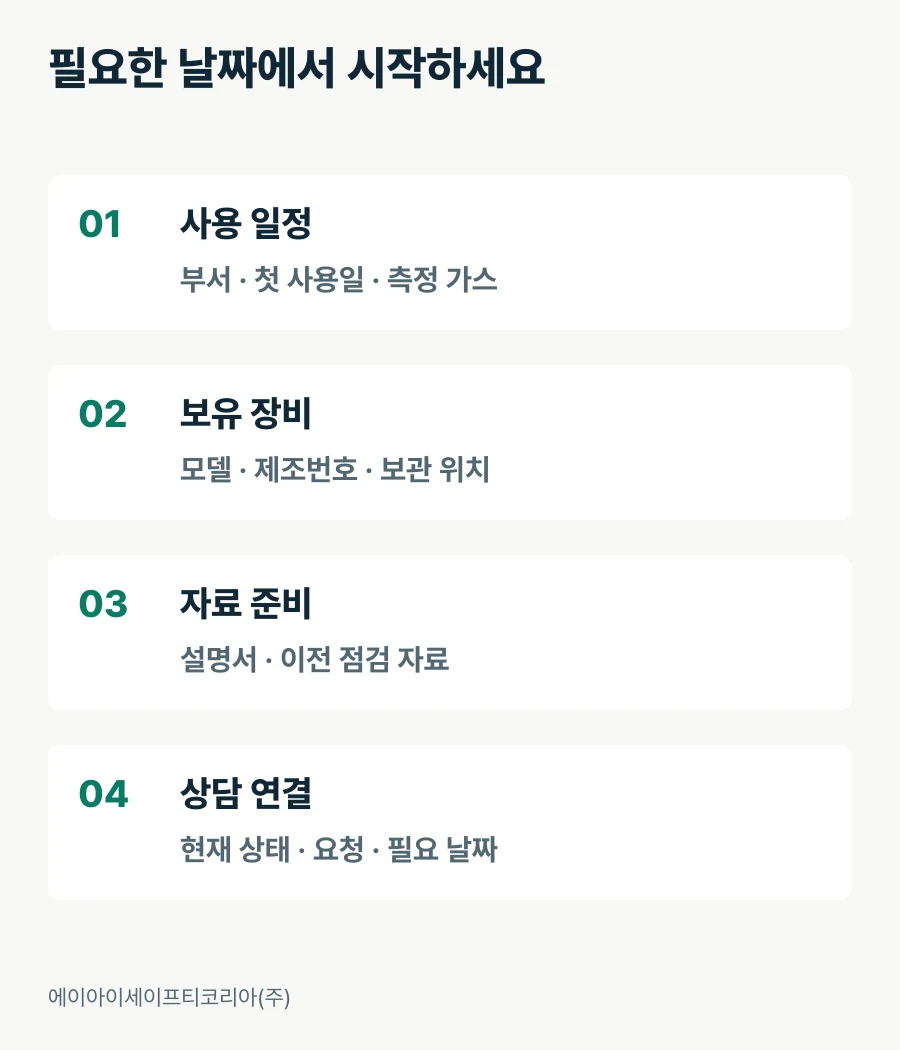
Collect the dates when equipment is needed first
A plant’s overall restart date may differ from the dates individual departments use equipment. The maintenance team may begin preparations first, while another department needs instruments a few days later. Recording each department’s first usage date and planned working hours makes it easier to select the units to check first.
Include the department, contact person, location and gases to be measured in the schedule. The more specifically you describe which department wants to check which gases for which task, the easier it is to match an existing model than with a single line saying “detector required.” Mark overlapping requests side by side to prepare equipment allocations and enquiries about additional purchases together.
Information to collect first | What to record |
|---|---|
First usage schedule | Each department’s date and planned hours |
Intended task | Location and task name |
Measurement items | List of gases to check |
Preparation contact | Equipment recipient and contact channel |
For longer assignments, share the schedule beyond the first day as well. If equipment will move between departments, mark the handover dates. Distinguishing when someone asks for equipment from when it is actually needed helps secure preparation time.
Connect storage locations to a list of individual units
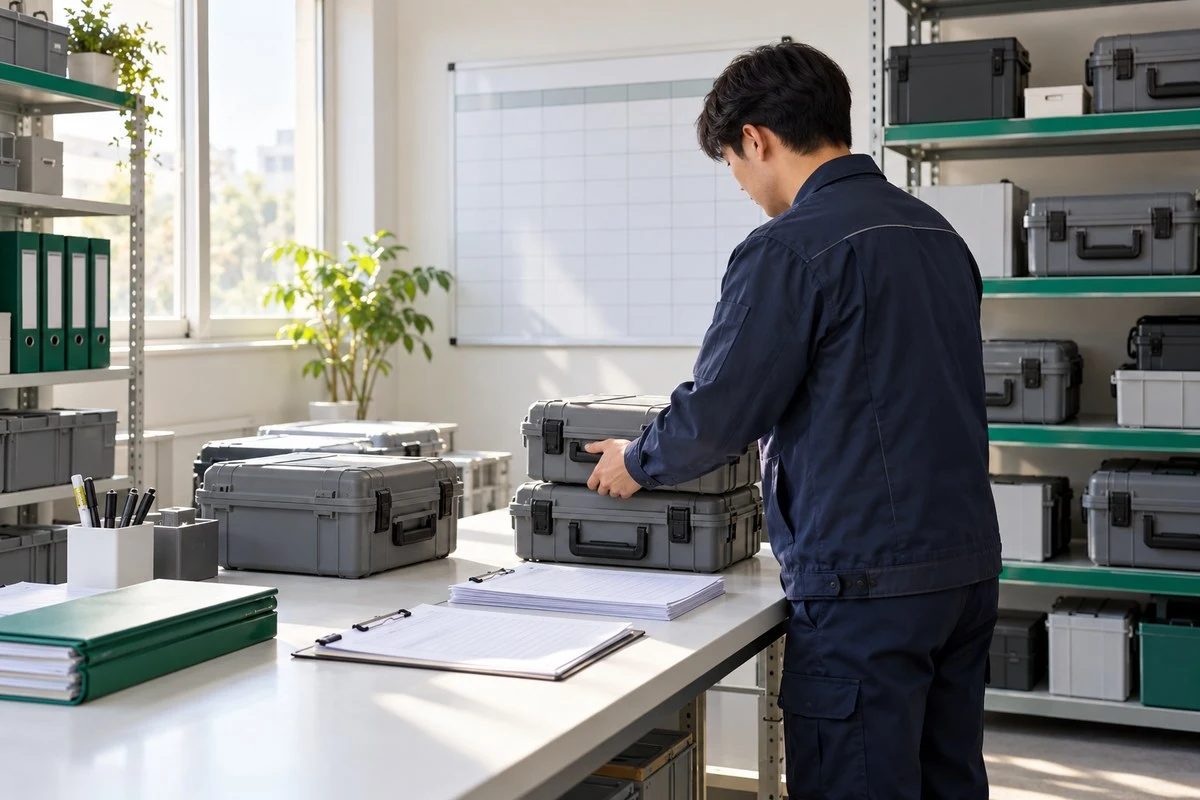
Now place the equipment you have beside the schedule. Gather cases in the storeroom, units held by departments and instruments awaiting inspection enquiries into one list. Record the model name, individual serial number and storage location so that units remain easy to find even when you have several of the same model.
What matters more than the number of cases is which unit is where. Compare the management number on the outside with the unit’s information, and record the locations of separately stored charging accessories and manuals. This reduces the time the recipient spends searching again for the instrument and its documents.
Keep the status column simple and action-oriented. Write the next action, such as “confirm location,” “collect documents,” “inspection enquiry” or “discuss allocation.” Adding a contact person and confirmation date to each item shows completed and remaining preparations at a glance.
Place required gases beside the models you have
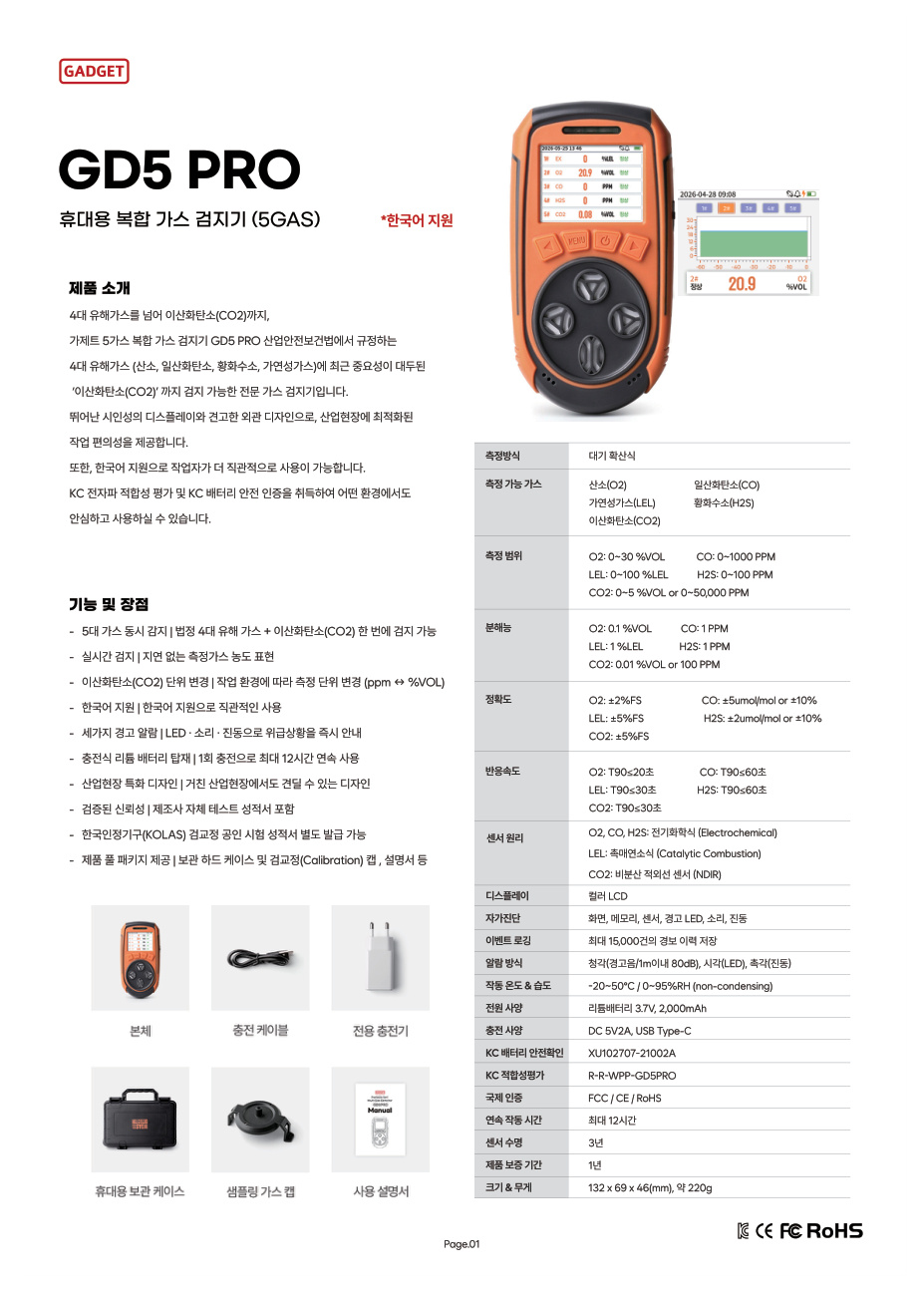
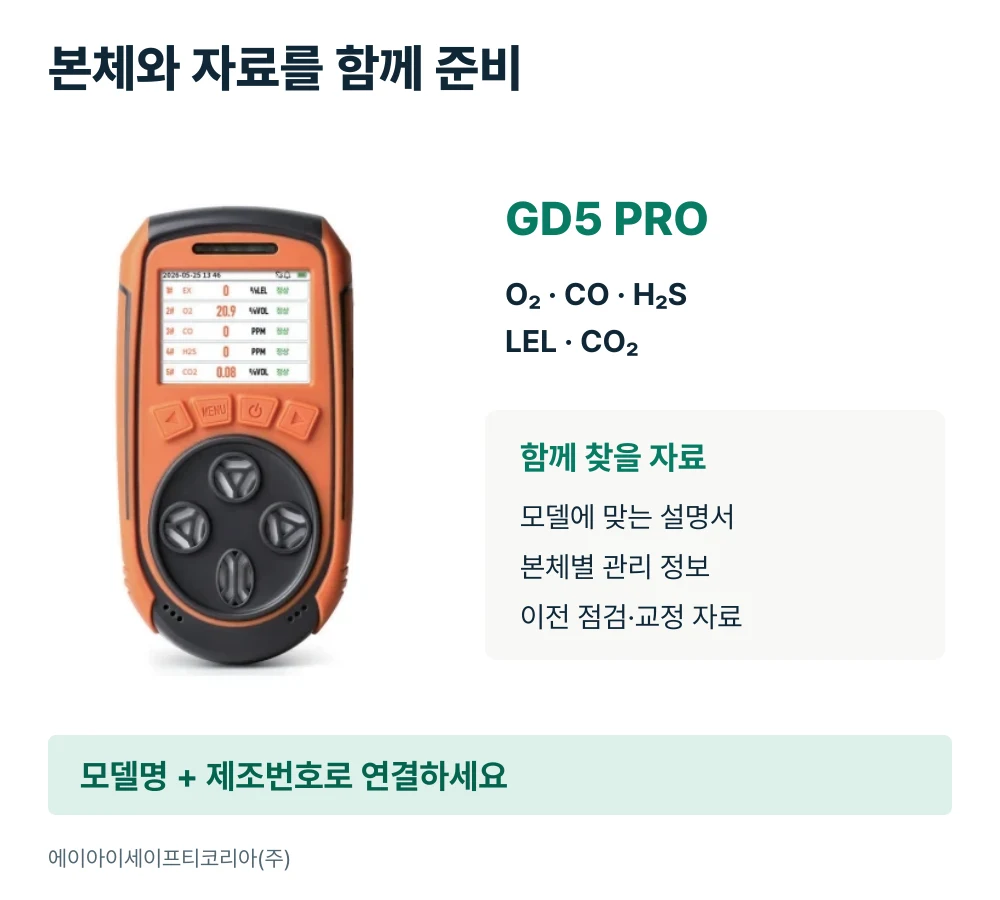
The gas list from each department is the starting point for matching products. For example, GD5 PRO is a portable multi-gas detector that measures O₂, CO, H₂S, LEL and CO₂. When listing equipment candidates for work involving these five items, you can review the product documents alongside them.
Find the measured gases in the catalogue for each model you own and record them beside the schedule. Mark any new gas added to a department’s request or any change of work location separately. This gives the consultation a specific question: continue reviewing the current instrument, or ask about another model or configuration?
The GD5 PRO catalogue introduces the main unit, charging cable, dedicated charger, portable storage case, sampling gas cap and user manual. Checking the accessories to prepare alongside each unit in the equipment list makes it easier to organize the handover items. If additional accessories are needed, prepare the model name and a photograph of the relevant part together.
Explore the GD5 PRO product configuration
Keep manuals and previous inspection records together
A person receiving the instrument for the first time begins by checking its product name. Collect the matching manual, current management sheet and stored inspection or calibration records in the same location. Including the model name and serial number in filenames helps distinguish documents for different instruments.
It also helps to check document dates together with the equipment they cover. If a folder contains records from several dates, identify the latest documents and organize older ones so that their history remains easy to find. Preparing a photograph of the unit with the first page of its documents quickly establishes which instrument is being discussed during consultation.
Keep the departmental handover guide short. A single page with the storage location, document folder, return location and enquiry contact is enough to get started. During actual preparation for use, review the check items in that model’s manual as well. A clear route to the documents helps keep preparations moving when the person responsible changes.
Include the required date in inspection enquiries
Group symptoms or document questions discovered during preparation by instrument and discuss them together. AI Safety Korea Co., Ltd. accepts enquiries about gas detector readings, calibration and fault symptoms. Share the manufacturer, model name, serial number, quantity and current condition to discuss the information needed for intake.
Giving each department’s planned first usage date is more specific than saying “needed after the holiday.” Note whether previous inspection records are available, which documents are required and which instrument each question concerns. Reflecting the process and schedule confirmed during consultation in the preparation list lets you give the department the same information.
When considering additional equipment, send both the list of existing models and the new work requirements. Separating inspection enquiries for current equipment from enquiries about additional purchases helps obtain the answers each needs. Include costs and timing among the consultation topics to continue preparing the purchase.
One list to share before work resumes
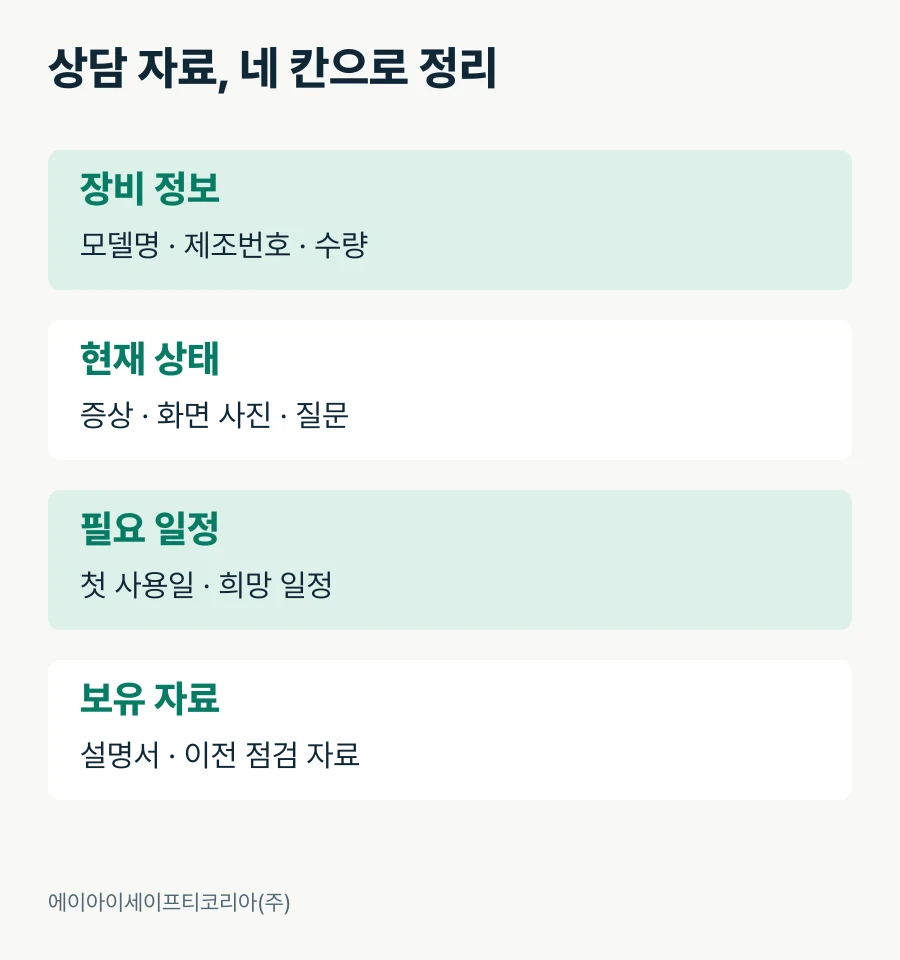
Finally, have the user departments and preparation contacts check the same list. This clarifies the next actions not only for ordering new instruments but also for finding existing units, gathering documents and arranging the necessary consultations.
Have you recorded each department’s first usage date and contact person?
Have you received the gas list for each task?
Have you linked model names, serial numbers and storage locations?
Have you checked which accessories to prepare with each unit?
Have you collected manuals and previous inspection records?
Have you written down symptoms and requests for the instruments to discuss?
Have you reflected confirmed schedules and contacts in the list after consultation?
Start post-holiday gas detector preparations by connecting the schedule with a list of individual units. Tell AI Safety Korea Co., Ltd. which models you have, what you need and by when, and we will review product configurations and inspection intake details with you.
Enquire about gas detectors and inspections