When you see a measurement range in a specification sheet, you may wonder, “Does this mean the alarm will not sound until that value?” Measurement range and alarm setpoint answer different questions. The range describes the interval the instrument is designed to measure; an alarm setting describes the condition at which it is configured to alert. Add the workplace criterion, and you need to distinguish three separate pieces of information.
Measurement range is the interval a channel is designed to cover
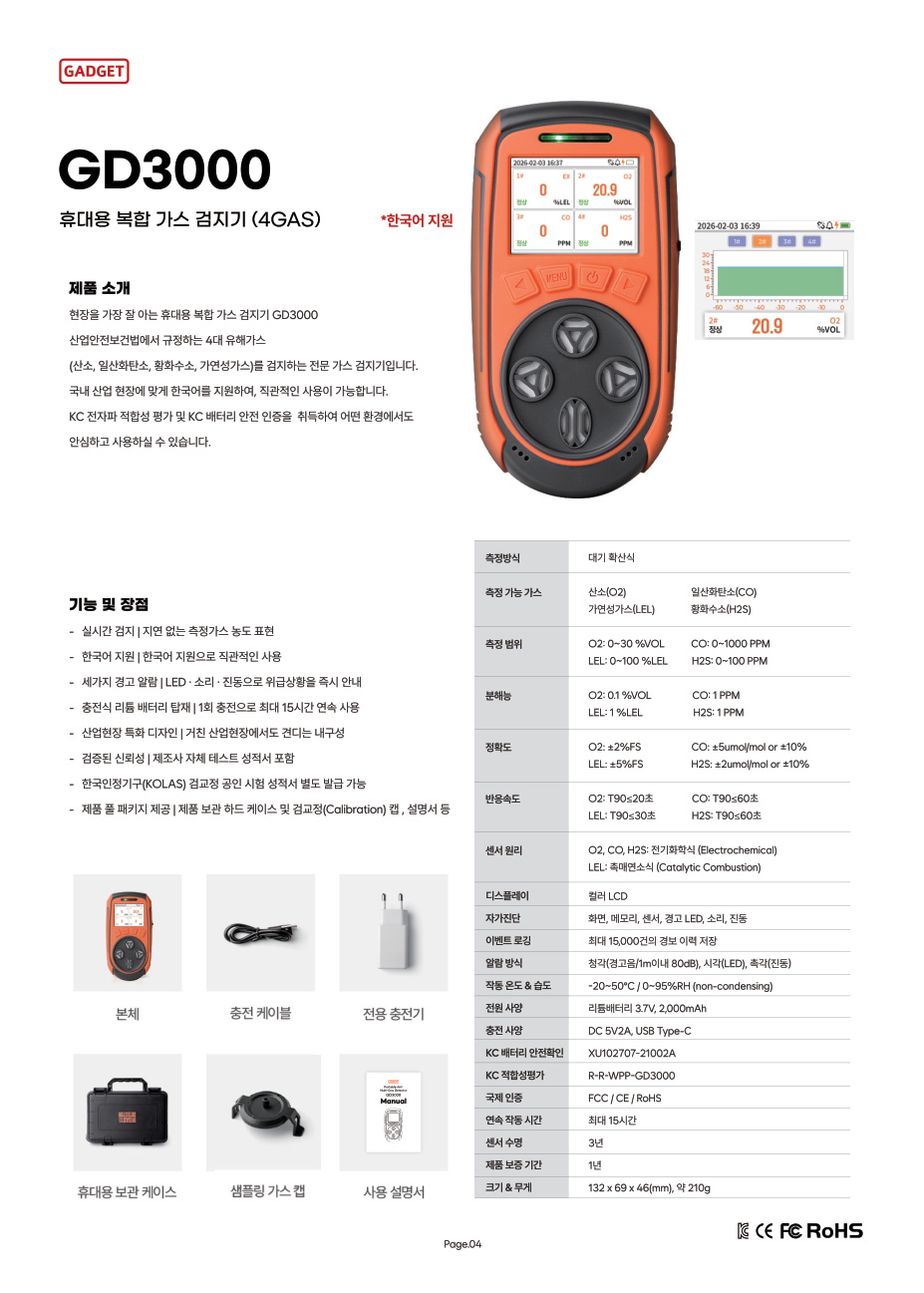
The Korean GD3000 manual lists separate measurement ranges for the EX, H₂S, CO, and O₂ channels. For example, the manual gives the CO channel a range of 0–1,000 ppm. This number describes the measurement interval the channel is designed to display. It does not mean work is permitted until 1,000 ppm, nor does the upper end of the range automatically become the alarm value.
Being within the measurement range also does not mean the measurement is equally accurate at every point. Accuracy is a separate specification tied to test conditions and references. A wider range alone does not establish that an instrument is more sensitive or better suited to a particular need. It is best to understand measurement range only as information describing the concentration interval the instrument can display.
An alarm setpoint is the condition that triggers an alert
An alarm setting is a device configuration that triggers an alert, such as sound, light, or vibration, when a measurement reaches a particular condition. The GD3000 manual describes a menu for setting low and high alarm values by gas. Since alarm values are a separate setting from measurement range, treating the range’s upper limit and the alarm criterion as the same number would lead to a misunderstanding of how the instrument operates.
As a hypothetical example, suppose a user separately configures an alarm condition below the upper end of a channel with a measurement range of 0–1,000 ppm. That setpoint is a criterion for an instrument alert. It does not change the measurement range or establish the allowable workplace concentration for the entire site. Conversely, even if an alarm value is configured, it cannot be used to conclude that there is no risk. Actual settings should be handled according to the manual for the model and the site’s safety-management criteria.
An instrument alarm and a workplace criterion are not the same rule
A product’s alarm setting is an instrument feature that helps the user notice a condition. Laws or workplace criteria are separate systems established according to the applicable gas, work, jurisdiction, and management procedures. They may be related, but they do not automatically have the same value. Reading a product’s maximum measurement range as a legal exposure limit or an allowable entry concentration can lead to an incorrect conclusion.
When reviewing specifications, retain the item names from the table and record `measurement range`, `accuracy`, and `alarm setting` separately. Check workplace management criteria separately against the responsible safety procedures. The value a detector can display does not decide whether work is authorized. This article does not establish a new alarm value or safety criterion.
Read each channel specification with its gas name and unit
GD3000 channels use different concentration units depending on the target. The Korean manual lists a CO measurement range of 0–1,000 ppm and an O₂ range of 0–30.0%VOL. If you look only at the upper numbers, 1,000 appears greater than 30, but the gases and units differ, so you cannot compare the ranges by number size. When copying a table into another document, copy the gas name and unit for that row along with the range value.
For example, if a review sheet says only “0–1,000,” it may be difficult later to tell whether that refers to CO or another channel. If “CO, ppm, measurement range” is retained, the corresponding manual specification can be identified. When comparing an alarm setpoint too, preserve the channel and unit shown in its menu. This recording method helps prevent confusion between specification items, but it does not establish an alarm value or allowable workplace criterion.
The upper limit in a specification sheet, an alarm setting shown in a menu, and a workplace management criterion answer different questions in different documents. Including the gas name and unit when comparing channel ranges helps prevent someone from bringing in a setting or value from another channel by mistake. Do not estimate settings or workplace values that are not directly confirmed in the product documentation.
For example, if a hypothetical review sheet says only “Alarm 50,” that wording alone does not identify the channel. Keep the channel name and unit in the same row when recording a range or alarm condition so the number is not mistakenly applied to another target. This example explains how to distinguish information; it does not recommend a GD3000 alarm setting.
To compare GD3000 range and alarm functions, consider the device revision and the item you are checking. Tell AI Safety Korea Co., Ltd. the gas channel and manual revision, and we can point out where the public manual separately describes measurement range and alarm settings.
Ask about alarms and measurement specifications