If the GD4 Mini runs for less time than expected after a full charge, should you replace the battery first? A shorter runtime alone cannot diagnose a battery problem. The energy stored in the battery, the power consumed by the instrument, the actual charge state, and operating conditions all play a part.
Maximum operating time is not a guarantee for every situation
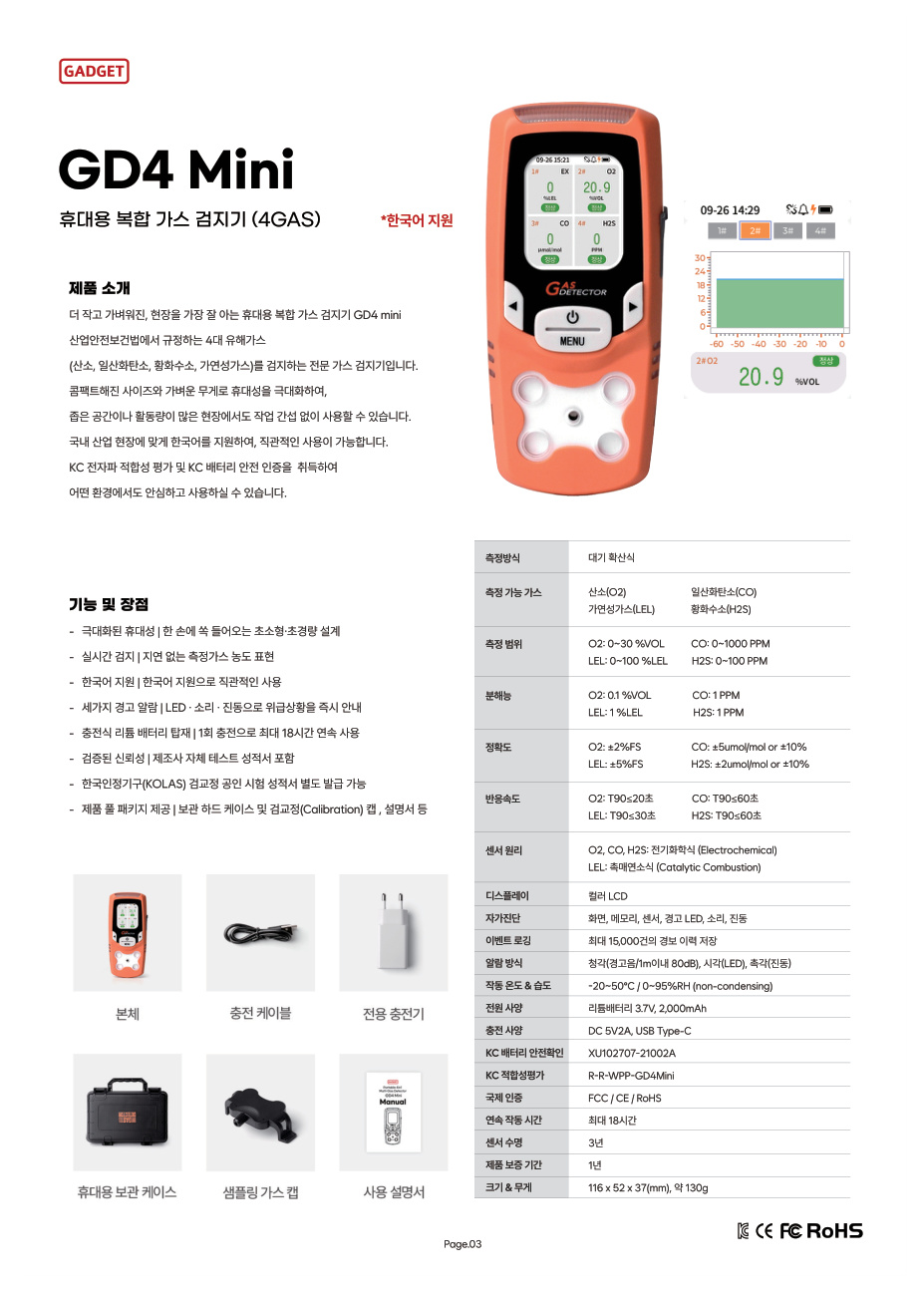
The approved GD4 Mini catalog lists a maximum operating time of 18 hours for its lithium battery. This is the maximum shown in the document; it does not guarantee the same runtime under every setting, environment, or battery condition. As a simple analogy, even two containers of the same size take different times to empty depending on whether they are full and how quickly water is drawn out. A battery’s runtime can likewise vary depending on the charge and the conditions under which the instrument consumes energy. The 18-hour figure also does not guarantee an entire shift or define when a battery should be replaced.
Consider short runtime in separate cause categories
Start by distinguishing whether a charge-complete indicator actually appeared, whether there were unusual indications during charging, and which alarms or errors appeared after the instrument was turned on. A charge indicator that keeps showing progress and a device that shuts down early after a full charge are different starting points. Battery age or condition, charging conditions, and a power-related issue in the instrument are separate areas to inspect, but one symptom does not identify which—if any—is the cause on a GD4 Mini.
Imagine a hypothetical log: charging was confirmed complete at 8 a.m., use began at 9 a.m., and the power shut off at 2 p.m. The observed period of use is five hours. Recording the battery indication and screen message before shutdown may help a technician determine whether the same symptom recurs or whether charging may not have completed. This example illustrates what to observe; it is not a pass/fail runtime threshold.
Check replacement decisions against model-specific guidance
Battery life, replacement criteria, charger output, and compatibility conditions should follow the model-specific manual or service criteria. Using an arbitrary charger because its connector looks the same, or opening the instrument and trying to replace the battery, is not an appropriate way to establish the cause. If an unusual indication appears during use, follow the manual and site procedures. The public information reviewed does not confirm GD4 Mini-specific battery replacement rules or the permitted charger compatibility range.
A remaining-battery display is also not the same as a guaranteed amount of future runtime. It may estimate the remaining energy, but the estimate may not match actual runtime under different operating conditions. Conversely, an unexpectedly early shutdown does not by itself prove that either the display or battery has failed. Detailed evidence on how the GD4 Mini calculates its remaining-charge display was not available, so do not convert a particular remaining percentage into a number of hours.
It can help to split inspection questions into two parts. “Did the charge indicator show completion normally?” is an observation about the power source and charging process. “How long did it operate after completion, and what did the display show?” is an observation about runtime during use. Recording both stages helps distinguish a charging-equipment issue from power consumption during operation or a battery condition that needs inspection. The record is not itself a diagnosis; manufacturer inspection criteria are still needed.
Battery energy and power are related but different quantities. Energy is the total amount that can be supplied over time; power describes how quickly energy is being used at a given moment. In principle, runtime gets shorter if available energy falls or power consumption rises. However, no measurement data was found showing how much power the screen, sensors, alarms, or other components actually consume on the GD4 Mini, so none of them can be identified as the cause. This explains the general relationship: runtime is not determined by a single battery-percentage number.
For the same reason, it is difficult to apply a maximum runtime directly to a site schedule. A catalog maximum is not a guarantee covering every usage condition. For example, if an instrument is specified for a maximum of 18 hours but shuts down after six hours at a site, comparing only those two numbers is not enough to diagnose a fault. Actual conditions, whether charging completed, whether the symptom recurs, and the instrument’s condition need to be established.
Do not turn one observed runtime into a battery replacement interval. Instead, see whether the observation recurs under a consistent recording method. Record separately when the charge-complete indicator appeared, when the instrument was turned on, and what it showed before shutting down. Repeated runtime figures are still not a replacement decision by themselves; check the official GD4 Mini service criteria.
Record the charge-complete time, start and end times of use, and the indications shown, then ask about a battery and charging inspection.
Ask for a GD4 Mini Battery and Charging Inspection