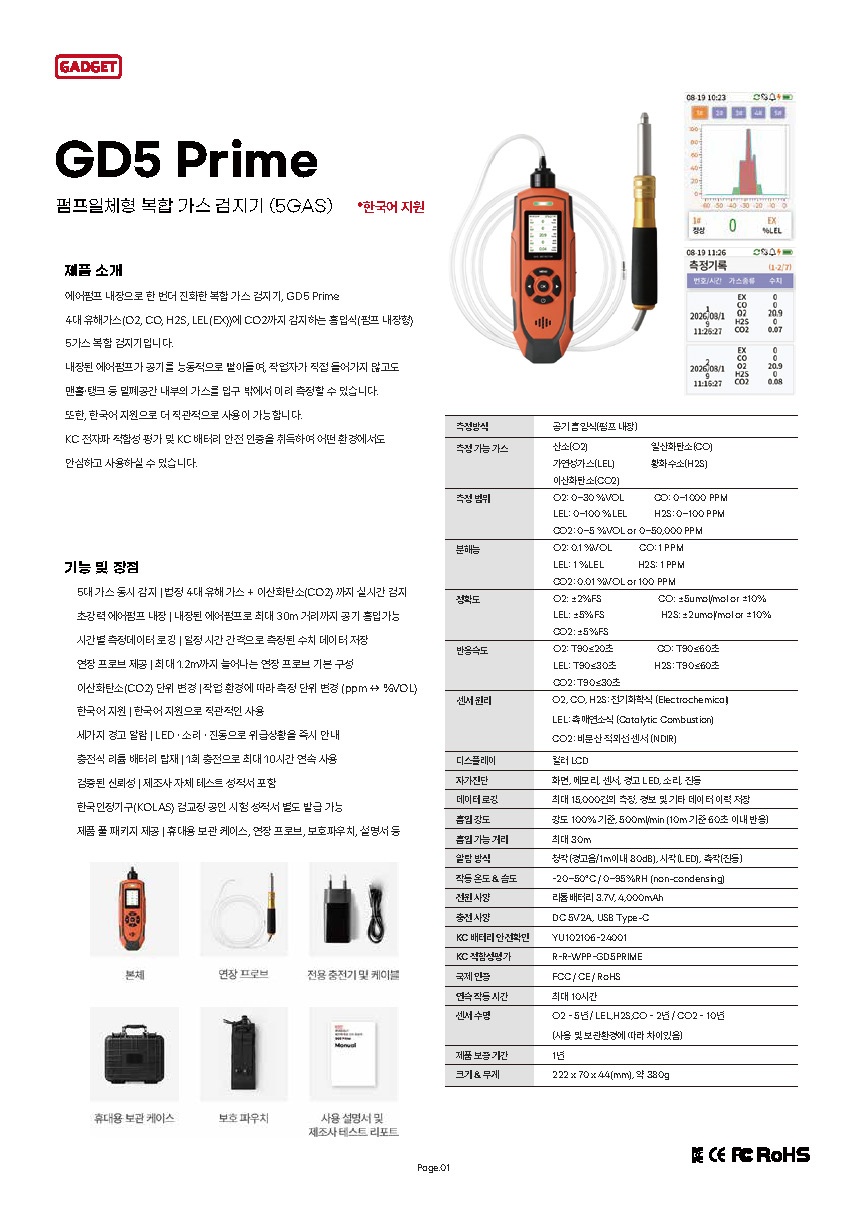
If the GD5 Prime catalog shows a portable case and a protective pouch separately, you may wonder whether you need both. They are introduced as different accessories, not duplicate listings of the same item. The case is a configuration for storing and transporting the instrument and accessories together; the pouch is a separate item that surrounds the instrument. Which one to use depends on what you carry and the conditions required during actual use.
A transport set and an item fitted around the instrument serve different purposes
Imagine moving the instrument from storage to a work area. Whether you carry only the instrument or manage a set with a probe, charger, and cable changes why you might need a case. The catalog case can be considered as a container for items stored together. The pouch, by contrast, is shown as something fitted around the instrument, so distinguish whether you want it to cover the instrument during transport or stay on during work. The public photo alone does not establish the pouch material or a specific level of protection.
The word “protective” does not establish a rating
The protective purpose of an accessory and the instrument’s performance markings are supported by different evidence. An IP marking classifies protection against ingress of solids and water; explosion protection is a separate suitability and set of operating conditions for locations with ignition hazards. One does not guarantee the other. For example, even if a water-splash rating is confirmed, that alone does not permit use in a hazardous location, and a pouch does not create explosion-protection certification the instrument does not have. Confirm the exact markings and scope in the model’s certification documents and user manual.
Whether it can stay on during operation depends on the air path and controls
Suppose you plan to take measurements with the pouch fitted. Check whether it covers the area through which the instrument’s sensors receive air, whether alarm indicators and controls remain usable, and whether the manufacturer permits use in that condition. These factors are difficult to determine from the pouch’s shape alone. If the sensor inlet is blocked, that can affect how the sample reaches the sensor; if the display is covered, it may be harder for a user to check the measurement status. The GD5 Prime catalog shows the pouch as an accessory but does not provide measurement suitability with it installed or water- or explosion-protection test results.
Decide whether both are needed based on how you actually transport the equipment
If you need to store and transport the instrument and several accessories together, a case may be useful. Consider the pouch when there is a separate need to wrap the instrument, but whether it is needed and whether it may be used while measuring are separate questions. The choice may also differ depending on whether you carry only the instrument and leave the case at the site or move all accessories together. You cannot conclude that every user needs both items.
As a hypothetical transport scenario, suppose you move the equipment from storage to the site in one trip and then carry only the instrument once work begins. The case is relevant to whether you need a configuration for transporting several items together; the pouch is relevant to whether you need a separate covering for the instrument. One item does not always replace the other, and they do not necessarily need to be used simultaneously. Their separate appearance in a catalog means the configurations are distinct options, not a mandatory purchase list.
When deciding whether to have both, distinguish the items you want to store from the accessories you will actually fit to the instrument. For example, if you need to organize and transport a probe and cable too, consider a case with suitable capacity. If you separately need a pouch around the instrument, check whether the sensor and display can be used while it is fitted. Whether measurements can be taken with the pouch installed cannot be confirmed from a public configuration photo alone; use supplier or manufacturer documentation.
This distinction makes the purchase question more specific. Instead of expecting a universal yes or no to “Do I need both?”, check whether the case you have already meets your accessory-transport needs, when you plan to use the pouch, and whether it may stay fitted during operation. There is no basis for presuming that two layers of protection are necessary or for estimating the pouch’s actual water or explosion protection rating. Confirm the GD5 Prime case and pouch configuration from the official configuration materials current at the time of order.
For example, checking whether the sensor inlet remains open while the pouch surrounds the instrument is not merely a convenience issue. Measurement requires the sensor to receive surrounding air or a sample drawn by the pump, so a cover that blocks the inlet could change the conditions of use. Conversely, even if the pouch leaves a particular part of the instrument open, you cannot automatically conclude that the manufacturer permits measurement with it installed. Confirm actual use with the pouch fitted through official GD5 Prime information.
If you have questions about the GD5 Prime case and pouch configuration or using the pouch in a particular location, tell us about the use situation when you contact us.
Ask about GD5 Prime protective and transport accessories