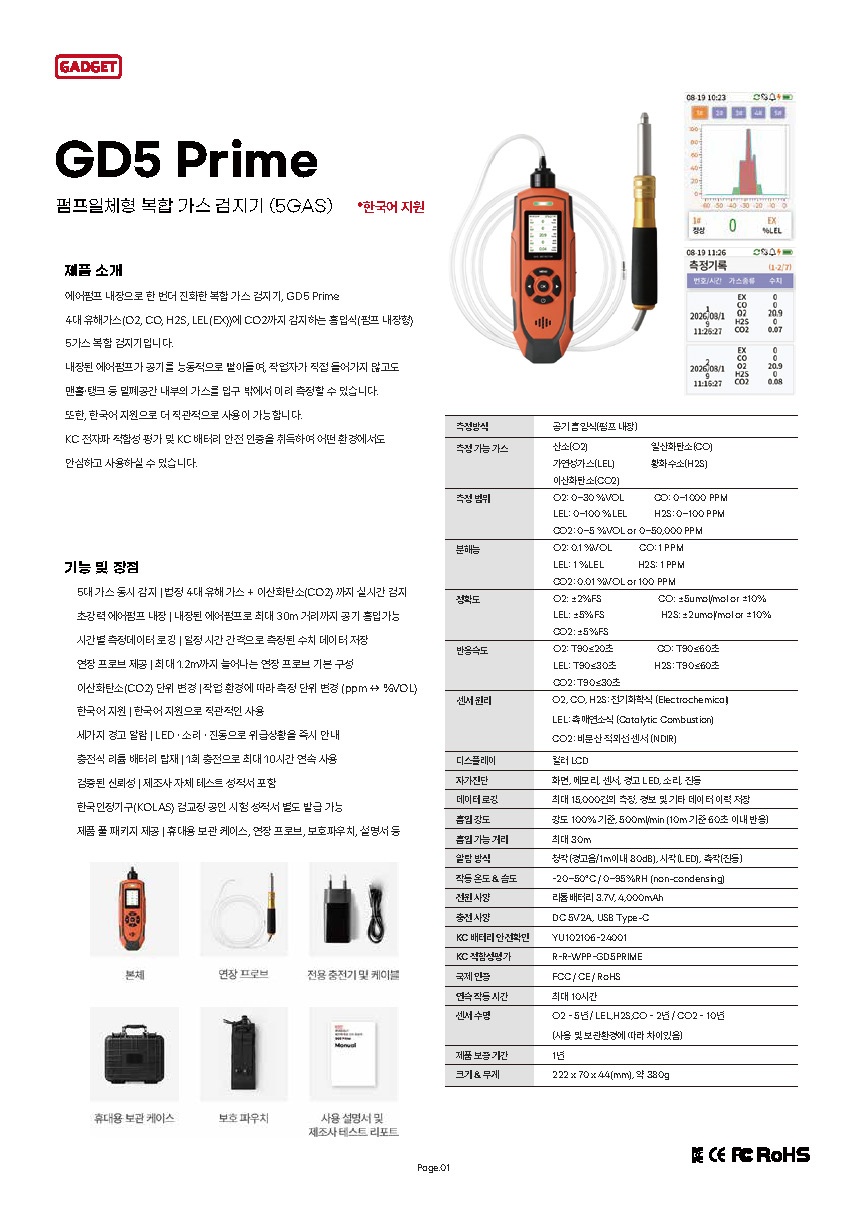
When considering a switch from the GD5 PRO to the GD5 Prime, similar gas channels may make the measurement method seem the same. The key difference is the path by which surrounding air reaches the sensor. The GD5 PRO is described as an atmospheric diffusion type, while the GD5 Prime uses a pump to draw air to the sensor.
A diffusion instrument measures air where the body is placed
In diffusion measurement, surrounding air moves naturally to the sensor inlet. The instrument is therefore placed at the point to be measured, where it reads the air around it. The sensor itself does not act as a pump that draws in air. The ability to bring a sample from a distant point through a separate sampling line is a different feature and should not be assumed from a diffusion design. The public GD5 PRO manual describes its diffusion measurement structure.
A pump can separate the sampling point from the instrument
A pump draws air from the end of a probe or hose and delivers it to the sensor. As a hypothetical example, imagine holding the instrument outside a piece of equipment while sampling air at one point inside it. The pump design can separate the instrument’s location from the sample location. The GD5 Prime catalog shows an internal pump and probe configuration.
However, the pump delivers air from the point where the sampling inlet is placed. It does not monitor a whole large room at once or determine whether work is safe. The actual work location and sampling method must follow site safety procedures. A pump design also requires consideration of the time it takes a new sample to travel through the line to the sensor, so a reading immediately after moving the inlet cannot be assumed to reflect the new point at once. Waiting time and permitted distance depend on the model, line, and gas conditions; consult the GD5 Prime manual.
Shared sensor channels do not mean shared accessories
If the two products measure some of the same target gases, that helps when comparing the sensor items you need. But probe or tube connections, case size and storage, and charging power depend on the body structure and accessory design. Similar-looking connectors or exteriors are not enough to assume existing parts can be reused. In particular, the GD5 Prime sampling configuration includes a pump and sample path, so it should be considered separately from the diffusion model’s parts list.
Choose the method based on where you need to sample
The first question is whether you can place the instrument at the measurement point or need to bring a sample from a separate point. Then confirm the actual gas channels, approved sampling parts, and model-specific power and portability conditions. A pump design is not always more accurate or superior to diffusion; the structures address different measurement locations.
A separate sampling inlet means managing the sample path
A diffusion sensor is exposed to the surrounding air and reads gas at that location. A pump system creates a separate path so air entering at a defined inlet passes through tubing and connectors to the instrument. This added path offers flexibility in sampling location, while making connection condition and tubing suitability part of interpreting the result. If the line is kinked or a connection is loose, it is unclear whether the intended sample is being delivered correctly. Follow the inspection procedure in the GD5 Prime manual for any abnormal condition.
In a hypothetical comparison around the same equipment, a diffusion instrument reflects the air where its sensor is placed. With a pump instrument, the probe tip can be placed elsewhere and the sample brought back to the instrument. If the two screens differ, first distinguish a device difference from a difference in actual sampling location or sample travel time. Two numbers captured at the same clock time do not prove that they represent air from the same place.
The pump and sensor also have different jobs. The pump helps move the sample; the sensor produces a measurement signal for the target gas. Adding a pump or changing the measurement method does not add a gas channel that the instrument lacks or create new sensor accuracy. Check each model’s sensors and accessories against its official product materials. The decision to move from diffusion to a pump design is clearer when centered on the required sampling location and the approved sample path to that location.
When the measurement method changes, records should also be more specific. For diffusion, recording where the instrument was placed explains which air was measured. With a pump, the instrument and sampling inlet may be in different places, so record them separately. “Measured at the worker’s location” and “held at the worker’s location while sampling inside the equipment” describe different spatial information. The record should explain where the sample entered the system.
If you are switching from the GD5 PRO to the GD5 Prime, ask about both the appropriate measurement method and whether existing accessories can be used.
How do the GD5 PRO diffusion type and GD5 Prime pump type differ?