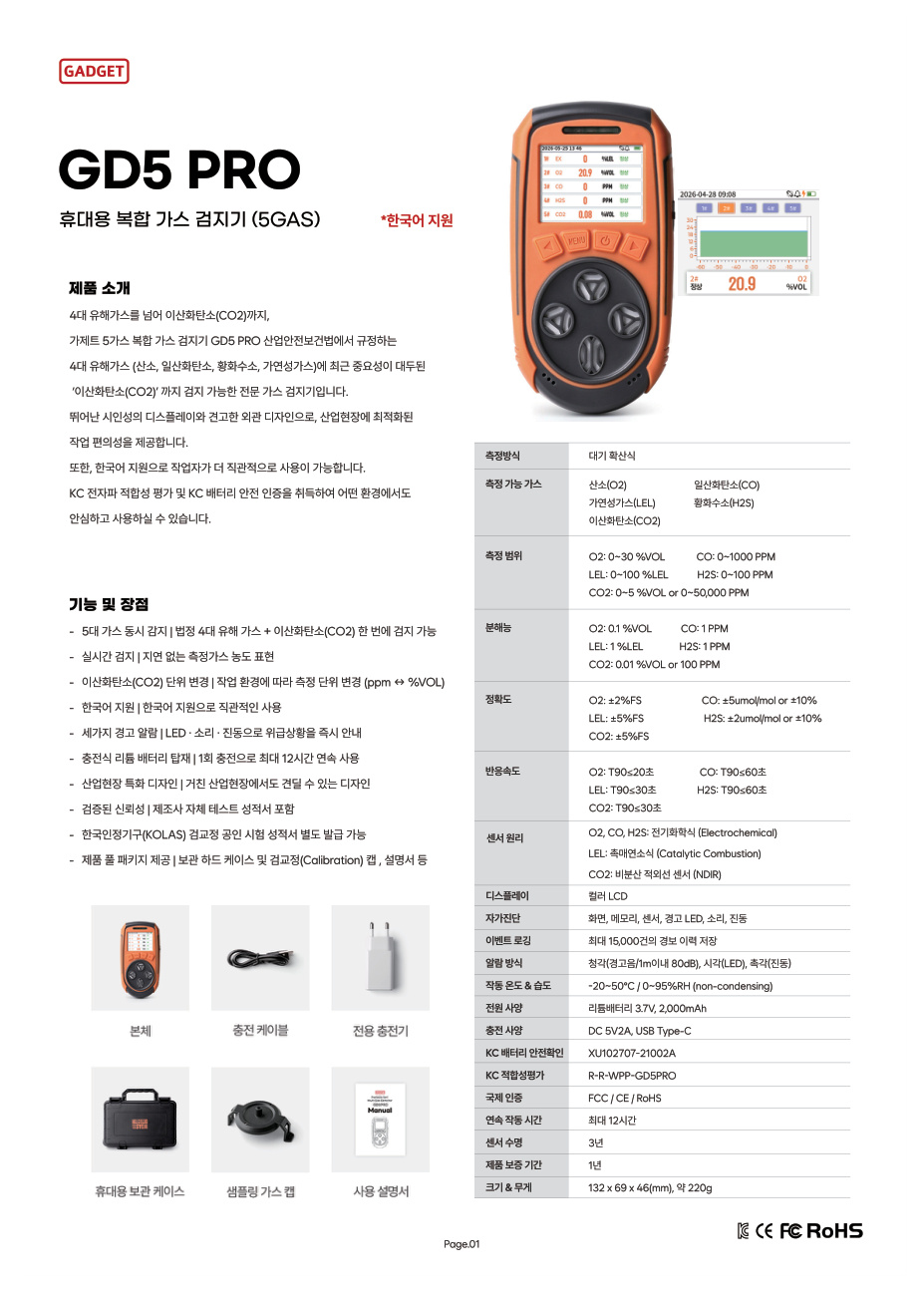
If you are holding a GD5 PRO while the air you want to check is inside equipment, you may wonder whether you can measure at a distance. The key is not only how many gases can be measured, but how air reaches the sensors. Diffusion and pump sampling use different ways to bring a sample to the sensors.
The approved GD5 PRO materials describe it as an atmospheric diffusion-type instrument. This means you should not assume that the instrument automatically draws in air from a distant location. If remote sampling is needed, check whether a separate configuration with a supported pump and hose is available.
With diffusion, surrounding air must reach the sensors
A diffusion-type instrument measures when the surrounding air naturally reaches the sensor inlet. If you want to know about air inside equipment while keeping the instrument beside the operator, you need a way to carry a sample from that point to the instrument. Even if the instrument has sensors for several gases, it does not measure air at a distant point unless that sample reaches the sensor inlet.
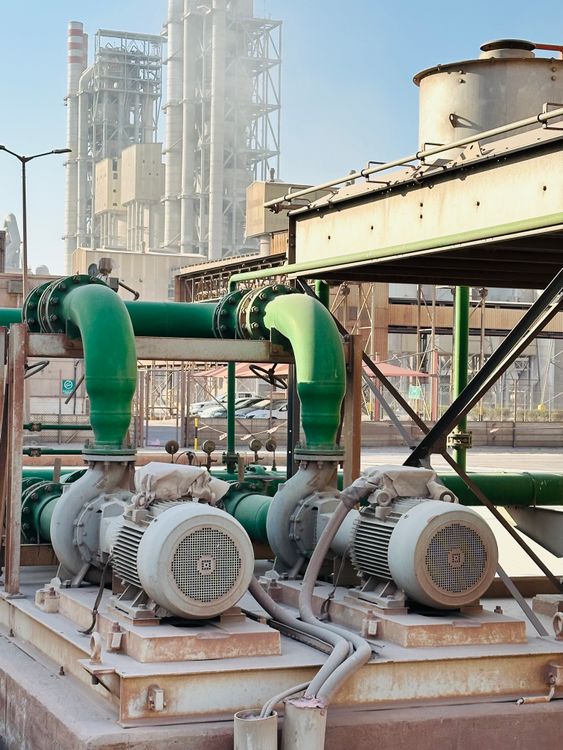
A pump-sampling instrument uses suction to move air from the end of a hose or probe toward the sensors. You can leave the instrument in place and put the sampling inlet at a distant point, but the result is for the air entering through that connected inlet. Unless the hose end is placed at multiple points, the instrument does not report conditions at other locations at the same time.
A cap, probe, hose, and pump each have a different role
A probe helps position the sampling inlet where you need it. A hose provides a path for the sample to travel from there toward the instrument. A cap may be an accessory that connects to an instrument inlet or a specified flow path. The pump is the part that draws in air. The presence of a cap or long hose does not, by itself, give the instrument a pump function.
For remote sampling, the instrument must support a pump-sampling configuration, and the pump and connectors must be suitable for that product. Do not infer that an external pump or a cap or probe from another model is compatible just because the GD5 PRO is described as diffusion type. Do not rely on an improvised modification when an approved connection combination has not been confirmed.
It takes time for air to travel through the hose and reach the sensor
There is a transport time while air passes through the hose and reaches the sensor, followed by the sensor’s own response time. The process can vary with hose length and construction, pump flow, connection condition, and the properties of the target gas. Some gases may adsorb to or react with the hose material, so tube selection can also matter.
That is why a number starting to change on the screen after using a long hose does not necessarily mean it is already a stable concentration at the sampling inlet. Waiting times from another product cannot simply be applied to the GD5 PRO either. Check the manual for the specific model and accessory combination for sampling conditions and how long to wait.
The connection path can affect the sample
The hose and connectors form the path by which surrounding air travels to the sensor. If a connection is loose or a tube is damaged, outside air may mix in, so the sample may differ from the air at the location you intended to check. Some gases may also adsorb to or react with the hose material and affect transport. These effects are not resolved simply by increasing the sampling distance.
For a pump-sampling system, check that the target gas, instrument, and specified hose are a compatible combination. Crowcon’s Gas-Pro materials, for example, specify manufacturer-designated tubing for certain gases, illustrating that line material can matter for a particular model. This recommendation cannot be applied to the GD5 PRO; follow the documentation for the instrument you use. The same tube may also transport different gases differently, so conditions established for one gas should not automatically be applied to another.
The hose material is part of the sample path. Manufacturer technical materials sometimes direct users to specified tubing when sampling gases such as ammonia or hydrogen sulfide that may adsorb to particular tubes. This illustrates that tube materials may not behave the same way with every gas. That guidance is for the Crowcon Gas-Pro and should not be applied to the GD5 PRO; check the accessory information for the relevant model.
A pump does not add measurement channels
A pump moves air; the gases the instrument can measure depend on the sensors installed in the instrument. For example, connecting a sampling pump to an instrument with only an oxygen channel does not create a CO₂ channel. This is why the ability to bring a sample from a distant point and the ability to identify a particular gas must be considered separately. Do not assume additional sensors or accessory compatibility beyond the publicly documented GD5 PRO configuration; confirm them in the model-specific materials.
Whether the GD5 PRO can check air at the point you need depends on its diffusion method and any supported sampling configuration. Tell AI Safety Korea Co., Ltd. which model you use and where you need to sample, and we can discuss whether a suitable product configuration is available.
Ask about a GD5 PRO remote-sampling setup