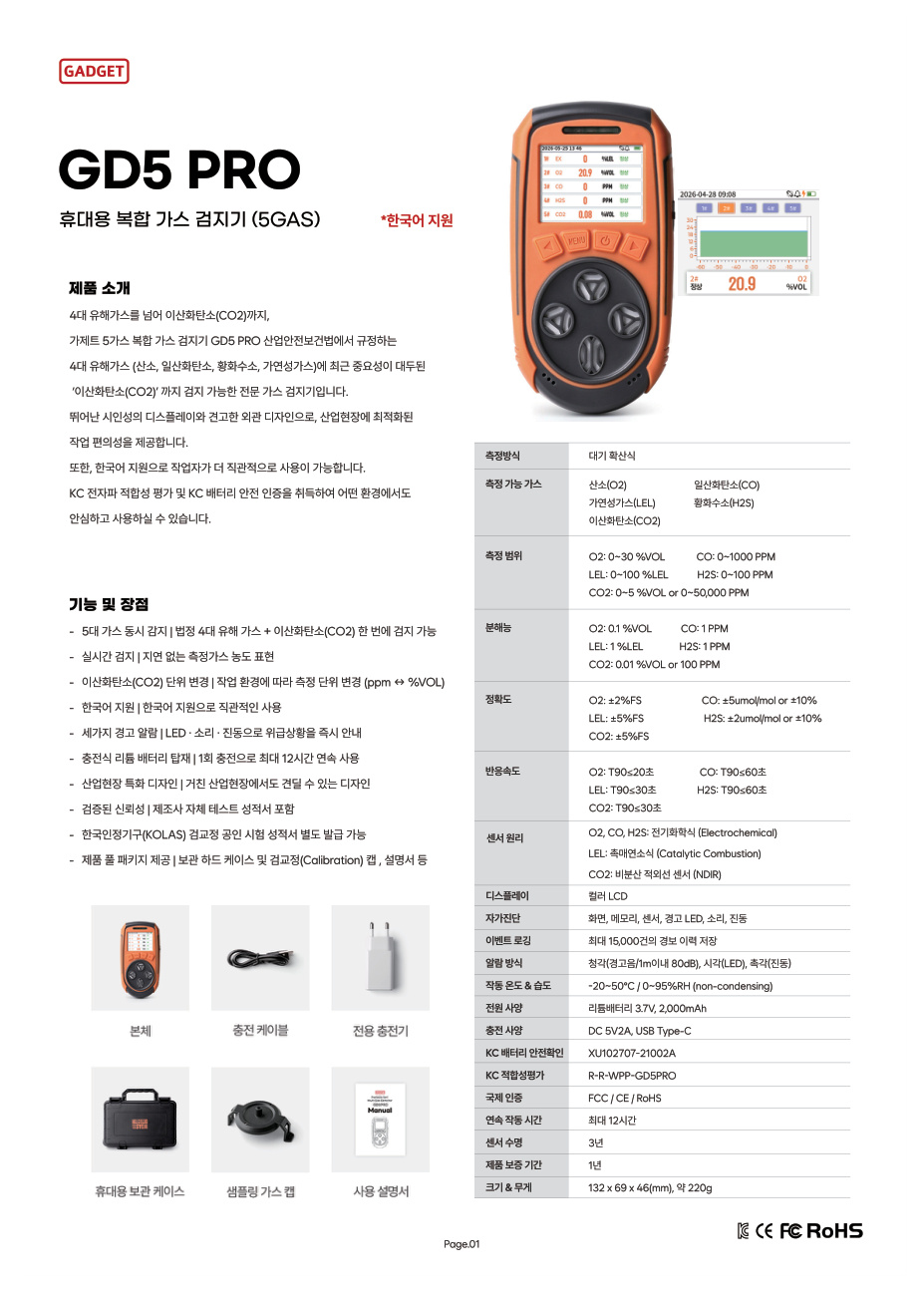
When adding another GD5 PRO, you may wonder whether you can reuse the charger and case you already own. Reusing accessories can simplify a purchase, but not every accessory is compatible just because it belongs to the same product family. Check the charger’s electrical requirements and the case’s physical fit separately.
Check the charger’s electrical requirements before its connector
The fact that a charger physically connects to the instrument does not mean it is electrically suitable. A charger must provide the required power conditions, such as voltage and current, and the manufacturer’s specified combination takes the instrument’s charging circuit and operating environment into account. A matching plug or an illuminated indicator alone does not establish that the setup is suitable for continued use.
Even when an instrument uses a familiar connector such as USB-C, the connector’s shape is separate from whether the charger is approved. Check the supported charger and cable against the user manual or official accessory information. Any restrictions on where charging may take place should also follow the product manual. We cannot recommend a third-party power supply without confirmed GD5 PRO charging ratings and approved accessories.
Even if you have a charger for the same model, check whether it applies to the instrument configuration currently being supplied. Comparing the accessory label with the instrument model matters because supply dates or instrument configurations may differ. A similar name or the fact that two products come from the same manufacturer does not prove that the combination is approved.
Check the case against the instrument and accessories you will store
For a case, consider not only whether the instrument fits but also whether the inside shape matches its exterior and whether any part can shift or be pressed during storage. Even if the instrument fits, a protrusion or button may catch, or there may not be room for other parts you want to store with it. Conversely, too much empty space may let the instrument move during transport. The fact that the case closes does not guarantee a suitable fit.
Physical fit and protective performance are separate questions. A carrying case or pouch surrounding the instrument does not increase its water, dust, or explosion protection. Those properties must be confirmed from the instrument’s certification or product information for an approved combination. Do not assume that fitting a different case changes the conditions under which the instrument may be used.
Why compatibility criteria differ by accessory
For a charger, the key criteria include electrical requirements and contacts. For a case, they include internal dimensions and the way the instrument is held in place. Compatibility of one accessory does not establish compatibility of another. The instrument may fit in a case while the charger is not applicable to the new configuration, or the charger may be suitable while the case cannot hold additional accessories.
If the additional purchase happens at a different time, check whether earlier accessory information still applies to the current instrument. The configuration sheet or part label from the earlier purchase can be compared with the official information for the new instrument. Do not apply older guidance solely because the product name is the same; confirm that the actual combination is permitted.
Similar connectors do not necessarily mean the same power connection
A charging connector shows the physical form of the connection, but it may not tell you the internal contact arrangement or required electrical conditions. Two connectors that look alike cannot be assumed interchangeable if their connections or power requirements differ. That is why the accessory label, manufacturer-designated instrument model, and power conditions should all match. This article does not specify the actual GD5 PRO connector or its ratings.
Checking the power requirements is different from simply seeing whether the battery charged to some degree. Observing that the instrument turns on or displays a charging indicator does not prove that the power combination is manufacturer-approved. The accessory’s model or official designation is important.
Whether a case “fits” also depends on how you will use it
The internal space needed depends on whether you use the case only to store the instrument or also to carry a charging accessory or other consumables. The fact that the instrument fits does not mean the full set of accessories will fit or stay secured during transport. If the case has dividers or retaining features, check that they do not interfere with the instrument’s shape or connectors.
This also matters when planning the number of accessories. Even when a team adds several instruments, whether each needs its own case and charger or whether some arrangement can be shared may depend on supply conditions and how the instruments are used. Do not base purchase quantities on unconfirmed assumptions about simultaneous charging or shared accessories; identify the required items using an approved configuration.
Whether you can reuse your existing GD5 PRO charger and case should be confirmed from the identification on each accessory and the current product configuration. Tell AI Safety Korea Co., Ltd. what accessories you have and what you plan to add, and we can discuss the compatibility that can be confirmed.
Ask about GD5 PRO accessory compatibility