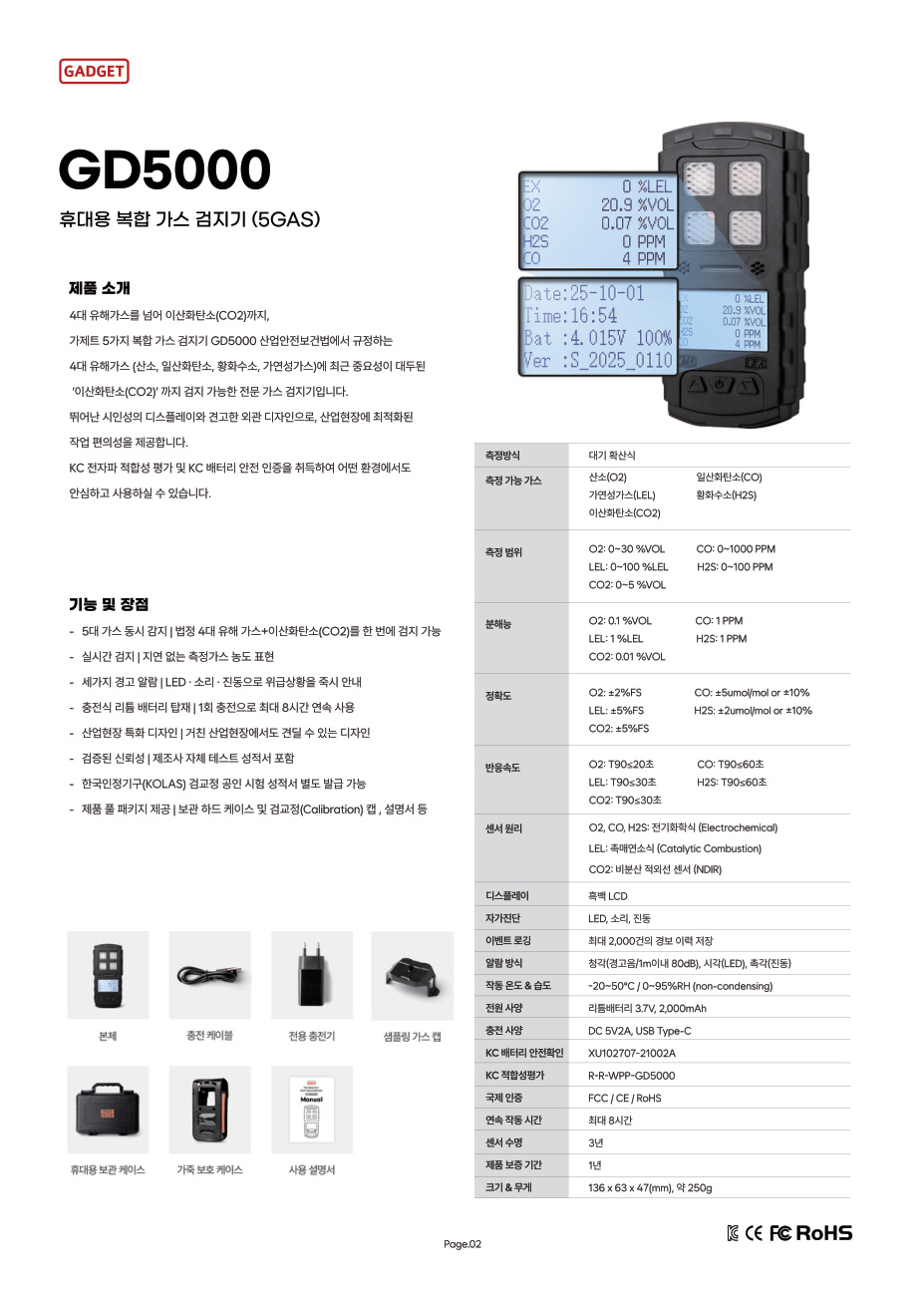
The GD5000 catalog introduces two different cases as separate items. Their shapes look different in the photos, but the word “case” alone does not tell you which item you need. Let’s distinguish their appearance and intended use from performance that cannot be inferred from the name.
How do the storage case and instrument case differ?
The item with a handle is shaped to hold the instrument for storage and transport, while the leather item is presented as an outer case fitted to the instrument’s shape. One is a storage case into which the instrument can be placed and removed; the other is a case used on the instrument itself. In the images, you can distinguish them by whether they have a handle and whether they follow the instrument’s outline.
Imagine Department A needs to carry a GD5000 from storage to a work area, while Department B is looking for a case to put on the instrument. Both might say they “need a case,” but one is a container for placing and removing the instrument and the other is an accessory shaped to fit the instrument. Specifying “the handled storage case” or “the leather case worn on the instrument” helps prevent people from interpreting the same phrase differently.
The name “protective case” does not establish a protection rating
The fact that a leather case surrounds the instrument is separate from whether it withstands particular water, dust, or impact conditions. The catalog name and photo alone do not establish a water or dust ingress rating or a drop-test result. Nor does putting a case on the detector increase the detector’s own certification or protection rating. If you need a particular level of protection in a specific environment, check whether manufacturer test documents or separate specifications are available for that purpose. If no such documentation is confirmed, describe only the case’s form instead of making broader performance claims.
You also cannot assume that a similar-looking case will fit a different model. Buttons, display, sensor inlet, and charging connector may be in different places, so instruments with similar outer shapes may not align with the case. Use the catalog label for GD5000 to identify the item, and separately check compatibility if you want to use it with another instrument.
Distinguish catalog items from the contents of an actual order
A product catalog shows items introduced alongside the product, but it does not establish which accessories are included by default in an individual order or whether they are currently available separately. Configurations and supply dates may differ, so the relevant quotation and order details are more direct sources when checking what you actually received. Treating a catalog image as the contents list for a current order could cause you to miss an option selected at the time or an item purchased separately.
For example, even if a previous order included both the storage case and leather case, you cannot assume the same configuration will be included in the next order. It is better to check separately whether the item is listed in the order documents and whether the delivered goods match. If you are not sure which item you need, provide the instrument model and describe the case form you are looking for. Saying whether you mean a storage item or a case fitted to the instrument is clearer than simply asking for “a set.”
Consider accessory cases alongside instrument use conditions
What you need to check depends on whether the case is for holding the instrument during storage or is an outer case that stays on the instrument during use. If it is fitted to the instrument, the actual use matters: whether it covers the display, controls, or the part through which the sensor receives air, and whether it must be removed during charging. Confirm in the model-specific guidance whether the instrument is designed to operate with the accessory installed. Even if the exterior seems to fit, covering the sensor inlet or controls could affect usability and measurement conditions.
When choosing a storage case, consider whether it needs space for items stored with the instrument as well as for the instrument itself. By contrast, do not assume that a fitted case for the instrument is designed to hold nearby cables or manuals. The catalog photos help distinguish the two forms; they are not design drawings that establish internal dimensions or storage capacity. Separating the need for carrying space from the need for an outer case fitted to the instrument helps clarify each item’s role.
If the instrument receives surrounding air through a sensor inlet, it also matters whether an outer case fitted to the instrument covers that inlet or air path. If air does not exchange freely at the inlet, the conditions under which the sensor receives the surrounding sample may change. Check whether the display and controls remain accessible too, but confirm in GD5000-specific guidance whether use with the case installed is allowed. A device inside a storage bag during transport and one with an outer case fitted while in use are not under the same conditions.
Tell AI Safety Korea Co., Ltd. the GD5000 model and which case form you are looking for, and we can confirm the catalog item name and current availability.
Ask about the GD5000 case you need