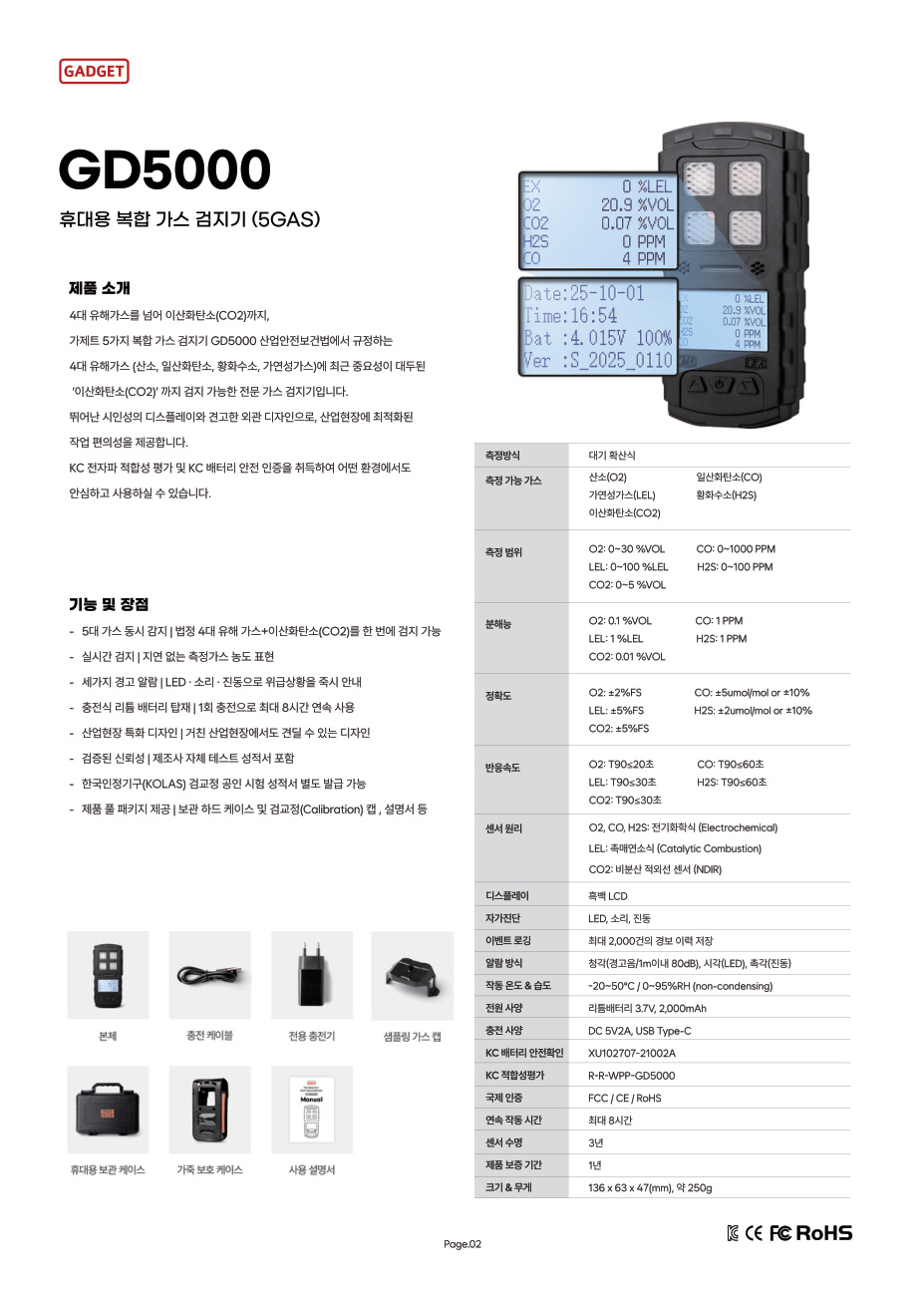
The GD5000 may look small in a photo, and you may wonder how much space it actually takes up. Its apparent size on screen changes with camera distance and image scaling. The approved catalog lists the GD5000 body dimensions as 136 × 63 × 47 mm and its weight as approximately 250 g. Here is how to relate those figures to actual carrying conditions.
Compare the three dimensions in the same order and units
136 × 63 × 47 mm are the instrument’s three dimensions. Converted from millimeters to centimeters, they are 13.6 × 6.3 × 4.7 cm. Follow the order used in the source for which dimension is width, height, or thickness so that you compare like directions. If you copy the numbers but change the axis order, your conclusion about whether it fits in a pouch or storage space may change.
For example, if the internal length of a storage space is 14 cm, you can convert 136 mm to 13.6 cm and check the available clearance along that direction. But this comparison alone cannot establish that the entire instrument will fit. The width and thickness must also fit, and you should separately allow for space taken up by the storage structure and for the clearance needed to insert and remove the instrument. This example shows how to align length units; it does not identify a particular case for the GD5000. The order of the three dimensions is also part of the comparison. One specification sheet may list length, width, and height, while another lists width, height, and depth. Comparing the first number in each list without checking the labels can mean comparing different axes. Recording the internal dimensions in the same order makes it easier to assess how the instrument might fit.
Volume calculated from the outer dimensions is not the instrument’s actual volume
Multiplying the three dimensions gives the space occupied by a rectangular bounding box around 136 × 63 × 47 mm. This is the size of a box enclosing the outer corners; it is not the actual material volume or internal space of the instrument. If the body has curved surfaces or gaps, its actual shape differs from that rectangular box. Use a volume calculated from dimensions only as a conceptual reference for rough storage-space comparisons. A simple calculation for the GD5000’s bounding box gives about 402,696 mm³, or approximately 0.40 L. This is the space for an assumed rectangular solid filled out to its corners; it is not the amount of plastic in the body or its internal volume. Do not copy it into a catalog as though it were the product’s actual volume.
The dimensions of the instrument body and those of the shipping package are also different. The outer package may be larger because it includes cushioning, cables, a manual, or other items. The GD5000 catalog dimensions describe the body exterior; they do not give the shipping box dimensions or parcel volume. If you are planning space in a transport vehicle or on a storage shelf, check the package dimensions separately.
Approximately 250 g alone cannot determine wearing comfort
The approximately 250 g listed in the catalog is the weight of the instrument body. It should not be treated as the weight of a complete set including items such as a case or charger. The weight information needed when wearing one instrument differs from what is needed when carrying several instruments in a bag. When comparing weights, align the basis: body only on both sides, or all included components on both sides.
Weight summarizes an object’s mass, but it does not directly describe the rotational load it places on the body. As a general principle of physics, the leverage effect of an object of the same weight can change depending on how far it is from its support point. This explanation is not a product specification for the GD5000’s center of gravity or mounting position. Check the approved accessories and product information for actual mounting methods; a photo or body weight alone cannot establish which position will feel more comfortable. In general mechanics, changing the distance between the center of gravity and support point can change the rotational effect pulling on the body. That is one reason an instrument attached to a bag and one secured close to the waist may feel different as they move. However, the GD5000’s center of gravity and recommended mounting point cannot be calculated from the published body weight alone.
Use a product photo to understand the body’s exterior shape, dimensions to compare storage spaces, and weights based on the same included items to assess carrying loads. If you want to know whether the published GD5000 dimensions and weight apply to your storage or transport conditions, tell AI Safety Korea Co., Ltd. your use and configuration needs. We can distinguish the confirmed body specifications from package and accessory details that need separate confirmation. For example, ask for the body’s three dimensions when checking a storage shelf, and the package exterior when estimating parcel space. Keeping numbers for different purposes separate helps prevent body specifications from being mistaken for package dimensions.
Ask about GD5000 carrying conditions