If the GD9000 includes a sampling cap, can you connect a hose and measure CO₂ at a distant location? A cap may connect to the instrument inlet, but it has a different role from a pump that draws in air. Following the sample path makes the difference clear.
The sample must travel from the inlet to the sensor
In a pumped configuration, air enters through the sampling inlet, travels through a hose and connections, passes through the pump, and reaches the sensor. The pump moves the sample; the sensor measures the gas in the air that arrives. A cap may cover an inlet or help with a connection, but it does not itself create a pressure difference that moves air. So you must separately confirm that a hose can fit the cap and that the instrument is designed to draw in and measure that sample.
When checking air directly in front of the instrument body, surrounding air simply needs to reach the sensor. To check air in a location that a person cannot easily approach, the system may require both a sample path running from that location to the instrument and a device to move the air. This example explains the concept of remote sampling; it does not mean the GD9000 supports that configuration.
What the public GD9000 materials establish
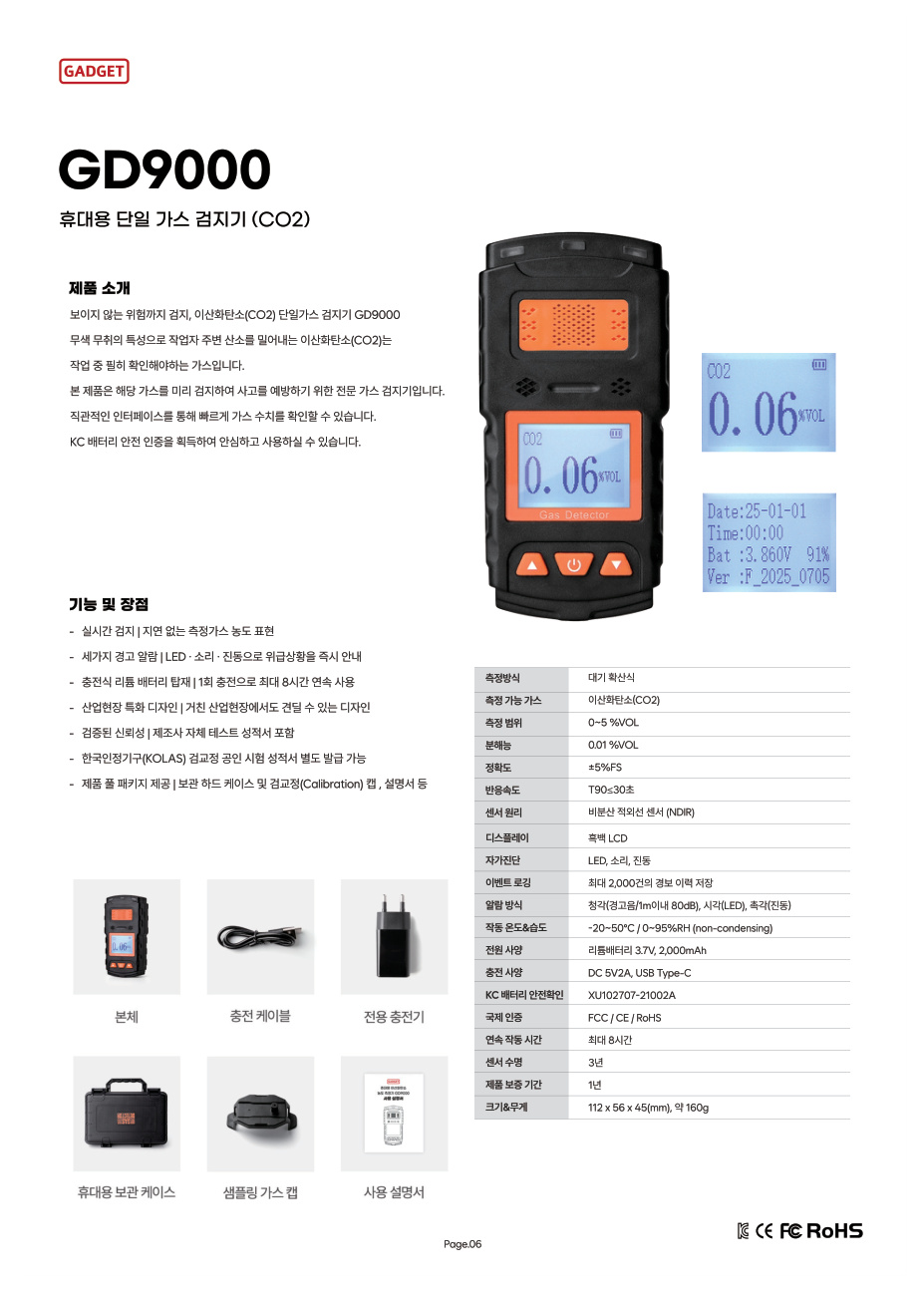
The GD9000 catalog describes the model as an atmospheric diffusion CO₂ instrument and shows a sampling gas cap among its components. Diffusion is the principle by which surrounding air reaches the sensor. The public materials do not confirm the cap’s specific purpose or a pump-and-hose connection method, so they do not establish that the instrument has a built-in pump or can draw remotely through a hose attached to the cap. It would also be inappropriate to assign the cap another purpose without supporting materials.
An accessory’s name does not explain every role it may have in the air path. Even if the cap shape fits an inlet, that does not prove pump compatibility, sample flow, or measurement time. The instrument’s target is also listed as CO₂; attaching an external accessory does not make it detect a different gas.
A new sample arrives only after the air in the hose changes
A hose in a pumped instrument may contain air from the previous sampling point. When the hose end is moved to a new location, new sample air enters and displaces the air already in the hose before reaching the sensor. The moment the air at the hose end changes is therefore not necessarily the moment the display begins to show the new sample. Hose length and internal volume, pump flow, connection condition, and sensor response time all affect transport and display.
As a hypothetical illustration, suppose the sampling inlet is moved from point A to point B. If the screen value does not change immediately, that does not establish that there is no target gas at B; air from the previous point may still be in the path. Calculating an actual waiting time requires the flow and hose specifications for that instrument, so you cannot transfer the timing from equipment made by another manufacturer. This example describes sample transport in general and does not state a GD9000 flow rate or waiting time.
Mixing at a connection can change how representative a sample is
If outside air mixes into the sample as it passes through the hose and connections to the sensor, the sample that arrives may differ from the air at the original location. As a hypothetical example, suppose there is a gap in the hose intended to bring air from point B. Even with the pump running, air from outside the sampling inlet could enter as well, so the sensor reading cannot be assumed to represent only the sample from point B. This illustrates how the sample path affects the meaning of a measurement; it does not describe the GD9000’s connection design.
For this reason, a pumped configuration requires more than confirming that a pump is present. Check that approved connectors and hoses fit tightly and that the material is appropriate for the target gas. Even if a pump indicator is on, follow the product-specific instructions to establish whether the intended sample is moving through the correct path. In particular, do not assume that adding a suction accessory from another instrument to the diffusion-type GD9000 creates the same airflow.
The volume inside a hose depends on its length and inner diameter. Under the same flow conditions, a longer hose can contain more air, so more air may need to move before a sample from a new point displaces what was already in the line. Distance alone is therefore not enough to calculate response time; flow and hose specifications are also needed. This is a general principle of pumped sample delivery, not a statement of the GD9000’s permitted hose length or exact waiting time.
Hose material matters too. Some gases may adsorb onto the tubing surface or react with its material, so a physical connection does not mean every hose is suitable for every gas. A loose connection or blocked path can also prevent the intended sample from being delivered completely. Public materials do not confirm an approved pump, hose, and cap combination for the GD9000. Tell AI Safety Korea Co., Ltd. the target gas and sampling location and ask about the supported configuration.
Ask About GD9000 Remote Sampling