
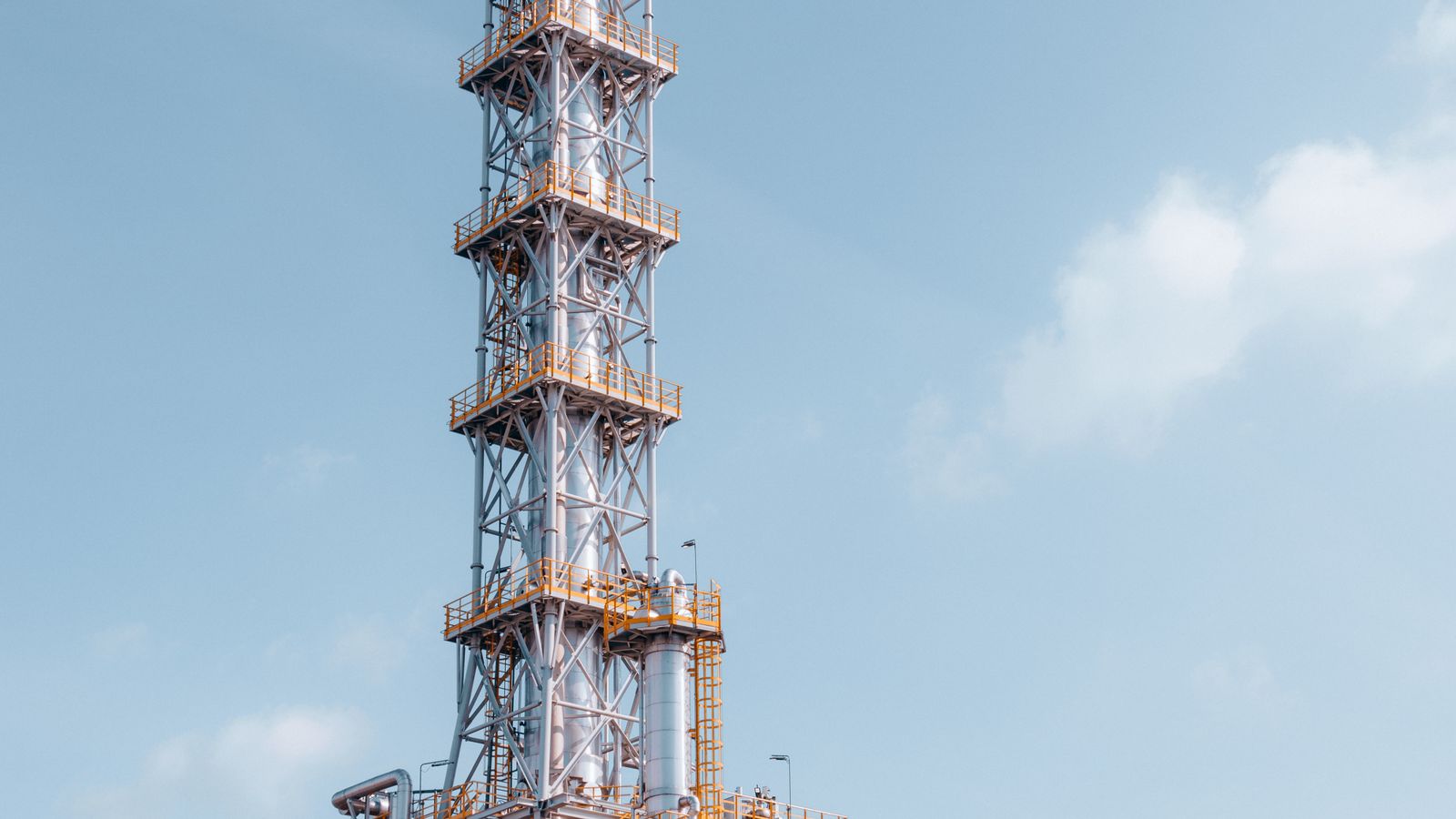
The expansion of the hydrogen economy is an expansion of measurement points
Viewing the hydrogen economy only in terms of equipment counts or supply volumes can obscure the structure of instrumentation demand. After production, hydrogen passes through purification, compression, liquefaction or conversion into another carrier, storage, transport, unloading, refueling, and use in fuel cells or combustion equipment. Between each stage arise boundaries where pressure and flow are transferred, where product quality is verified, and where gas is monitored to ensure that it does not escape. As facilities multiply, demand does not simply grow for one type of sensor in large quantities; multiple measurement layers serving different purposes expand together.
Korea's Hydrogen Economy Promotion and Hydrogen Safety Management Actdefines the hydrogen industry broadly to include production, storage, transport, refueling and sales, as well as fuel cells, hydrogen gas turbines, and related products, parts, materials and equipment. This definition does not guarantee market size, but it shows that the scope of instrumentation is not confined to a single refueling station. Composition analysis in production, leak monitoring during compression and storage, refueling quality control, combustion control at end-use facilities, and portable detection during maintenance are all connected within one value chain.
The question that the hydrogen-economy transition poses to the instrumentation industry, therefore, is not, 'How many hydrogen sensors will be sold?' The central questions are what must be measured in each process, which protective action or quality decision the resulting value triggers, and who will verify performance and how. Actual orders cannot be inferred from policy targets or project announcements alone. Instrumentation demand becomes a specification only when the final investment decision, permitting, equipment configuration, risk assessment and operating approach take concrete form.
Hydrogen properties require dedicated detection design
Hydrogen is colorless and odorless, making it difficult for people to perceive with their senses. Because it is lighter than air, it may disperse quickly in open areas, but it can accumulate locally where it has no escape path—for example, beneath indoor ceilings, between beams and roofs, under canopies, or in the upper spaces of pipe trenches. The U.S. Department of Energy's hydrogen safety guidanceexplains that adequate ventilation and leak detection are important because hydrogen has a wide flammable-concentration range and low ignition energy, and that dedicated flame detection is needed because its flame is nearly invisible.
These properties cannot be reduced to a single rule that 'because the gas is light, sensors must always be installed on the ceiling.' The actual concentration field depends on the size and direction of the leak opening, pressure, jet momentum, obstacles, natural and mechanical ventilation, and indoor temperature. A risk assessment should identify locations close to potential leak sources for early detection, locations where gas may stagnate, and locations representative of the ventilation exhaust flow. NFPA's NFPA 2 Hydrogen Technologies Code, 2026 editionaddresses hydrogen detection systems in a dedicated annex and should be applied only after confirming the edition and whether it has been adopted by the relevant jurisdiction.
Material integrity is also linked to instrumentation. Hydrogen can affect the mechanical properties of some metals and can readily pass through small leak paths in high-pressure equipment. For that reason, fixed concentration sensors should not be expected to detect every abnormal condition. Pressure-decay tests, leak-tightness tests using helium or another suitable tracer gas, acoustic monitoring and flow-imbalance monitoring, portable detection at valves and flanges, and material inspection data should be combined. The design should allow one method to compensate for the weaknesses of another.
Leak detection combines sensor performance with placement
Specifications for a fixed hydrogen detector should include, at a minimum, measurement range, accuracy, response time, repeatability, long-term drift, the effects of temperature, humidity and pressure, selectivity, susceptibility to poisoning, alarm outputs and fault diagnostics. ISO 26142:2010treats accuracy, response time, stability, measurement range, selectivity and poisoning, among other characteristics of stationary hydrogen detection apparatus, as subjects of product-performance evaluation and testing. The scope matters: this standard addresses detector product performance and does not substitute for the overall safety system or installation design. Purchasing a certified sensor alone does not make its placement and integration appropriate.
The sensing principle must also suit the operating environment. For catalytic combustion sensors, oxygen dependence and catalyst poisoning must be examined under the relevant conditions; semiconductor, thermal-conductivity, electrochemical and optical sensors each differ in selectivity, zero stability, susceptibility to temperature and humidity, and detection range. An infrared LEL sensor intended for hydrocarbons should not be assumed to detect hydrogen automatically. Because hydrogen does not absorb infrared radiation like common hydrocarbons, the equipment’s actual target gas and approved calibration conditions must be confirmed.
The U.S. National Renewable Energy Laboratory's Hydrogen Safety Sensor Testing Protocolshows that leaks and cleanliness in the test apparatus itself, system response time, and calibration must first be checked before the measured sensor response can be interpreted. The same applies in the field. Sampling tubing adds gas transport time, while dust, condensation and clogged filters slow the response. Installation verification should distinguish between a functional test that applies test gas directly to the sensor head and an end-to-end test that releases gas at a representative leak point and measures the time required for actual detection, alarm and shutdown.
Flame detection is a different protective layer from gas detection
A hydrogen flame may be difficult to see in bright daylight, and its smoke and radiative characteristics differ from those of a hydrocarbon fire. A leak detector warns that a flammable mixture is forming before ignition, whereas a flame detector confirms that combustion has already begun. Neither replaces the other. Once a flame forms, combustion may cause the concentration around the leak point to read low, so gas concentration alone must not be used to conclude that no fire exists.
When selecting a flame detector, verify its response wavelengths for hydrogen flames, field of view, detection distance, obstructions, immunity to false alarms from sunlight, welding and hot surfaces, and response time. Indoor facilities, outdoor refueling stations and turbine enclosures have different background radiation and line-of-sight conditions. Do not stop at the field of view shown on drawings; verify the actual detection coverage using a test source and procedure approved by the manufacturer. Even when gas and flame alarms enter the same control panel, their indication, priority, and shutdown, ventilation and fire-service notification logic should be configured for the corresponding stage of the incident.
Treat ventilation as a concentration-control function, not merely airflow volume
Ventilation does not eliminate a leak; it is a protective layer that reduces the likelihood that leaked hydrogen will accumulate to a hazardous concentration. A single design airflow value is not enough to describe performance. The leak rate, room volume, makeup-air path, exhaust intake location, ceiling geometry, fan-start delay and failure conditions must be reviewed together. For natural ventilation, confirm that openings will not in practice be obstructed; for mechanical ventilation, verify that fans and dampers respond to commands and that actual airflow is established.
A critical instrumentation need arises between the concentration sensor and the fan. The detector can issue staged alarms, while the control system can shut off the hydrogen supply, stop equipment, activate emergency ventilation, turn on warning lights and send remote notifications. At the same time, feedback from a differential-pressure switch or flowmeter should confirm that ventilation succeeded. An energized fan run contact alone does not prove that airflow has been established. Verification should also cover whether detection, shutdown and alarms remain available for the required duration during a power loss, and whether ventilation exhaust can recirculate into an intake or toward an ignition source.
Do not copy a universal alarm setpoint found on the internet. Consider the applicable regulations and adopted standards, process risk assessment, detector uncertainty and response delay, ventilation performance, and the time required to shut down. Lowering the alarm value can increase the margin for early response, but drift and interfering gases may produce frequent false alarms. Conversely, simply raising the threshold to reduce false alarms can forfeit the necessary response time. Document not only alarm concentrations but also principles for handling rate of rise, concurrence among multiple sensors, sensor failure and loss of communications.
Purity and process monitoring serve a different purpose from safety detection
Instrumentation at hydrogen production facilities goes beyond leak alarms. In water electrolysis, it monitors water quality, voltage and current, stack temperature and pressure, hydrogen and oxygen flow rates, gas crossover, and moisture and impurities after drying and purification. In reforming processes, important measurements include the feed-to-steam ratio, reactor temperature, process composition such as carbon monoxide, carbon dioxide and methane, and pressure-swing adsorption purification performance. The DOE's explanation of hydrogen production by electrolysisnotes that PEM, alkaline and solid oxide electrolysis use different electrolytes and operating temperatures. This is why analyzer and sample-conditioning specifications vary even though each application is described as 'hydrogen production.'
Product-purity measurement is directly linked to fuel-cell performance and service life. ISO 14687:2025addresses the quality characteristics of hydrogen supplied to road-vehicle and stationary PEM fuel cells, among other applications, while ISO 19880-8:2024specifies protocols for assuring the quality of hydrogen for road-vehicle PEM fuel cells at distribution facilities and refueling stations. This means that a safety-oriented %LEL sensor and trace-impurity analysis are entirely different measurement problems.
It is difficult to measure every impurity continuously in the field with a single online analyzer. NREL research on hydrogen contaminant detection likewise explains that specialized laboratory analysis is needed to identify the many low-level impurities required by standards, while field devices may focus on selected indicators that can prevent process upsets. A quality-control plan should therefore combine supplier qualification, periodic sampling and laboratory analysis, online monitoring of process-critical indicators, and shipment holds when abnormalities occur. Sample cylinders, sampling points, purging, transport and storage are also part of the result.
Certification and traceability create demand for instruments of record
Measurements can serve both as data for safe operation and as evidence supporting quality and environmental claims. Korea’s Notice on the Operation of the Clean Hydrogen Certification Systemestablishes operating procedures for facility verification, certification and inspection. The current Hydrogen Act and its Enforcement Decree allow certification criteria to include direct and indirect greenhouse gas emissions from raw-material extraction through production, import, and domestic and international transport. This system does not guarantee certification or support for any particular project. Businesses applying for certification must, however, consistently manage the basis for their energy and raw-material use, production volumes, transport and emissions calculations.
Here, data lineage is as important as the accuracy of flowmeters, electricity meters, gas-composition analyzers, and temperature and pressure instruments. It must be possible to trace which instrument measured which batch and period, whether its calibration status was valid, and how missing data and manual adjustments were handled. Even if safety-control data and commercial or certification data are used in the same system, the measurement purpose, applicability of legal metrology, verification interval and authority to make changes must remain distinct. 'Data exists' is not the same as 'the data is auditable.'
Permit and inspection requirements for hydrogen products and facilities also affect instrumentation specifications. Equipment intended for use in Korea must be reviewed not only against the Hydrogen Act but also against requirements for high-pressure gas, fire safety, electrical and explosion protection, industrial safety, and the competent authorities. A foreign standards certificate does not automatically establish suitability for installation in Korea, and the reverse is also true. Defining the applicable regulations, standard editions, required certifications, test reports, calibration traceability and document language at the procurement stage can reduce redesign and schedule risks.
The form of instrumentation demand changes across the life cycle
During planning and basic design, the focus is on temporary measurements needed for material balances and risk assessments, input data for leak and ventilation models, and review of analyzer specifications. During detailed design and procurement, detection range, explosion-protection and environmental ratings, functional-safety integration, sampling systems, calibration gases and spare parts, and communication protocols become purchasing specifications. During fabrication and site acceptance, instrument calibration, loop checks, interlock cause-and-effect testing, ventilation performance, and detection-time verification at representative leak points are required.
During operation, continuous data from fixed detectors and process analyzers, portable detection before work, bump tests, zero and span calibration, and inspection of filters, pumps and sample lines become recurring needs. Sensor drift, poisoning, condensation, calibration-gas expiry and communication errors should be trended. When alarms recur, do not raise thresholds arbitrarily; distinguish genuine small leaks and process or ventilation changes from sensor degradation. A maintenance bypass should record the approver, end time and alternative monitoring measures, and should be managed so it does not remain active automatically.
Expansion, fuel changes and software modifications require management of change and revalidation. If the hydrogen co-firing ratio, production pathway, pressure, piping layout, ventilation fan or canopy geometry changes, verify again whether existing sensor locations and alarm logic remain valid. Decommissioning and dismantling also require residual-gas checks, inerting and portable measurements before piping is opened. Instrumentation demand is not a one-time equipment sale at installation; it extends into life-cycle services encompassing calibration, testing, data review, parts replacement and recertification.
Suppliers need an application basis more than a product list
Instrumentation suppliers entering the hydrogen sector should explain their application boundaries instead of offering only the label 'hydrogen-ready.' First distinguish whether the application is safety leak detection, flame confirmation, process control, product-quality analysis or certification data. Then specify the target and interfering gases, pressure, temperature and humidity, required response time, installation area, sample conditions, alarm and shutdown functions, calibration method and traceability, maintenance personnel and spare parts.
Users should not compare total purchase price alone. They should consider the cost of ownership, including sensor replacement intervals, certified calibration gas, on-site calibration time, downtime, sample-line cleaning, data integration and training. For hydrogen purity analysis in particular, success may depend less on the analyzer itself than on a system that obtains a representative sample without contamination and a procedure that connects analysis results to shipment decisions. For a safety detector, successful alarm and shutdown during an actual leak matter more than how long it displays a normal reading.
Ultimately, the new layer of demand created by the hydrogen-economy transition is not a single 'sensor that measures hydrogen.' It is an overlapping structure of layers: one that finds leaks early, one that confirms invisible flames, one that proves ventilation is actually working, one that stabilizes the process and assures product purity, and one that traces data for certification and inspection. The business opportunity depends less on listing as many layers as possible than on the ability to turn a specific facility's risk and quality requirements into a verifiable measurement system.
Sources
Safe Use of Hydrogen — U.S. Department of Energy, accessed 2026-09-09
Hydrogen Safety Sensor Testing Protocol — National Renewable Energy Laboratory, accessed 2026-09-09
NFPA 2: Hydrogen Technologies Code, 2026 edition — National Fire Protection Association, accessed 2026-09-09
ISO/TS 15916:2026 — International Organization for Standardization, accessed 2026-09-09
ISO 26142:2010 — International Organization for Standardization, accessed 2026-09-09
ISO 14687:2025 — International Organization for Standardization, accessed 2026-09-09
ISO 19880-8:2024 — International Organization for Standardization, accessed 2026-09-09
Hydrogen Economy Promotion and Hydrogen Safety Management Act — Korean Law Information Center, accessed 2026-09-09
Notice on the Operation of the Clean Hydrogen Certification System — Korean Law Information Center, accessed 2026-09-09