If you wear a radio and other equipment with your work clothes, a gas detector’s size and weight can affect how it feels to carry throughout the day. What does a smaller model reduce, and what should you check separately about its measurement functions? Using approved GD4 Mini materials as an example, let’s look at portability and sensor configuration separately.
Compare the instrument dimensions with where you will wear it
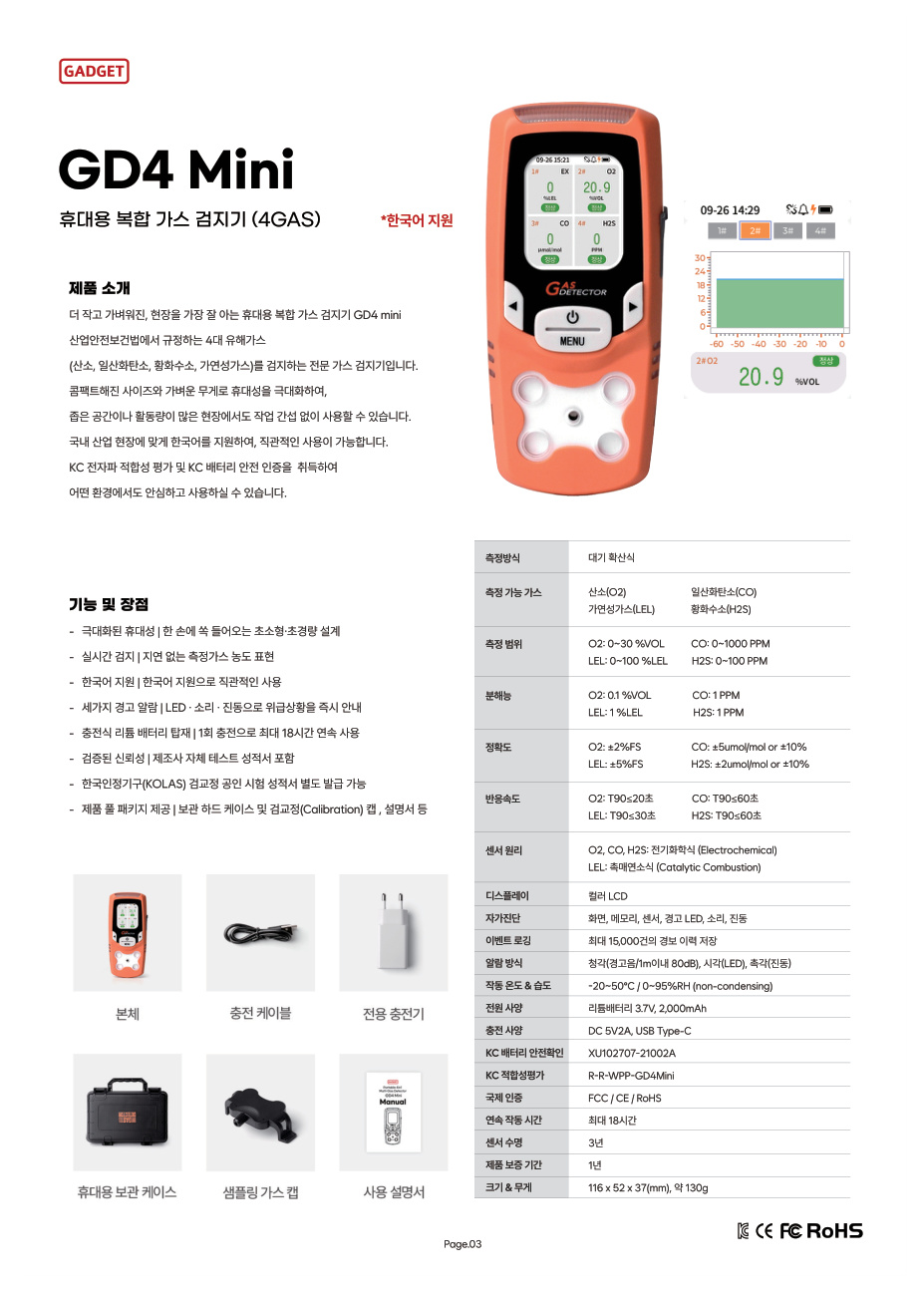
The GD4 Mini catalog lists body dimensions of 116 × 52 × 37 mm and an approximate weight of 130 g. These figures give you a basis for comparing the instrument with the space available, rather than estimating its size from a product photo. You can consider how its width, height, and thickness might fit in a pocket or on a belt. However, the catalog dimensions and weight refer to the instrument body; they do not describe a complete carrying setup that includes a case or other accessories.
Comfort is not determined by weight alone. For example, imagine a worker wearing a radio on the chest and placing the detector nearby. The device’s width and whether it blocks the display may matter. If it is clipped to a belt, the direction the worker must look to read the screen may be different. This is a hypothetical example about the wearer and position. The weight figure alone cannot establish that the device will be comfortable for every worker.
Even at a small size, measurement channels depend on the product
The published GD4 Mini materials and Korean user manual list four channels: EX, H₂S, CO, and O₂. A compact exterior does not tell you what sensors are configured. Check whether the gases you need appear on the list. CO₂ is not listed, so it cannot be measured using the CO sensor. Which gas a sensor measures, its range, and its accuracy are separate product specifications. You cannot infer that a compact device has lower sensor performance, or that it matches another model regardless of size.
The manual describes real-time data and status information on the LCD. The fact that a screen is present is separate from whether it is easy to read. Consider whether the display is visible in the way the user wears the device and whether the required channel names and units can be read. A color display or small body alone cannot establish readability or measurement accuracy.
Standby time and continuous operating time are different
The GD4 Mini manual lists approximately 18 hours as standby time. Do not interpret this as the continuous operating time for a full day of measurement. Standby and actual operation, with the sensor and display active, are different conditions. A convenient size and sufficient operating time are separate questions. Check the latest materials for the model and the conditions of use to determine operating time.
When considering a compact instrument, you can compare the conditions that matter to the user in two steps. First, check whether the actual GD4 Mini channel list and measurement range match the gases you need. Then compare the body dimensions and weight with the intended wearing position and other carried equipment, and check the display from the user’s actual posture. This helps avoid choosing a candidate that lacks a required sensor just because it is light, or judging portability only from a photo when the channels are suitable.
The catalog’s “weight” may also refer to different things in different documents, so it is important to read the approved catalog figure as applying to the instrument body. A case, clip, or other accessory in the purchase configuration may change the total weight carried, but the difference cannot be quantified from the current materials. Also, small size describes the physical body; it does not indicate protection against water, dust, or explosion hazards. Check separate certificates and product materials for those conditions.
Finally, distinguish portability from battery operation. A lightweight body does not mean long continuous operating time. The approximately 18 hours for GD4 Mini is stated as standby time in the manual and is not a guarantee of actual operating time. Size and weight, channels and range, display, and operating time are separate questions, each of which should be checked against the appropriate specification.
The catalog’s actual dimensions are useful when comparing the device with other equipment you carry. Comparing its width, height, and depth with the space available where it will be attached to work clothes can help anticipate physical interference that is difficult to judge from a photo. Remember that these dimensions describe the body alone. The space occupied may change with the accessories in the actual setup, but do not add an assumed amount if the published materials do not provide dimensions for the complete worn configuration. Keep physical fit separate from reviewing sensors and display functions.
Weight should also be considered in light of who carries the device and how. Wearing it in one fixed position throughout the day differs from moving it among several positions. Use the catalog figure as a common basis for comparing products, but not as a direct prediction of an individual’s comfort or fatigue.
Tell AI Safety Korea Co., Ltd. which gases you need, where you plan to wear the instrument, and what other equipment you carry, and we can discuss whether the published GD4 Mini dimensions, weight, and channel configuration fit those conditions.
Ask about GD4 Mini portability and channels