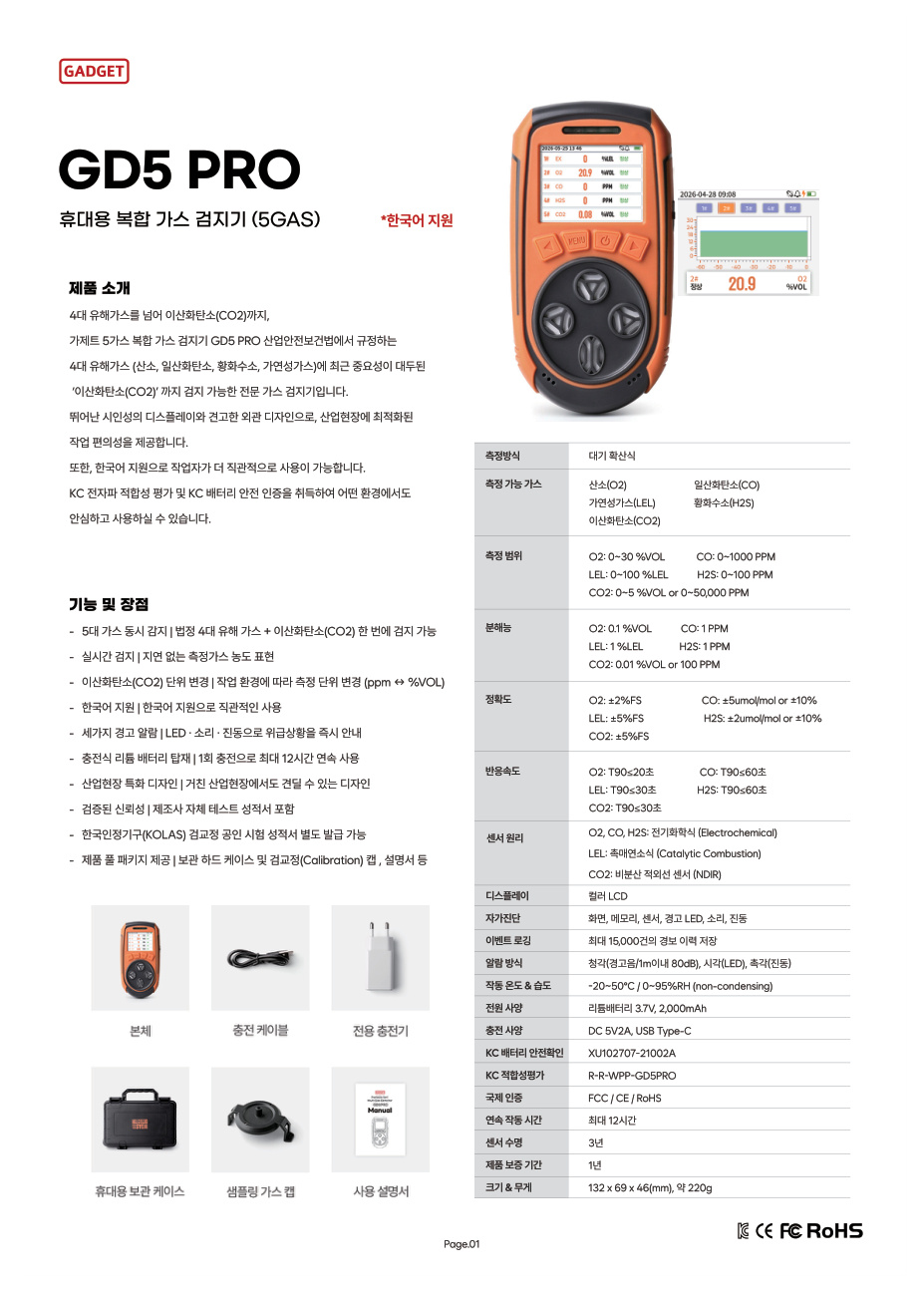
A maintenance team may visit one facility in the morning and another in the afternoon. When preparing to leave, there is something to organize before the equipment: bring each site’s requested gases, operating schedule and documents together on one page.
Collect the answers from each site and separate shared requirements from additional ones. This makes it clearer which detector to purchase and what to take with it. Here is a site questionnaire a mobile maintenance team can prepare before requesting a quotation.
Add one line of requirements beside each scheduled visit
A travel schedule often lists only addresses and appointment times. When considering equipment purchases, add “gases to check during this visit” to each row. Copy the gas names from the customer’s information email or work request and leave any unanswered items as questions.
Even when the task is described as “equipment maintenance,” different sites may request different instruments and documents. Grouping the purpose of the visit, target gases and required documents is more useful in a consultation than a long description of the site. Answers collected beforehand also let the purchasing coordinator and the person making the visit prepare from the same information.

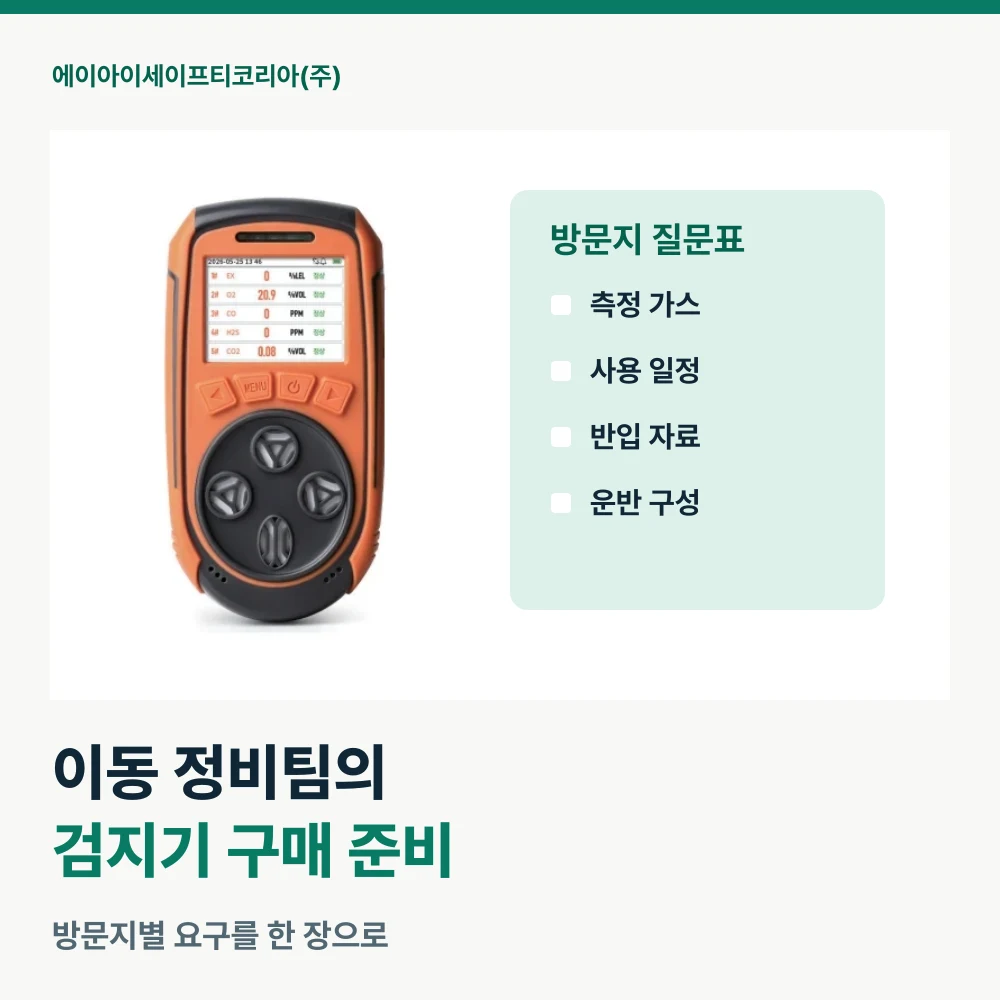
Five fields are enough for your site questions
You do not need a long form to begin. Send the same five questions to each site and place the answers side by side. If several people are involved, recording the response date and responsible department makes follow-up easier.
Question | Answer to collect | What it informs in the purchasing discussion |
|---|---|---|
Which gases will you check? | Gas names and requested items | The product’s target gases |
Where will it be used? | Work area and where the instrument will be placed | The main unit and required configuration |
From when until when will it be used? | Operating period and next visit schedule | Runtime and charging preparations |
Which documents should you bring? | Requested document names and submission timing | Preparation of product documents |
What will be transported together? | Main unit, accessories and document list | The case and items to be issued |
If the only instruction is “bring a gas detector,” start with the first question. A clear gas list makes it easier to review product candidates and leads to more specific questions about location, schedule and documents. Site photographs or a simple layout can also quickly clarify which area is being discussed.
Separate shared requirements from site-specific additions
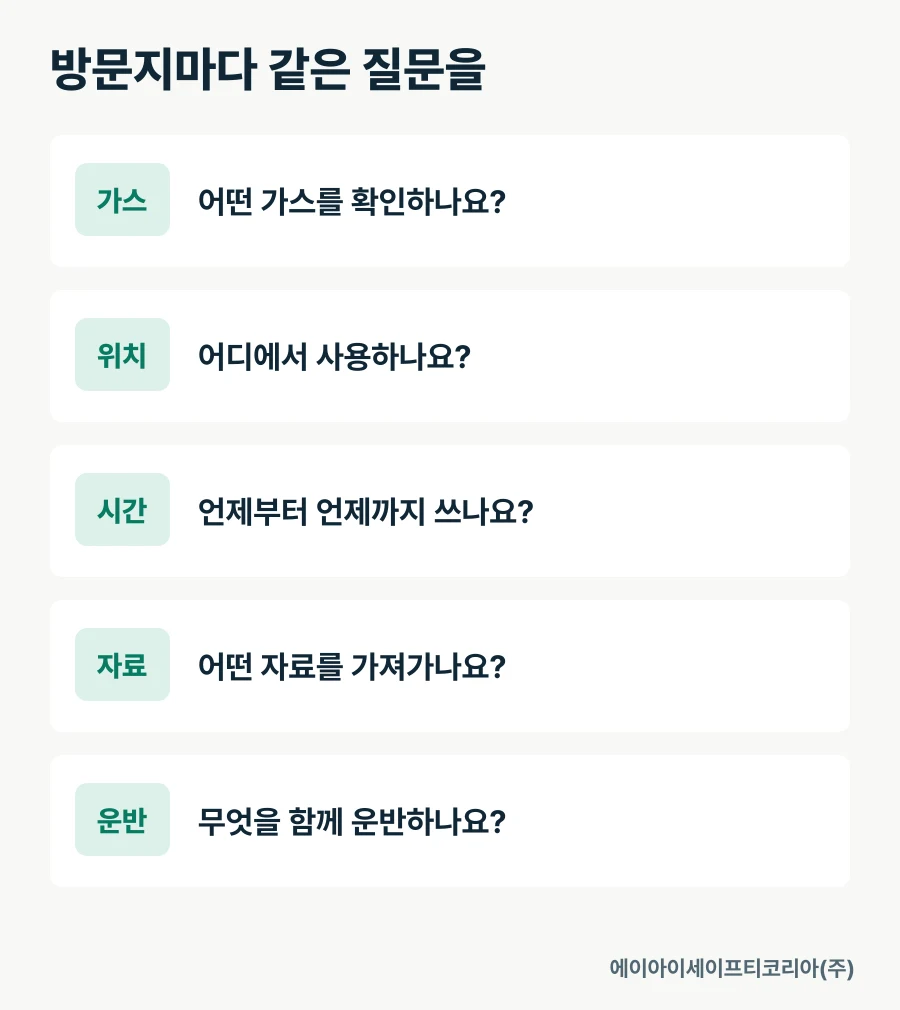
Once the answers are collected, first mark the items repeated at every site. These become the shared conditions the team should present first in its purchasing consultation. Record items requested by only one location separately alongside them.
For example, if sites provide different gas lists, write down the shared gases and additional gases separately. The same applies to documents. Distinguishing a site requesting a product catalog from one requesting unit-specific management records makes the files to prepare clear. Using the actual requested document names also reduces the need to check similarly named materials again.
Tell us whether you would like to standardize on one model or use different configurations for different tasks. Including the purchasing coordinator’s preferred management approach allows the consultation to cover model configurations and document preparation together.
If your work requires five gases, explore the GD5 PRO configuration
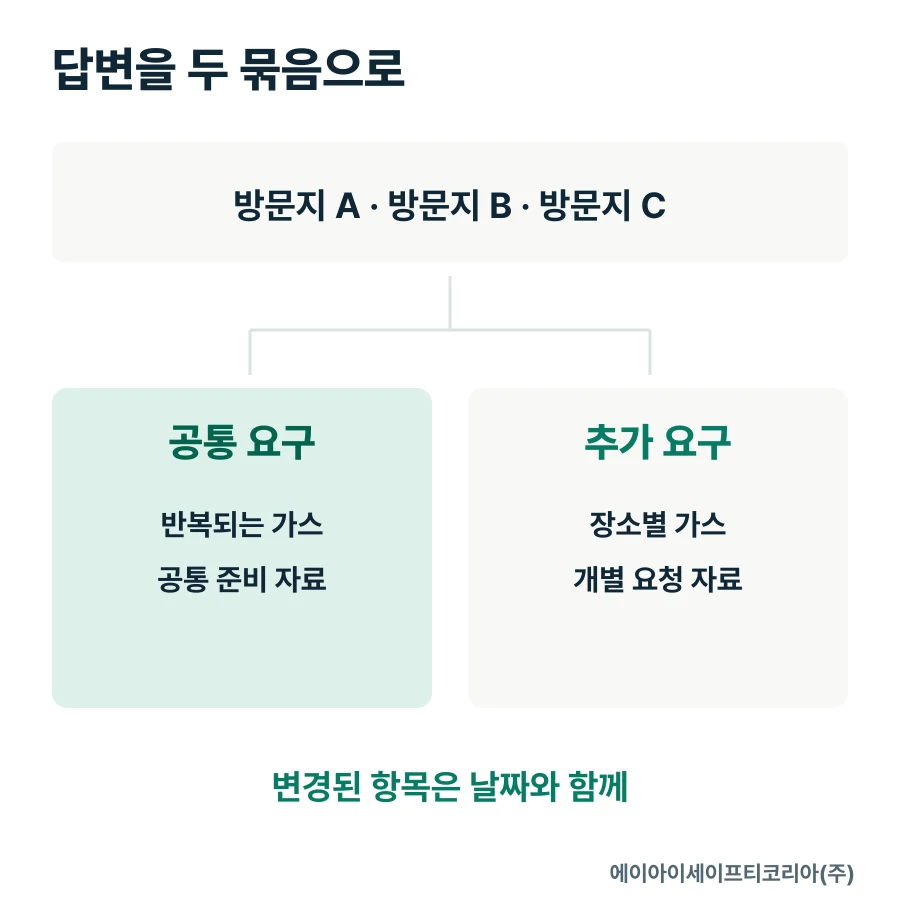
GD5 PRO is a portable multi-gas detector for O₂ (oxygen), CO (carbon monoxide), H₂S (hydrogen sulfide), LEL (combustible gases) and CO₂ (carbon dioxide). If these five items appear in the lists received from your sites, compare the target gases and operating configuration on the product page.
It uses ambient diffusion and provides a color LCD with Korean language support. For a team in which several people receive and use instruments, it is helpful to keep model-specific documents in one place and make them searchable under the same model name as the unit actually issued.
The maximum continuous operating time on one charge is 12 hours. Record the actual period of use and the charging location in the site questionnaire. The catalog introduces a charging cable, dedicated charger, portable storage case and user manual, so you can list the items you need alongside the main unit when requesting a quotation.
Explore GD5 PRO and its catalog
Finish departure preparations with a bundle for each site
Preparing equipment and documents separately can leave you comparing different lists just before departure. Use the site name to bring the unit model, accompanying items and document files into one preparation list. Assigning someone to check the list before closing the case also simplifies handover.
List the sites to visit and their requirements in the same order.
Record the model name and identification details of the unit to be used.
Check the charging items and transport items prepared for that unit.
Record requested document names together with their file locations.
Note the local contact and response date.
Mark the changed row whenever the schedule or gas list changes.
When a new site is added, simply add a row to the existing questionnaire. Instead of writing a long explanation from scratch each time, highlight the changed items. In particular, distinguish schedule-only changes from additions to the target gases so you can quickly find what needs a further consultation.
Prepare equipment around your next visit schedule
Purchasing detectors for a mobile maintenance team becomes more specific as soon as the site requirements are collected. Fill in the five fields—gases, location, time, documents and transport—and separate shared requirements from additional ones. You can then compare product candidates and preparation items using the same criteria.
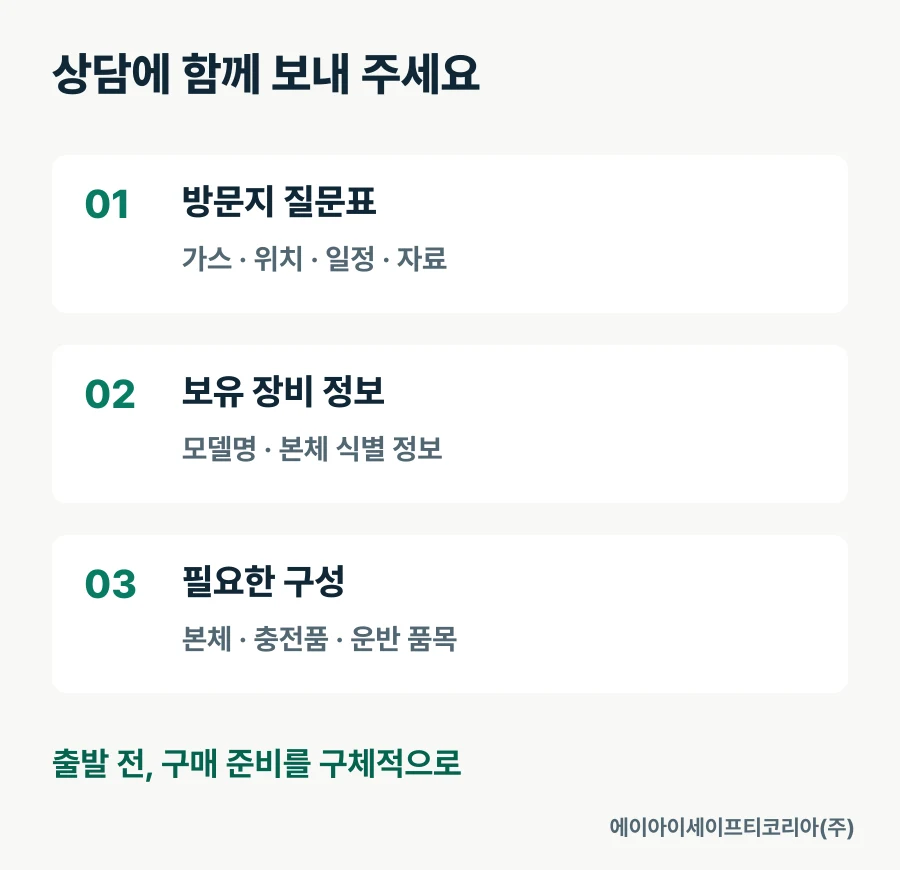
Share your site questionnaire, existing models and newly required configuration with AI Safety Korea Co., Ltd. We will review products and documents together in line with your travel schedule and purchasing plan.
Discuss equipment purchases for your mobile maintenance team