An oxygen detector shows a reading that looks normal. Does that mean carbon monoxide (CO) or carbon dioxide (CO₂) is also at a safe level? No. An oxygen channel reports the oxygen concentration at the sampling point; it does not measure the concentration of another gas. Whether you need a single-gas or multigas instrument depends on which gases you need to monitor.
An oxygen sensor responds to oxygen
A gas sensor converts a change caused by its target gas at the sensing element into a signal displayed as a concentration. A typical electrochemical oxygen sensor measures a current that responds to oxygen. Its reading therefore does not provide separate information about whether CO or CO₂ is present, or at what concentration. It is similar to a thermometer not reporting humidity: both values relate to the condition of the air, but they measure different things.
Oxygen changes and the presence of other gases can occur at the same time, but their relationship cannot be represented by a fixed calculation. Oxygen can change for many reasons. If oxygen has decreased, confirm that with the oxygen reading; measure what other gas is present and at what concentration separately, using a sensor suitable for that gas. Converting an oxygen reading into a CO or CO₂ concentration does not match the measurement principle.
CO and CO₂ cannot substitute for each other either
CO is carbon monoxide, and CO₂ is carbon dioxide. Their chemical formulas may look similar, but they are different gases and are distinguished by different sensors. A CO channel does not measure CO₂, and a CO₂ channel does not report CO. When recording a display, avoid shortening either to “carbon”; record the actual channel name and unit so the two targets are not confused.
Imagine a hypothetical purchase request that says only “check oxygen,” while process documentation also mentions a CO check. An oxygen-only model may meet the oxygen measurement request, but it does not provide a CO channel. Conversely, a request for CO alone does not mean you should assume that CO₂ must also be measured. First confirm the gas names in the requirements.
When choosing channels, after asking “How many gases does it measure?” ask what sensor is used for each channel. Oxygen, CO, CO₂, and hydrogen sulfide all relate to components in air, but they are not interchangeable measurement items. A record showing both O₂ and CO readings requires the instrument to provide the separate measurement results from both sensors. Adding an inferred CO value to a table from an oxygen-only instrument could make an unmeasured number look like an actual observation.
When comparing product information, placing `measured gas`, `sensor option`, `unit`, and `range` in the same row makes differences easier to spot. A catalog may list several selectable sensors, but check which channels are actually included in the quotation or equipment configuration. Recording the exact channel names also helps prevent confusion caused by similar numbers or terms.
Compare single-gas and multigas instruments by their actual channels
A single-gas instrument is configured to measure one gas; a multigas instrument uses multiple sensor channels in one body. A higher channel count does not automatically meet every site requirement. Check that the gases you need are included in the installed configuration and that their ranges and units match the requirements.
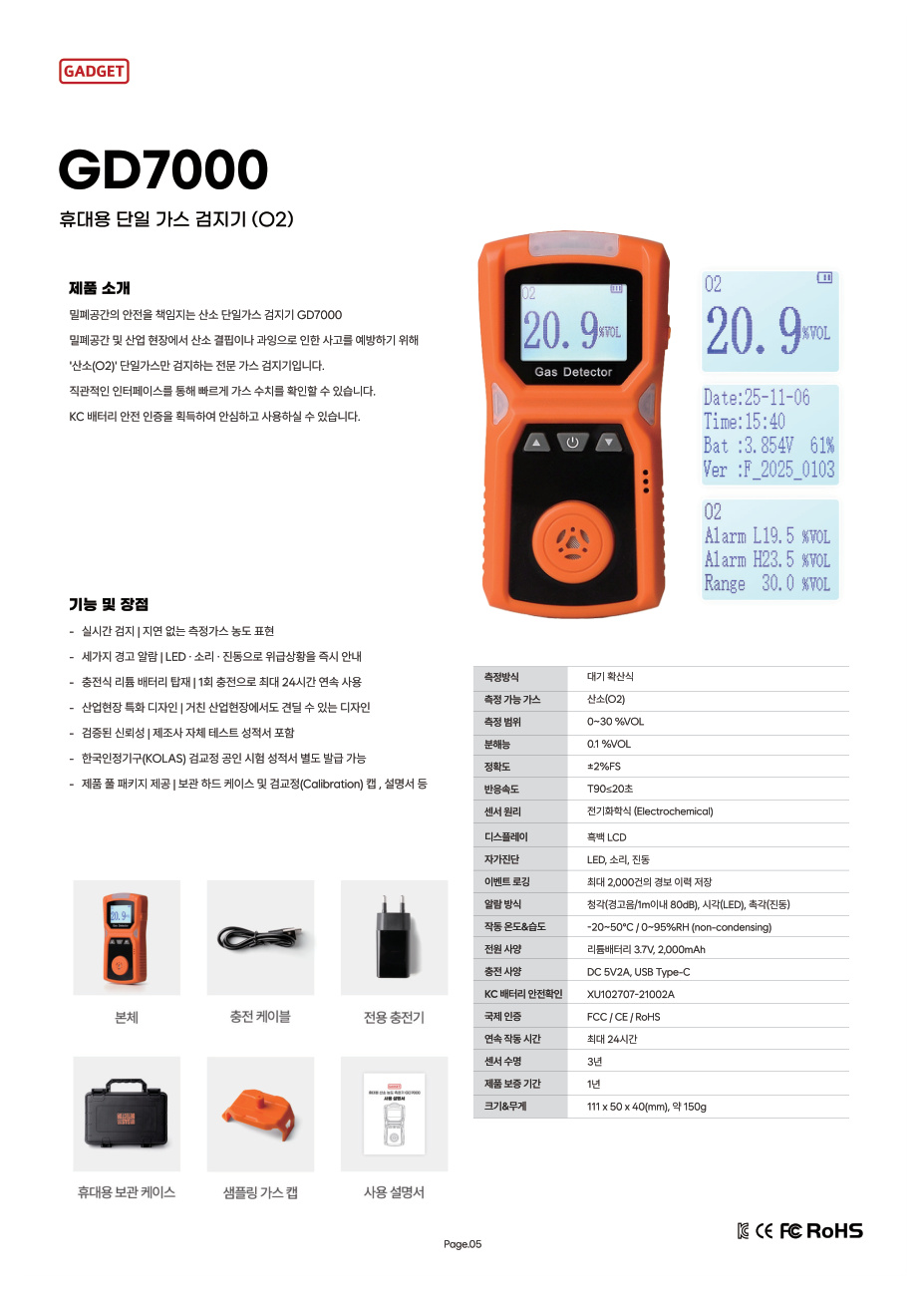
In the approved AI Safety Korea Co., Ltd. catalog, GD7000 is presented as a single-gas oxygen model. That material supports the publicly stated GD7000 configuration; it does not establish the channel configuration of other models or suitability for a particular task. For a multigas model, compare the actual sensor list instead of relying on the product name.
If a request omits the gas name or uses a broad term such as “hazardous gas,” a purchaser cannot choose the sensor by guesswork. Check the substance name and measurement requirement in the work documents, and do not turn an unclear target into a confirmed one. Recording an unmeasured channel as zero can also be confused with a measured result that happened to be zero.
The same principle applies when one instrument body displays several channels at once: each channel provides a separate sensor result. If oxygen and CO appear side by side, read each displayed value and unit separately. A normal status for one channel does not substitute for checking another. This matters when selecting an instrument and when reviewing measurement records.
If you have identified gases to measure in addition to oxygen, compare their names and required ranges with the model of the instrument you have. Once it is clear that one oxygen reading cannot establish the presence or concentration of another gas, the distinction between single-gas and multigas instruments is straightforward. If you have questions about interpreting a request or configuring sensors, tell AI Safety Korea Co., Ltd. the measurement purpose and target list, and ask about publicly documented configurations such as GD7000.
Ask about oxygen and multigas configurations