
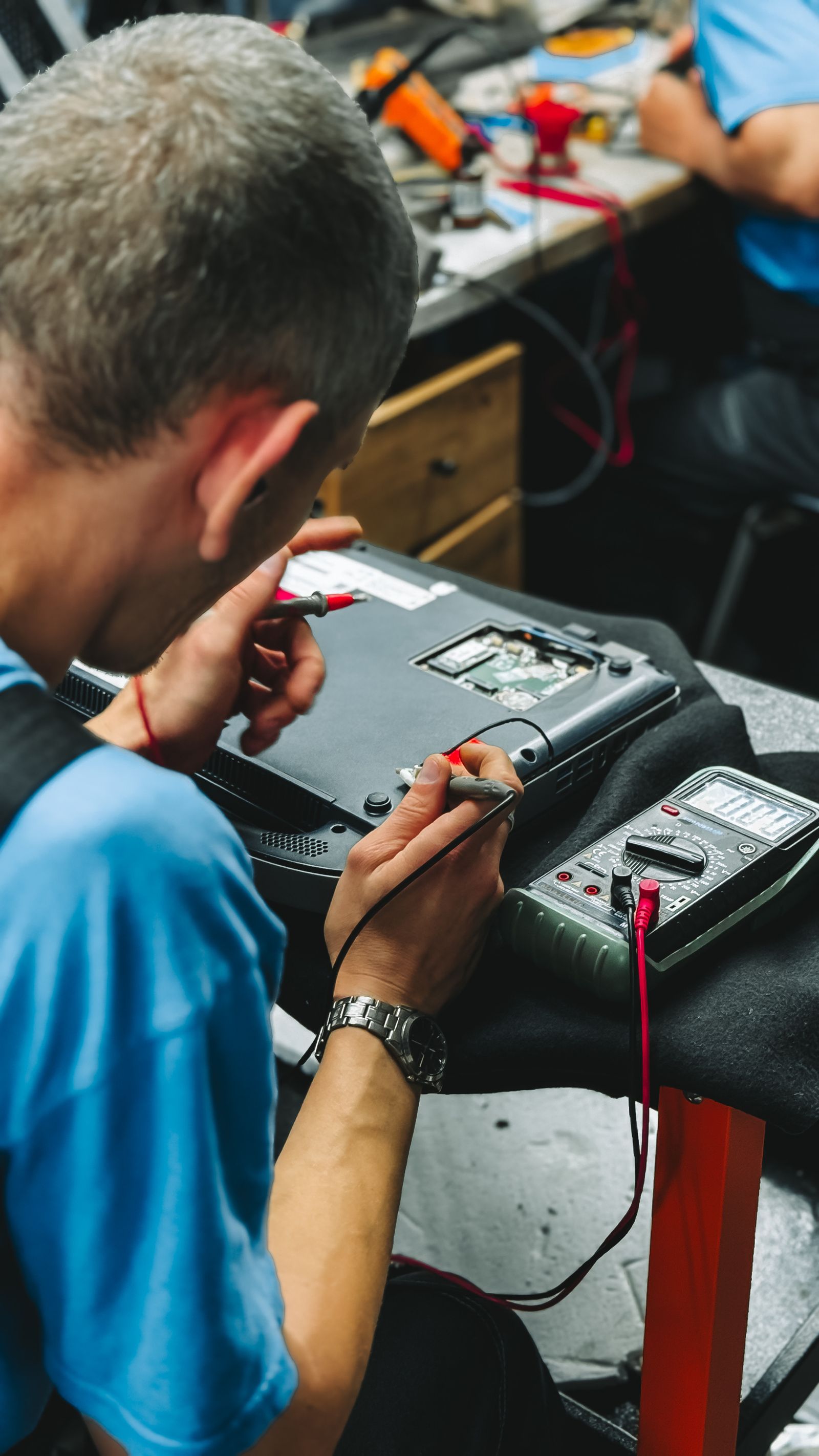
A portable gas detector returns after sensor replacement, but the work record lists only a part name. It says a new sensor was fitted, yet the gas channel, calibration completion and retention of site settings are unclear. Checks remain between replacement completion and permission to use.
Manage portable gas detector sensor replacement as a combination of compatible part selection, authorized work and post-replacement verification. This article provides request and return criteria for managers and service personnel, rather than disassembly instructions for repair.
1. Narrow down the fault before deciding on replacement
Abnormal readings or failed function checks do not always mean the sensor itself has failed. Test gas and adapters, blocked filters, settings and power condition also need review. If the cause is unconfirmed, describe observed symptoms in the request rather than declaring a “faulty sensor.”
For example, “hydrogen sulfide channel failed function check; test date and gas cylinder information attached” clearly identifies evidence for review. Record buttons pressed, messages displayed and conditions in which the issue occurs. Do not re-enter a hazardous area to reproduce symptoms or introduce unverified gas.
US OSHA technical guidance discusses instrument inspection and servicing according to function check and calibration results. It does not establish Korean statutory repair qualifications or replacement intervals. See distinguishing sensor life and replacement signs when documenting the replacement decision. OSHA detector testing and calibration guidance
2. Verify compatible sensors by part number rather than appearance
Matching target gas and physical fit in a socket do not establish compatibility. Verify that the manufacturer's part is permitted for the model, hardware configuration, firmware and measurement range. For a substitute with a changed part number, obtain documentation relating it to the old number.
The Honeywell GasAlertMicroClip manual requires sensors designed for the detector and specified parts. This does not establish equivalent compatibility for another brand's sensor. Replacement procedures differ by model even within a product family, so provide the exact model before ordering. Honeywell replacement sensor and maintenance guidance
Basic information to request includes full model name, body serial number, gas channel, existing part number, proposed replacement number and authorization basis. Mark unclear items awaiting verification rather than filling a quotation with assumptions. Keep availability and actual compatibility judgments separate.
3. Explosion protection includes replacement parts and assembly conditions
Explosion protection is not maintained by a marking alone. Verify that parts and manufacturer maintenance and assembly conditions remain within permitted limits. Opening a housing does not necessarily invalidate every certification automatically, nor does an alarm after sensor replacement establish continued conformity.
The MSA ALTAIR 4XR manual warns that component damage during sensor handling can affect intrinsic safety and requires calibration after replacement. These are procedures for that model; do not apply its assembly torques or stabilization times unchanged to other detectors. Managers should verify the manual used and parts fitted, seeking a manufacturer judgment if work exceeded the permitted maintenance scope. MSA ALTAIR 4XR maintenance manual
Some replacement instructions in a manual do not justify encouraging untrained people to disassemble instruments. Check training, equipment, maintenance authorization and workplace procedures; if unclear, use the manufacturer or an authorized service route. Do not plan to open housings or swap parts in a hazardous area.
4. Separate symptoms from requested outcomes in the service request
The request should establish concrete acceptance criteria beyond “please repair.” Separate fault reproduction information, permitted changes and documents required on return. Before shipping, establish whether the quotation includes calibration or only parts replacement.
Section | Service request entries |
|---|---|
Instrument identification | Model / body serial number / asset number / configured channels |
Observed symptoms | Display message / occurrence time / photographs / test results |
History | Calibration and inspection records / known impact, immersion, high concentration or solvent contact |
Requested scope | Diagnosis / approved part replacement / necessary follow-up tests |
Change management | Person to notify in advance of sensor configuration, unit or alarm setting changes |
Return documents | Replacement part number / work date / calibration results / remaining issues |
Return conditions | Responsible reviewer / site setting comparison / pre-assignment checks |
If contamination is possible, notify the provider of substances and condition before packing. Confirm how it can accept the instrument and follow workplace contaminated-material handling procedures. Do not label it “cleaned” without verification to accelerate service.
5. Post-replacement calibration and field return are separate stages
Apply model instructions to stabilization and calibration needs, gases and procedures after replacement. Stabilization prepares sensor response; calibration checks and adjusts its relationship with specified reference gas. Completion of either stage does not eliminate the other.
Return documents must at least connect the actual instrument number and replaced channel. If the record says only “normal,” ask what was checked and under which conditions. If calibration results carry another serial number or only a pre-replacement date, resolve the document's subject and sequence first.
At the site, compare information affecting use, including configured channels, units, alarms and time, with managed reference settings. Review changes under site risk assessment and approval procedures. Changing alarms arbitrarily to pass a test differs from approving and applying settings needed at the site.
Finally, complete workplace pre-work checks and obtain return-to-service approval. Separate the provider's completion date from the site's available-for-assignment date to reduce use before inspection. Checking detector condition does not replace entry authorization or a safety judgment on the working environment itself.
6. Hypothetical example: replacing one sensor and checking the whole configuration
This hypothetical example illustrates the procedure. A four-gas detector is sent for service after an oxygen-channel fault. The manager sends its body serial number and recent inspection records, retaining the configuration and alarm settings from before service.
On return, the manager first checks the oxygen sensor part number and calibration results. They then compare the other channels for omissions or deactivation and check display units and time. Even if only one sensor was replaced, acceptance covers the whole instrument the worker will use.
If replacement is documented but site setting checks remain, mark it “under return-to-service review.” Workers use a checked replacement instrument meanwhile. Only after the manager signs all checks does it become available for assignment and begin its new sensor history.
The benefit illustrated is not an unmeasured reduction in failure rate or extension of life. It is traceability of what was replaced and the condition in which it returned. If symptoms recur, the new sensor's installation date and verification documents support discussion with service personnel.
Action checklist
[ ] Record symptoms and test conditions and establish replacement need.
[ ] Compare model, body serial number, channel and part number.
[ ] Verify authorization for the replacement and its relationship to substituted parts.
[ ] Confirm the maintainer's work scope and applicable manual.
[ ] Include manufacturer sensor, explosion protection and sealing conditions in the request.
[ ] Obtain evidence of post-replacement stabilization and calibration completion.
[ ] Compare site settings and configured channels on the returned instrument.
[ ] Assign a replacement instrument until return-to-service approval.
[ ] Begin the new sensor's history and retain the old one.
Conclusion
Completing portable gas detector sensor replacement involves more than fitting a part. Verify compatibility and maintenance scope, compare calibration, configuration and settings, and record approval before returning it to work.
Managing the service request and return checklist as a pair clarifies responsibility and evidence. For instruments not immediately used after return, continue with storage and release inspection criteria.
Sources
Honeywell, GasAlertMicroClip XT·XL·X3 User Manual: specified sensors and parts, and model-specific servicing conditions.
MSA, ALTAIR 4XR Operating Manual: sensor replacement handling precautions and subsequent calibration requirements.
OSHA, Calibrating and Testing Direct-Reading Portable Gas Monitors: technical background on function checks, calibration and removal-from-service decisions. US guidance.