
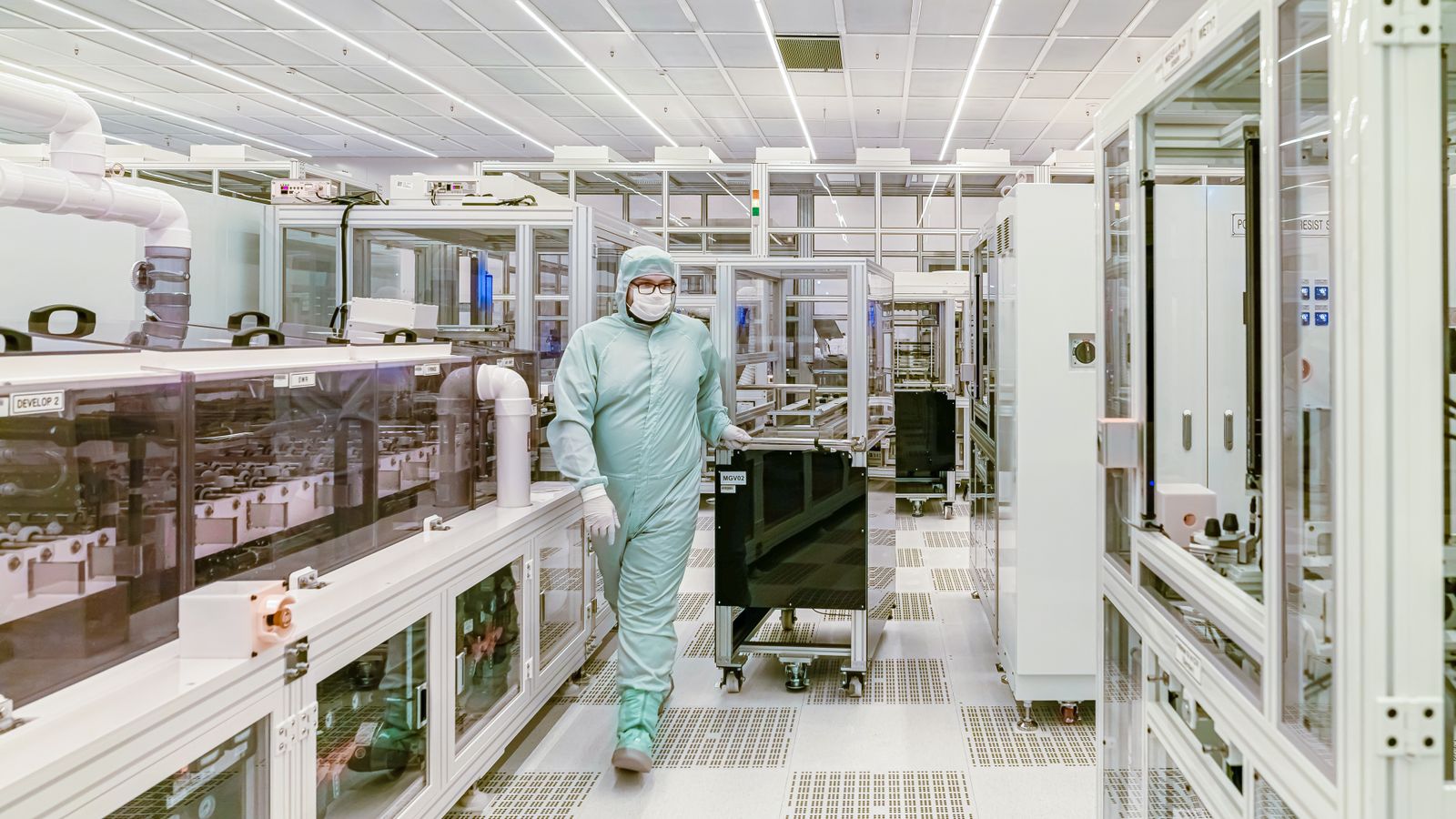
What to verify before focusing on the term “large-area”
Large-area process chambers in semiconductor manufacturing equipment may require a worker to put part of the body inside, or enter completely, for cleaning, residue removal, component replacement, or internal inspection. A chamber does not automatically become a confined space simply because it is large, nor does a wide door automatically make it an ordinary work area. Restricted entry and exit, a design not intended for continuous occupancy, limited natural ventilation, and the potential for oxygen deficiency, hazardous gases, fire, or explosion must be evaluated for the actual equipment and task conditions. The primary references are the facility’s confined-space inventory, risk assessment, manufacturer’s maintenance procedures, chemical information, and entry-permit procedure.
This article is not a work permit that replaces site procedures. Acceptable concentrations, target substances, purge conditions, personal protective equipment, and rescue methods vary by chamber according to process gases and by-products, equipment design, Korean regulations, and facility standards. If the site program prohibits entry or requires a specialist rescue team, that determination must be followed. Interlocks must not be defeated for convenience, and workers must not enter based only on a `purge complete` message on a normal production display.
OSHA’s semiconductor manufacturing guidance presents process automation, process enclosure, LOTO, continuous gas detection, automatic gas shutoff, and exhaust and treatment as representative risk-reduction measures. This shows that chamber-entry safety is not a single reading from a portable detector, but a system in which design controls and work controls operate together.
Step 1: Define the work boundary and hazardous substances first
The person planning the measurements must identify more than the equipment name; the boundary affected by the specific job must be mapped. Check the connections among the chamber body, load lock, upstream gas lines, downstream vacuum pump, scrubber, exhaust duct, cooling water, cleaning chemicals, and adjacent modules. Include the previous recipe, the last gases introduced, cleaning gases, purge gases, reaction by-products, and any solvents or adhesives to be used during maintenance. Because fluorine- and chlorine-based reactive gases and volatile products may be used or generated in semiconductor dry etching, a standard 4-gas sensor for oxygen, combustibles, carbon monoxide, and hydrogen sulfide must not be assumed to be sufficient.
The measurement plan must specify the following:
Boundaries of the space to be entered and adjacent connected spaces
The previous process and expected residual gases and reaction by-products
Measurement parameters, including oxygen, combustible atmospheres, and process-specific toxic gases
Entry-permit criteria and alarm setpoints for each parameter
Measurement locations, sequence, sampling time, and conditions requiring retesting
Immediate evacuation criteria for loss of ventilation or power and for an alarm
The entry worker, tester, person in charge, attendant, and rescue communication structure
If the substance inventory includes a material to which the detector sensor does not respond, a separate method must be established, such as detector tubes, a substance-specific sensor, or sampling by an analytical laboratory. Cross-sensitivity, sensor poisoning, and the effects of humidity and pressure must also be checked against the manufacturer’s information. “Not measured” is not the same as “not present.” The key question is whether a method capable of detecting the substance was used.
Step 2: Complete isolation and LOTO, then verify a zero-energy state
Atmospheric testing cannot replace energy isolation. First shut down the equipment by the prescribed method, identify every hazardous energy source, and disconnect, lock out, and tag it. This includes not only electrical and RF power, but also vacuum, compressed air, process gas, nitrogen, cooling water, hydraulic and pneumatic actuators, heaters, capacitors, springs, and doors or lifts that move under gravity. Also verify whether connected adjacent equipment could reintroduce energy or material into the chamber.
OSHA’s LOTO procedure sets out a sequence of preparing for shutdown, shutting down the equipment, isolating energy sources, applying locks and tags, removing stored energy, and verifying isolation. At the site, do not rely only on an indication that a valve is closed; where practicable, use an equipment-specific approved method such as blinds, double block and bleed, or physical disconnection. Safely return the vacuum to atmospheric pressure, release pressure, and cool hot components to an acceptable temperature. For stored electrical energy, follow the specified discharge waiting period and verify the absence of voltage.
Nitrogen used for purging is no exception. Manage the required supply path according to procedure while purging, but after the purge, when a person is to enter, change and verify the isolation state appropriate for entry so nitrogen cannot continue to enter and displace oxygen. Record in the work permit which valves and dampers must be in which positions and who applies and removes each lock. For group LOTO, follow the rules for each participant’s lock and for shift handover.
Step 3: Verify purge completion with measured values
Calculating purge duration or the number of volume exchanges is a starting point, not entry authorization. Stagnant zones may remain depending on the chamber’s actual volume, internal baffles and fixtures, gas inlet and outlet locations, leakage, and exhaust performance. After completing the specified purge and ventilation, use remote sampling from a safe location outside the entry opening to check the residual atmosphere. Leaning the face or upper body into the chamber to insert a detector may itself constitute entry.
Purge verification must answer the following questions:
Did the normal purge sequence finish without an error?
Were gas supply isolation and the exhaust path verified in the field?
Are the portable instrument readings within the entry-permit criteria?
Were all process-specific target substances measured?
Did the samples represent potential stagnant locations and the worker’s actual breathing zone?
Do conditions remain acceptable after ventilation stops or residues are disturbed?
A NIOSH semiconductor field evaluation reported that hydrogen, carbon monoxide, carbon dioxide, and a silane-related signal were detected over time inside a sealed container holding used filters. Although this case cannot predict concentrations in a particular chamber, it warns that material left after a process ends or enters the waste stage can change the atmosphere again through subsequent reactions and off-gassing. This is why one acceptable reading immediately after purging cannot guarantee safety throughout a lengthy maintenance task.
Step 4: Check instrument condition and sampling delay
The instrument must be suitable for the target gases and anticipated concentration range and must meet the calibration interval required by site procedure. Before use, inspect its exterior, battery, sensor expiration dates, filter, pump, and hose for blockage or leakage, and perform a bump test according to the manufacturer’s instructions. A bump test confirms that the sensors and alarms respond to gas; it is not the same as calibration, which adjusts accuracy. Do not use an instrument that fails the test; calibrate or repair it under the designated procedure.
A long sampling hose increases the time required for air to reach the sensors. Add the sensor response time to the transport time calculated from hose length and pump flow, then wait at each location until a stable value has been maintained for at least that duration. Also verify whether the hose material adsorbs or reacts with the target substance. Flush the hose adequately between locations so air from the first point does not distort the next reading. Record the actual concentration, measurement time and location, instrument number, tester, and ventilation status on the permit.
OSHA distinguishes atmospheric testing for hazard evaluation from testing to verify entry conditions and explains that actual readings should be recorded next to the criteria on the permit. Writing only “normal” or “no abnormality” makes it difficult to assess trends or how close a value is to a limit.
Step 5: Remotely test the top, middle, bottom, and blind spots
A single measurement point rarely represents a large-area chamber. Relative gas density affects distribution, but temperature differences, forced ventilation, internal geometry, leak location, heat of reaction, and work activity can also create stratification and localized high concentrations. Do not reduce the location plan to the phrase “heavy gases go down and light gases go up.” At minimum, measure the top, middle, and bottom, then add likely stagnant locations such as behind baffles, floor pockets, the side opposite the exhaust, around gas inlets, pump connections, and the points where workers will remain.
A recommended sequence is to begin with the nearest point while remaining outside the opening, then extend inward along a planned grid. For vertical entry or a space where stratification is possible, progressively check ahead and to both sides of the direction of travel. OSHA Appendix B advises testing the atmosphere approximately 1.22 meters ahead and to each side of the direction of movement in a potentially stratified atmosphere and slowing entry to match the probe sampling rate and instrument response time. In a large-area chamber, this principle should be converted into a denser measurement plan suited to the equipment geometry.
Test in the order of oxygen, combustible gases and vapors, and then toxic substances. Some combustible-gas sensors may give unreliable readings when oxygen is deficient, and fire and explosion hazards are immediate. This does not mean that a normal reading from the first sensor eliminates the need to prepare the next. Every target parameter must satisfy the permit criteria, and process-specific toxic substances must be assessed using methods appropriate to the substance. A normal oxygen reading alone does not establish a safe atmosphere.
Step 6: Retest under ventilation and monitor continuously after entry
Even when remote pre-entry testing is acceptable, the work itself can change the atmosphere. Scraping residue or removing parts may release trapped material, while cleaning agents, welding, adhesives, or heating can generate new vapors and gases. Conditions also change if the worker’s body or tools obstruct a ventilation duct or if the exhaust fan loses power. Therefore, retest under the ventilation configuration specified by the site permit procedure and make continuous monitoring the default during entry.
Place continuous monitors in the worker’s actual breathing zone or where the hazard is expected to appear first. In a large space, use personal detectors together with fixed or portable area detectors to capture both local and overall changes. Verify remote readouts visible to the outside attendant and audible, visual, and vibration alarms. Define in advance the data-recording interval, actions at a pre-alarm stage, over-range indication, and response to loss of communication.
In any of the following situations, stop work immediately, withdraw by a safe route that does not depend on powered equipment, and reassess the permit:
Oxygen, combustible, or toxic readings exceed permit criteria or their trends change abruptly
Detector failure, pump stoppage, sensor over-range indication, or loss of communication
Loss of forced ventilation, exhaust abnormality, or unexpected odor, mist, or leakage
A change in the work scope, materials used, number of entrants, or isolation status
An entrant develops dizziness, headache, irritation, impaired judgment, or another abnormal symptom
Do not re-enter immediately merely because ventilation after an alarm returned the readings to normal. Identify the cause, review isolation and the measurement plan again, and follow the facility procedure to determine whether the existing permit must be canceled or reissued.
Step 7: The permit is valid only when the attendant and rescue arrangements are ready
The attendant is not simply a record keeper. The attendant must know the entrants and their locations, maintain communication, monitor conditions and gas readings inside and outside, order evacuation if an abnormal condition occurs, and activate the emergency system. Do not assign the attendant concurrent production-support, material-handling, or other duties that divert attention. Provide access controls and warning signs at the opening to prevent unauthorized entry, and clearly hand over personnel, readings, isolation, and permit status at shift changes.
A rescue plan cannot end with a one-line instruction to “call 119.” Determine whether non-entry rescue is feasible and what retrieval equipment is needed based on the chamber opening’s size and orientation, internal obstructions, entrants’ protective equipment, expected hazardous substances, and rescue-team response time. Confirm that the rescue team or outside rescue service can actually perform a timely rescue in that chamber, and test the communication method and access route. Rescue equipment is ineffective if it cannot be attached to the worker or will snag on internal structures.
NIOSH warns that untrained coworkers repeatedly collapse while attempting rescues. An attendant must not enter the chamber spontaneously. Internal rescue may be performed only by personnel equipped with the required training, suitable respiratory protection, monitors, rescue equipment, and command structure. Before work begins, also assess whether a non-entry retrieval method intended for use until the rescue team arrives could itself create entanglement or compression hazards for the entrant.
Final 10-question check before authorization
Was the chamber’s confined-space classification and permit level confirmed through an up-to-date risk assessment?
Were the previous process gases, by-products, cleaning materials, and hazards from adjacent equipment inventoried?
Were electrical, RF, thermal, vacuum, pressure, gas, mechanical-drive, and stored-energy sources locked out and verified?
Was the residual atmosphere confirmed by actual multi-point concentrations rather than a purge-complete indication?
Can the detector detect every target substance, and are its bump-test and calibration statuses valid?
Was sufficient time allowed at each location for hose transport time and sensor response time?
Were the top, middle, bottom, worker breathing zone, stagnant zones, and connections tested?
Are continuous monitoring, maintained ventilation, and immediate evacuation criteria for an alarm ready during the work?
Are a dedicated attendant, communication, entrant control, and shift handover arrangements ready?
Were the rescue team’s capability, response time, and equipment verified and exercised under actual chamber conditions?
The essence of large-area chamber entry is not obtaining one good number. It is isolating hazards first, verifying purge results throughout the space, continuously monitoring changes during the work, and preparing a rescue system that will not put more people in danger if controls fail. If any one of these links has not been confirmed, the measurement procedure is not complete and entry authorization must be withheld.