
Scope of this article
Gas safety in underground military facilities is, before any specialized mission considerations, a basic occupational-safety matter of protecting people. In spaces with limited exchange with outside air, oxygen deficiency, carbon monoxide (CO) from fuel combustion, leaked flammable gases, gases that may be generated while batteries charge, hydrogen sulfide (H2S) from sewage and drainage systems, fire smoke, and carbon dioxide (CO2) can interact. An environment that appears normal during routine operations can deteriorate rapidly because of changes such as a power outage, ventilation failure, increased occupancy, maintenance, water leakage, or fire.
This article describes only general principles based on publicly available civilian and occupational-safety materials. It does not address the location, layout, occupancy capacity, ventilation routes, equipment capacity, security arrangements, vulnerable points, emergency routes, or operational procedures of any specific facility. At an actual workplace, the Republic of Korea’s occupational safety and health laws, fire-safety requirements, building, electrical, and environmental standards, and the requirements of the authorities having jurisdiction take precedence. Qualified safety, fire-protection, mechanical, and electrical professionals must conduct a site-specific risk assessment.
The first principle is to examine sources and changes, not simply the fact that a facility is underground
Do not place every area in the same risk class merely because it is underground, or judge overall safety with a single portable four-gas detector. For each space, first list the potential sources and the processes that may consume oxygen or displace air. Typical subjects for review include fuel-burning generators and heaters, vehicles and engines, fuel storage and transfer, battery charging, sewage and waste, cleaning agents, refrigerants, fire-extinguishing agents, painting, welding and cutting, human respiration, and fire. In addition to normal operation, startup and shutdown, maintenance, cleaning, power outages, flooding, reopening after prolonged closure, and temporary overcrowding must be treated as separate scenarios.
OSHA’s permit-required confined-space standard evaluates hazardous atmospheres in terms of oxygen deficiency or enrichment, flammable gases and vapors, toxic substances, and other factors, and connects pre-entry testing, monitoring during work, role assignments, training, and rescue procedures in a single program. This does not mean that every underground room has the same legal status as a confined space, but the management logic—classify the space, identify expected hazards, define acceptable conditions, and exit immediately if those conditions are lost—can be applied broadly. Risk-assessment findings should be documented according to the process, sources, pattern of occupancy, reliance on ventilation, and consequences of failure, rather than merely by the name of the space.
Ventilation is a system for maintaining function, not just a volume of air exchange
The purpose of ventilation goes beyond diluting contaminants. It must supply clean air to occupied areas, capture contamination at its source, limit the spread of contaminated air to other areas, and maintain temperature, humidity, and pressure within safe ranges. The required ventilation rate cannot be set using a generic value for “underground facilities.” It must be professionally calculated to reflect generation rates, work intensity, maximum expected occupancy, equipment heat loads, discharge locations, operating variations, and statutory requirements.
Ventilation equipment is not verified merely by an indication that it is switched on. Fan operating status, actual airflow or differential pressure, the quality of intake and exhaust air, filter condition, dampers and control systems, and the availability of emergency power must be checked regularly. Whether outdoor-air intakes may draw exhaust gases or other contaminants back inside should also be assessed from general environmental and industrial-hygiene perspectives. Even when temporary blowers are used, measurements must confirm that they supply clean air and effectively reach the occupied work area. Substituting direct oxygen supply for ventilation can increase oxygen-enrichment and fire hazards and must not be done without proper design and authorization.
OSHA’s atmospheric-testing procedure explains that oxygen should be tested first, followed by flammable gases and vapors, and then the anticipated toxic gases and vapors. This order is important because the response of many flammable-gas sensors is affected by oxygen concentration. A single measurement before the space is used is also insufficient. If a ventilation failure or a change in the work could alter the atmosphere, continuous monitoring or periodic monitoring matched to the rate at which the risk may change is necessary. The governing principle must be clear: when an alarm occurs, first move people to a safe location, assess the cause, and consider re-entry only after protective measures have been restored.
Manage CO and fire together around generators, fuel, and combustion equipment
CO is colorless and odorless, so it cannot be detected by smell or eye irritation. The CDC advises that portable generators must never be used inside a home or garage and should be operated outdoors, away from windows, doors, and vents. This lesson must be applied even more strictly in underground or partially underground settings. Combustion equipment must be installed in locations appropriate for its approved use and design conditions, its exhaust must be reliably separated from air systems serving occupied areas, and it must have a maintained dedicated exhaust and combustion-air supply. Do not assume that opening a door or operating a general-purpose fan resolves the hazard from engine exhaust.
Fuel management includes preventing leaks, using suitable containers and piping, controlling ignition sources, establishing procedures for refueling and transfer, responding to spills, and conducting regular inspections. Generator status signals and CO monitoring must remain separate. Even if an engine indicates normal operation, damage to an exhaust connection, backflow, or abnormal ventilation can allow CO to accumulate. A CO alarm must be recognizable even in noisy conditions, and responsibility for acknowledging alarms and the criteria for equipment shutdown, evacuation, and medical evaluation must be documented in advance. If several people develop headache, dizziness, nausea, or confusion at the same time, do not dismiss the symptoms as ordinary fatigue or a cold; respond immediately, including to the possibility of CO exposure.
Battery and sewage systems require different detection strategies
Hazards in a battery room or charging area vary with the battery chemistry and charging method. Lead-acid batteries may generate hydrogen while charging, and their electrolyte presents a corrosion hazard. With lithium-ion batteries, overheating and thermal runaway can create flammable and toxic decomposition gases and lead to fire. Battery type, manufacturer instructions, charger compatibility, signs of damage or overheating, ventilation, ignition-source control, collision prevention, and fire-suppression and isolation plans must therefore be managed together. OSHA’s standard for charging industrial-truck batteries also requires ventilation, fire protection, control of smoking and open flames, and prevention of equipment damage in charging areas.
Do not use a single “battery gas sensor” to represent every battery hazard. Qualified professionals must determine what to detect based on battery chemistry and failure scenarios, and it may be reasonable to consider temperature, smoke, and gas signals together. No combination of sensors, however, replaces changing defective cells, managing the state of charge, checking manufacturer recalls, and inspecting cables and terminals. Alarm settings and exhaust-system interlocks must be validated for early response and safe shutdown, rather than for the convenience of reducing nuisance alarms.
In sewage tanks, drainage pits, piping, and places where excrement or organic matter remains, consider H2S, methane, CO2, and oxygen deficiency. NIOSH describes H2S as a colorless gas with a rotten-egg odor, but emphasizes that the sense of smell becomes fatigued quickly and cannot be relied on as a warning. Concentrations can change abruptly when a closed sewage system is opened, agitated, or cleaned, so the absence of an odor must not be treated as proof of safety. Unauthorized entry and unplanned solo rescue must be prohibited, and a permit procedure must cover isolation, ventilation, pre-entry testing, monitoring during the work, an attendant, and a rescue plan.
Fire and occupancy are part of gas management
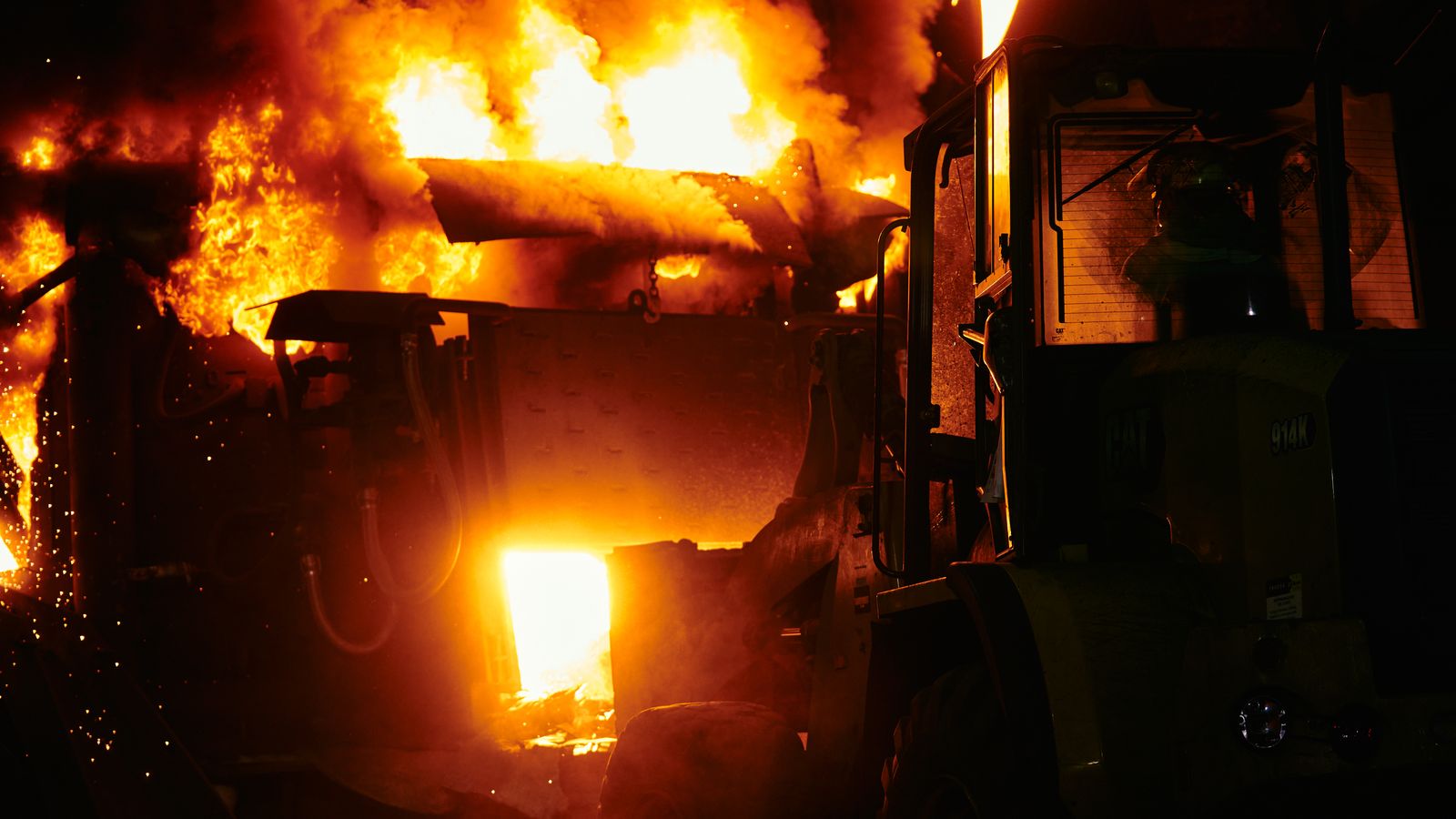
An underground fire produces smoke, CO, reduced oxygen, and loss of visibility at the same time as heat and flames. Gas detection therefore must not become an equipment project isolated from fire detection and alarms, fire compartments, suitable suppression systems, emergency lighting, and evacuation management. In line with OSHA’s fire-prevention-plan principles, major fire hazards and ignition sources, handling of hazardous materials, responsibility for maintaining protective equipment, and duties during a fire must be documented and included in training. Any automatic equipment shutdown or change in ventilation mode must be validated against the actual fire-safety design and applicable requirements, with change controls that prevent personnel from arbitrarily bypassing systems or silencing alarms.
Occupancy is both a ventilation load and a safety variable that must be accounted for during an emergency. Planned and actual occupancy, type of work, duration of stay, visitors, and people who may need assistance must be known. Higher occupancy or prolonged stays increase CO2 and heat and moisture loads and make evacuation and accountability more difficult. CO2 can serve as a supplementary indicator of ventilation conditions, but it does not replace detection of a particular toxic gas, CO, or oxygen deficiency. Conversely, one low CO2 reading does not mean that every indoor-air hazard has been eliminated. Keep personnel records to the minimum needed and follow privacy principles, while retaining the ability to determine who remains inside during an emergency.
Monitoring must be independent, available, and capable of prompting action
Fixed detectors and portable instruments serve different roles. Fixed systems are well suited to continuous monitoring and equipment interlocks, while portable equipment is useful at the worker’s breathing location, for temporary work, and for pre-entry checks. Critical hazards require a design that does not rely on a single sensor, power supply, or communication path. Simply installing two identical units, however, is not complete redundancy: both may suffer the same loss of common power, calibration error, environmental interference, or communication failure. Depending on the risk, combine independent power, local indication, manual verification methods, and conservative operating rules for loss of communication.
Every detector must have documented target gases, measurement ranges, response times, cross-sensitivities, temperature and humidity conditions, sensor life, and installation purpose. A bump test—a functional test before use—confirms that the sensor and alarm respond; it is not the same as calibration, which adjusts accuracy. OSHA’s guidance for portable direct-reading instruments recommends verifying testing and calibration before use according to the manufacturer’s instructions, performing a full calibration when results fall outside the acceptable range, and not using equipment that fails calibration. Track the standard-gas expiration date, person performing the test, results, failures, sensor replacements, and alarm-test records.
An alarm must do more than display a number; it must trigger action. It must be clear who receives the alarm, under what conditions work stops, who is notified, when evacuation occurs, and who approves restart. Include alarm delays, repeated nuisance alarms, sensor contamination, communication failure, and depletion of backup power in regular testing. Raising a setpoint or disabling a sensor because alarms occur frequently is not management; it conceals the hazard. Repeated alarms must lead to source removal, improved ventilation, or changes in work methods.
Training tests the organization’s response, not just how to operate equipment
Training must cover foreseeable events, including routine inspections as well as ventilation failure, a CO or flammable-gas alarm, abnormal oxygen, an H2S alarm during sewage work, battery overheating, fire, a power outage, and communication failure. Detailed exercise scenarios should not be disclosed publicly and must be managed within the facility under an approved safety plan. The purpose of training is not to clear an alarm quickly, but to confirm that stopping work, reporting the event, accounting for personnel, moving safely, requesting emergency care, isolating equipment, and approving re-entry actually work.
Rescue actions in particular require dedicated capability. If a coworker follows an incapacitated person into a hazardous atmosphere without protective equipment, the result may be multiple casualties. The rescue team’s capabilities, contact method, arrival time, respiratory protection and rescue equipment, and the transfer of site information must be evaluated in advance and practiced regularly. Regular occupants must be repeatedly trained to alarm, exit, and report immediately instead of attempting an improvised rescue. After an exercise, record the time taken to recognize alarms, omissions in personnel accountability, communication failures, equipment accessibility, and ambiguities in procedures, then assign a responsible person and deadline for each improvement.
Practical inspection questions
The safety manager should be able to answer the following questions with supporting evidence.
Does the current risk assessment for each area reflect its oxygen, flammability, toxicity, and asphyxiation hazards and the scenarios that could create them?
Is ventilation performance actually measured, with conservative operating and evacuation criteria that protect people during failures and power outages?
Are the exhaust, fuel, CO, and fire hazards of generators and other combustion equipment covered together by the maintenance and monitoring system?
Have the hazards, detection targets, work permits, and rescue plans appropriate to the battery chemistry and sewage systems been defined?
Can air quality and the thermal environment, alarm delivery, and personnel accountability be maintained at the maximum anticipated occupancy?
Do the testing, calibration, power, communications, and records for fixed and portable instruments include measures against common-cause failures?
Do workers understand what to do when an alarm occurs and the criteria for approving re-entry, and were these actions actually verified in a recent exercise?
Gas safety in an underground military facility is not determined by secret equipment or a single threshold. It depends on repeatedly applying the fundamentals: reduce sources, maintain ventilation, manage combustion, batteries, sewage, and fire as an integrated whole, monitor reliably while people are present, and make alarms lead to action. If inspection findings are uncertain, the decision should be to stop exposure and obtain an assessment from qualified professionals, not to continue operating.
Sources
Permit-Required Confined Spaces, 29 CFR 1910.146 — U.S. Occupational Safety and Health Administration (OSHA), accessed 2026-09-09
Confined-Space Atmospheric Testing Procedures, 29 CFR 1910.146 Appendix B — U.S. Occupational Safety and Health Administration (OSHA), accessed 2026-09-09
Calibrating and Testing Portable Direct-Reading Gas Monitors — U.S. Occupational Safety and Health Administration (OSHA), accessed 2026-09-09
Basic Information on Carbon Monoxide Poisoning — U.S. Centers for Disease Control and Prevention (CDC), accessed 2026-09-09
Charging and Changing Industrial-Truck Batteries, 29 CFR 1910.178(g) — U.S. Occupational Safety and Health Administration (OSHA), accessed 2026-09-09
Hydrogen Sulfide, NIOSH Pocket Guide to Chemical Hazards — U.S. National Institute for Occupational Safety and Health (NIOSH), accessed 2026-09-09
Fire Prevention Plans, 29 CFR 1910.39 — U.S. Occupational Safety and Health Administration (OSHA), accessed 2026-09-09