
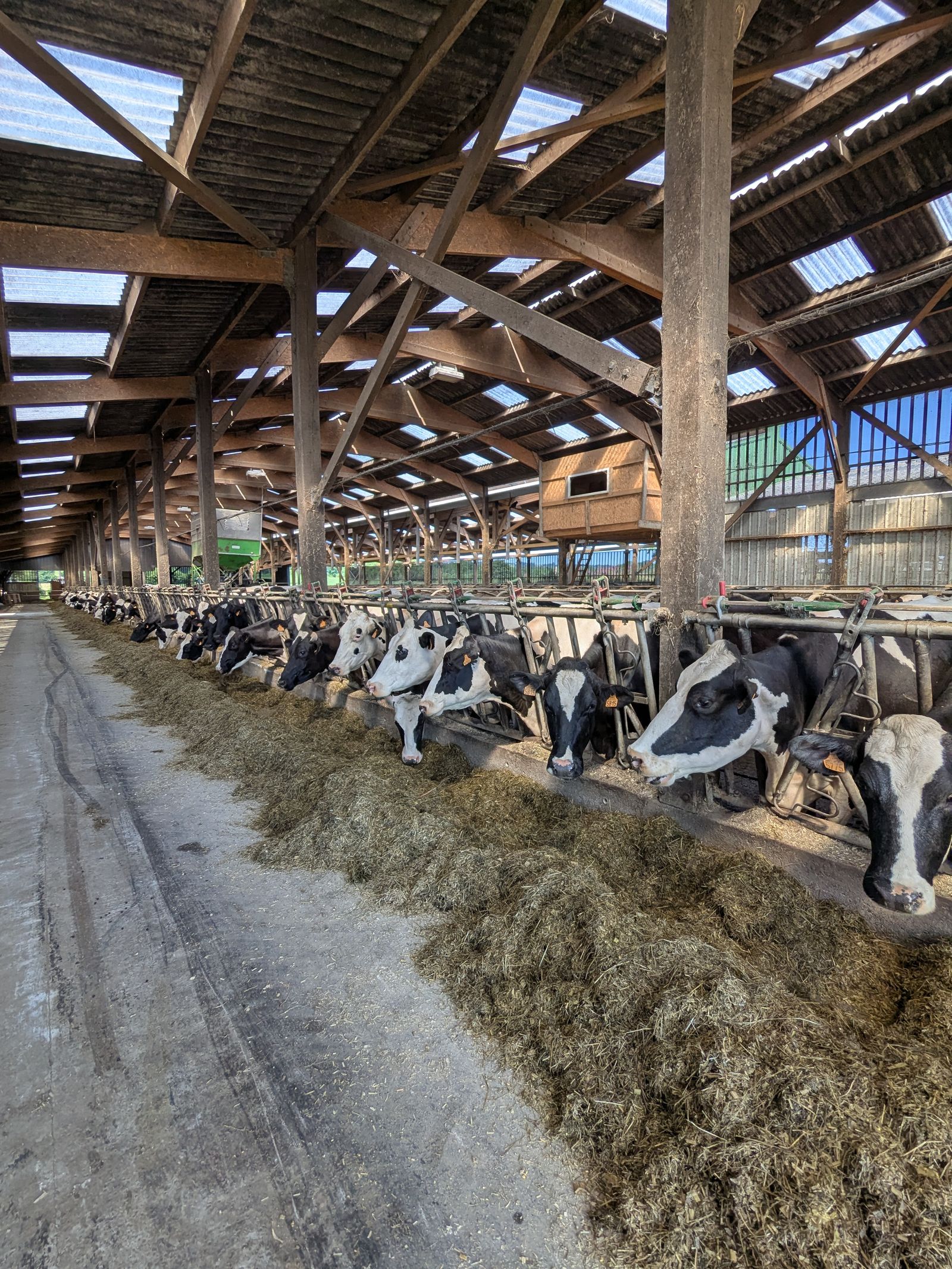
Feed administration records need to be distinguished from proof that a product was purchased. Continuity of feed-additive use concerns which herd received what product, and for how long and under what conditions. Chapters 6 and 19 of Technology and Solutions for Demonstrating Carbon Reduction explain why records need to link product purchase to actual use and the calculation of effects.
Define the concept and scope of application first
Activity data need identifiers that link product purchase and delivery with mixing and administration. It must also be possible to distinguish cases where the target herd changed or feeding stopped. Check whether documents are connected to actual activity, rather than simply whether paperwork exists. Field records should be limited to necessary items, with a process for correcting errors. Requiring the same complex records from every farm can create different levels of burden. It is also possible to consider combining complete activity records with purpose-specific sample checks.
3-NOP is a feed-additive approach that inhibits an enzymatic reaction involved in methane production. We should distinguish explaining its mode of action from confirming its effects under actual feeding conditions. Results can vary with dose, feed composition, intake, and production stage, so trial conditions must be read alongside the results. Check permitted conditions of use and safety and productivity data before deciding the scope of application.
Regulatory authorization is an official process for reviewing these items. The U.S. FDA Center for Veterinary Medicine reviewed the use of 3-NOP under specific conditions, and the EU specified authorization conditions through an implementing regulation. What must be read here is not simply the fact of authorization, but its scope. Authorization documents set specific limits for livestock species, growth stage, feeding dose, method of administration, and labeling requirements.
After a product is recognized, its effects and conditions of use on actual farms need to be examined. Check whether the scope of recognized trials matches the evidence required for policy compensation. If there is a gap, supplement it with activity data or additional demonstrations.
Records for feed-additive-based mitigation should connect purchasing and delivery with mixing and actual administration. It should be possible to verify which product was used, for which herd, when, and during any periods when use stopped. Confirmation of actual administration and the evidence supporting the mitigation factor are different types of information and should be managed separately. The fact that records were kept does not by itself establish a quantified reduction for that farm.
There are points between preparing an application and actual feeding and recordkeeping where support in the field is needed. Farms should receive guidance so they do not have to submit the same information repeatedly, and someone needs to explain items they find difficult. The book examines the conditions under which agricultural cooperatives’ organizational networks could take on this role.
Field support and business operations, finance, and independent verification are distinct roles for agricultural cooperative organizations. They can connect recordkeeping with joint purchasing and training, but authority over the final determination of effects and payments must be checked separately. Convenience from using existing field networks must be designed alongside supplier neutrality and controls for conflicts of interest. General trust in an organization cannot substitute for evidence of an individual mitigation outcome.
Conditions and limitations of field application
Suppose a farm buys feed in bulk but stops administering it during some periods. If use throughout the entire period is recognized based only on the total quantity shown on receipts, the actual activity and the calculation may diverge. Link product lots and mixing records to the target herd and period, and define how interruptions will be handled. The burden of recordkeeping is also part of farm operating costs.
Connecting application guidance, confirmation of eligible animals and feeding periods, joint purchasing, recordkeeping assistance, and complaint handling can lower the access burden for farms. The network of local agricultural and livestock cooperatives can provide a foundation, but staffing and livestock expertise differ by region. Compare actual operating costs and service quality to choose among independent delivery, a shared support center, or coordination with an outside specialist organization.
When data are handed over, check the source data and data dictionary, equipment and calibration history, rules for handling missing values and outliers, and model versions. A test that reconstructs results for an agreed period from source data can show whether they are usable in practice. Decide in advance what data and formats will be delivered at contract termination, along with access rights and retention and deletion conditions. Do not assume that providing a dashboard screen means all necessary data have been handed over.
If a defect is found in the input evidence, trace which calculations and periods were affected. Restore the data using a suitable alternative or assess sensitivity, and limit the scope of claims for results that cannot be restored. As with calibration records, manage the version and source of each calculation input.
Evidence needed for investment review
Investors should review sales performance separately from indicators of continued use. They should check whether there is a process for detecting missed feedings, whether correction histories are retained, and who pays for recordkeeping support. Requiring more records does not by itself improve quality.
The four conditions are criteria for checking whether benefits are realized. Do not conclude there is a net loss simply because some conditions are missing; calculate how each condition affects costs, mitigation volume, and risk for each farm group.
When government spending on an alternative mitigation project that can actually be substituted has been confirmed, that cost can be used as a reference for the performance-compensation rate. One verified tonne does not automatically replace a tonne from another sector or from international mitigation. Compare them in line with the recognition system, implementation period and risks, and the actual possibility of budget adjustment.
Excessive costs and complicated procedures can increase the burdens of participation and recordkeeping. However, the mere presence of farmer cost-sharing does not justify concluding that records are false or quality is low. Examine actual recordkeeping time, missing-data and error rates, rework, and dropouts, and compare the effects of cost support, training, simpler data entry, and risk-based checks. Design cost support alongside safeguards for conflicts of interest in independent verification.
Criteria to keep in view when making a decision
Verifiable feeding records explain the link between sales and effects. Actual use should be examined through a combination of a simple recordkeeping system and the necessary sample checks. Distinguishing activity data from the evidence supporting an effect factor also makes the assumptions behind the mitigation volume visible.
About the author
Bongjun Lee graduated from the Graduate School of Management of Technology (MOT) at Sogang University. He spent seven years at Infitron Co., Ltd. and 20 years at Honeywell, working for a total of 27 years in gas measurement in service engineering, technical sales, and channel management. He is now the founder of AI Safety Korea Co., Ltd., where he is researching livestock methane monitoring and measurement, reporting, and verification (MRV) systems using sensors, AI, and data analytics.