
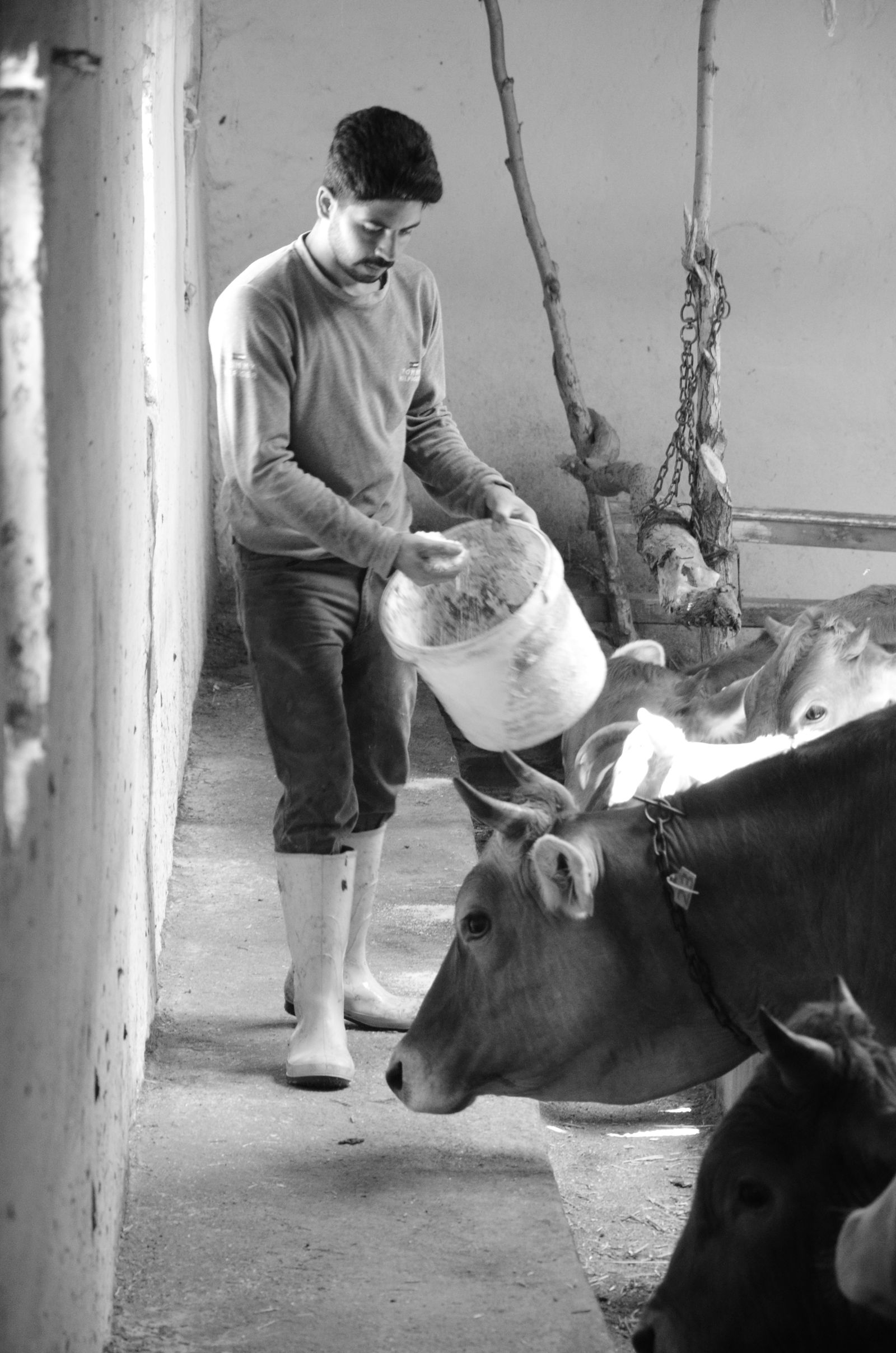
A low-carbon livestock transition is difficult to sustain through environmental goals alone. Efforts toward carbon neutrality in beef cattle must also consider farms’ additional costs and recordkeeping burdens, productivity, and safety. Chapter 14 of Technology and Solutions for Demonstrating Carbon Reduction can be read as a policy design perspective connecting business stability with evidence of emissions reductions.
Define the Concept and Scope of Application First
Evidence for transition support must match the purpose of the payment. Support for additional costs should be based on actual costs, while rewards for verified outcomes should rely on suitable performance data. Avoid using proof of purchase alone to explain the size of an emissions reduction. Field support organizations can help with applications, recordkeeping, and training. However, when authority over sales, support, quantification, and payment is combined, the necessary conflict-of-interest controls should be designed as well. Distinguishing the policy’s intent from the authority of individual programs makes accountability for implementation clear.
The significance of this law is that it places industrial protection and carbon neutrality in the same sentence. Until now, they have been treated as competing goals: strengthen emissions reductions and farms will struggle; protect farms and reductions will be delayed. The law’s placing of both purposes side by side is a starting point for breaking this framing.
Basic transition support, bonuses for verified outcomes, and support that lowers measurement and consulting costs can be designed for distinct purposes. This is a policy structure proposed in the book, not a payment rule already applied to every program. Distinguish the evidence for additional cost support from the basis for reduction outcomes, and clarify who is responsible for sales, application support, quantification, and payment decisions. Actual participation and payment conditions must be checked in the rules of the relevant program.
The scale-up proposed in the book is not an unconditional flat subsidy. It separates basic transition support, bonuses for verified outcomes, and MRV vouchers to lower measurement and consulting costs, with a structure for reassessing actual costs and results every year. Agricultural cooperative networks can connect with farms while maintaining supplier neutrality and separation of roles; government must retain responsibility for eligibility, payment authority, and independent evaluation.
A second channel is a social coordination body such as the Hanwoo Industry Development Council. If it addresses only supply and price stability, the costs and benefits of the low-carbon transition will not make it to the discussion table. It could be given a role in deliberating on the allocation of transition costs while distinguishing the roles of farms, feed companies, research institutions, verification bodies, distribution, and finance.
One point not to overlook. The law’s aim of business stability must not be weakened on the grounds of carbon performance. Reducing income protection for farms with poor reduction performance would conflict with the law’s purpose. Minimum income protection and performance rewards need to be designed together.
If support for suppliers is considered, conditions for price, supply stability, and efficacy data should also be established. Whether part of the subsidy is reflected in prices or margins should be assessed by examining input costs and contract terms together. An important check is whether the burden on farms has actually fallen.
Change how the adoption rate is defined. Manage it by the actual continuity of feeding among eligible animals, not by sales volume or the number of animals enrolled. This one change in definition alters the character of the policy. If managed by sales volume, increasing sales becomes the goal; if managed by continuity of feeding, the goal becomes enabling farms to keep using the feed.
Conditions and Limits in Field Application
Suppose a program asks farms to introduce a new feed and submit records. If the cost of participation does not align with the support actually received, sustained participation may be difficult. Support for basic transition costs and rewards for verified outcomes have different purposes and require different evidence. Policy proposals should be explained separately from current payment entitlements.
The precise wording is this: low-carbon feed is a climate mitigation measure that reduces methane, and its perceived value to farms may increase when combined with adaptation investments that reduce harm from heat waves, floods, and livestock disease. These measures have different purposes and operate on different time scales. They should, however, be supported together within the same farm transition plan.
If additional costs of a farm’s low-carbon transition are preventing participation, raising subsidies to reflect actual conditions should be actively considered. If farms cannot afford feed and recordkeeping and management costs, and therefore cannot use technology with confirmed effects, society also loses that reduction opportunity. The IPCC explains that mitigation subsidies are a policy tool for encouraging investment in emissions-reducing equipment and changes in processes, among other actions. However, costs per unit of reduction differ by policy. This book proposes investigating farms’ actual burdens and prioritizing support for areas where increased assistance could yield substantial additional reductions.
Evidence Needed for Investment Review
Investors and institutions should check not only the volume of deployment but also farms’ net benefits, continuity of feeding, and data quality. The purpose of a system does not imply a purchase mandate for a particular product or automatic budget allocation. Review the evidence, contracts, and actual implementation conditions of each program separately.
The per-animal support rate is a policy variable. But it cannot be set arbitrarily. As discussed in Chapters 6 and 14, the basis should be farms’ actual additional costs, determined by the combined effects of product price, required feeding quantity, feeding period, additional labor, administrative burden, and changes in weight gain and feed efficiency. This cost structure also varies greatly by farm group. Per-animal costs differ substantially between large specialized finishing farms and small part-time farms.
It is useful to report company growth and farm benefits separately in policy performance tables. For companies, examine revenue after support ends, maintenance capacity, and follow-on private investment. For farms, examine total operating costs, workload, and sustained use. Evaluate reduction outcomes separately within the boundaries of the applicable quantification and verification system. Do not convert an increase in investment raised into an equal amount of social benefit, or treat every supported farm as having reduced emissions.
Criteria to Keep in View
The ability to implement a transition comes from conditions farms can bear. Separate evidence of costs and outcomes according to their purpose, and clarify roles and responsibilities. A structure that reviews reduction goals alongside farm economics is needed to explain operations after deployment.
About the Author
Bongjun Lee graduated from the Graduate School of Management of Technology (MOT) at Sogang University. He spent seven years at Infitron Co., Ltd. and 20 years at Honeywell, working for a total of 27 years in gas measurement in service engineering, technical sales, and channel management. He is now the founder of AI Safety Korea Co., Ltd., where he is researching livestock methane monitoring and measurement, reporting, and verification (MRV) systems using sensors, AI, and data analytics.