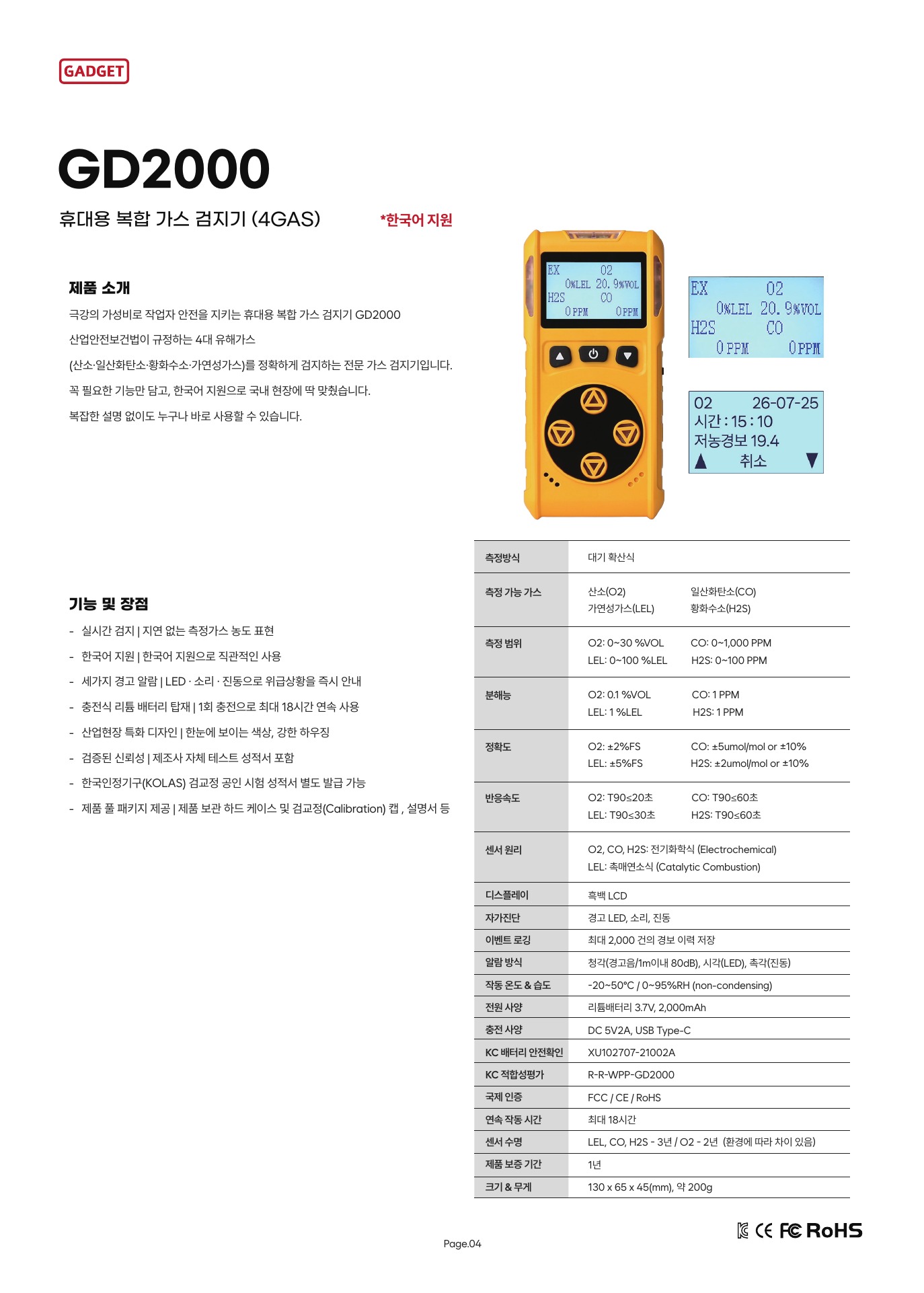
If the GD2000 specification lists an H₂S range of 0–100 ppm and an LEL range of 0–100% LEL, does that mean both channels measure the same concentration? No. Even though both numbers reach 100, their units and reference points differ.
ppm is a proportion in a mixture
ppm means parts per million. A value of 100 ppm means that 100 parts of the gas are present in one million parts of the mixture. Expressed as a volume percentage, the same mixture proportion is 0.01% VOL. ppm and %VOL can be converted mathematically because both express the proportion of a gas in a mixture.
The GD2000 specification’s H₂S range of 0–100 ppm is the measurement range for its hydrogen sulfide channel. Read the gas name and unit along with the number to identify which sensor specification it describes. The range by itself does not state accuracy or an alarm setpoint.
%LEL is a relative scale based on the lower explosive limit
The LEL is the lower limit of the concentration range at which a combustible gas can ignite and burn in air. %LEL expresses the current concentration as a percentage of that reference concentration, which is set to 100%. So 10% LEL means 10% of the LEL reference; it does not mean that the gas makes up 10% VOL of the air. Likewise, 100% LEL is not the same as 100% VOL.
For a hypothetical calculation, suppose a gas has an LEL of 2% VOL. Then 10% LEL corresponds to 10% of that reference, or 0.2% VOL. This is an arbitrary example to illustrate the relationship between units; it is not the actual LEL of a particular gas, the GD2000 calibration gas, or an alarm setting. LEL values vary by gas, so the result changes when the target gas changes.
The same number cannot be compared when its reference is different
100 ppm and 100% LEL share the number 100, but they do not represent the same concentration. Converting ppm to %VOL expresses the same mixture proportion in another unit. To convert %LEL to a mixture proportion, you need to know which gas’s LEL is being used, as well as the detector’s calibration gas or correction conditions. Without that reference information, you cannot state a particular ppm value for a %LEL display.
Range, resolution, and accuracy are different specifications
The H₂S range of 0–100 ppm and the LEL range of 0–100% LEL describe the intervals each channel is designed to display. A range ending at 100 does not mean that the measurement is 100% accurate at that point. Range describes the measurement interval; resolution describes the smallest scale increment the display can distinguish; and accuracy describes how close an indication is to a reference value. These are separate characteristics.
Suppose two rows in a hypothetical specification table each say `0–100`. If the first is H₂S in ppm and the second is LEL in %LEL, those numbers are upper limits on different unit scales. You cannot tell from the numbers alone which channel is more precise or accurate. Check the relevant accuracy and resolution specifications for each channel separately.
Why comparing the numbers can lead to the wrong conclusion
Copying only the maximum number from a specification table removes its measurement reference and invites a comparison of the numbers alone. But 100 ppm is a proportion in a mixture, while 100% LEL is a proportion relative to a particular gas’s lower explosive limit. You cannot rank one as a higher or lower concentration than the other. In particular, treating %LEL as an alarm or work-permission criterion turns a specification description into a safety judgment.
In a purchasing comparison, use separate columns for gas name, unit, range, resolution, and accuracy rather than copying only the range. Then compare the supporting specification for each item. Any GD2000 performance values beyond the H₂S and LEL ranges should be confirmed in the applicable approved specification. If a request simply says “100” and it is unclear which gas or unit it refers to, first confirm the original wording.
Here is another hypothetical conversion: if a gas’s LEL is assumed to be 2% VOL, then 10% LEL is one tenth of 2% VOL, or 0.2% VOL. You could also convert that mixture proportion to ppm, but first you would need the actual LEL for the target gas and the detector’s calibration and correction conditions. These example values are assumptions that demonstrate the calculation; they are not actual substances or site alarm or safety limits.
This distinction keeps concentration conversion separate from safety decisions.
If a hypothetical purchase document says “measures up to 100,” first check whether it means H₂S at 100 ppm or LEL at 100% LEL. These are upper limits for different channels. The GD2000 catalog lists H₂S at 0–100 ppm and LEL at 0–100% LEL as separate specifications. Do not use these ranges alone to determine accuracy, risk, alarm criteria, or whether work is permitted. Confirm the gas name and unit in your request with AI Safety Korea Co., Ltd.
Ask about GD2000 units and ranges