
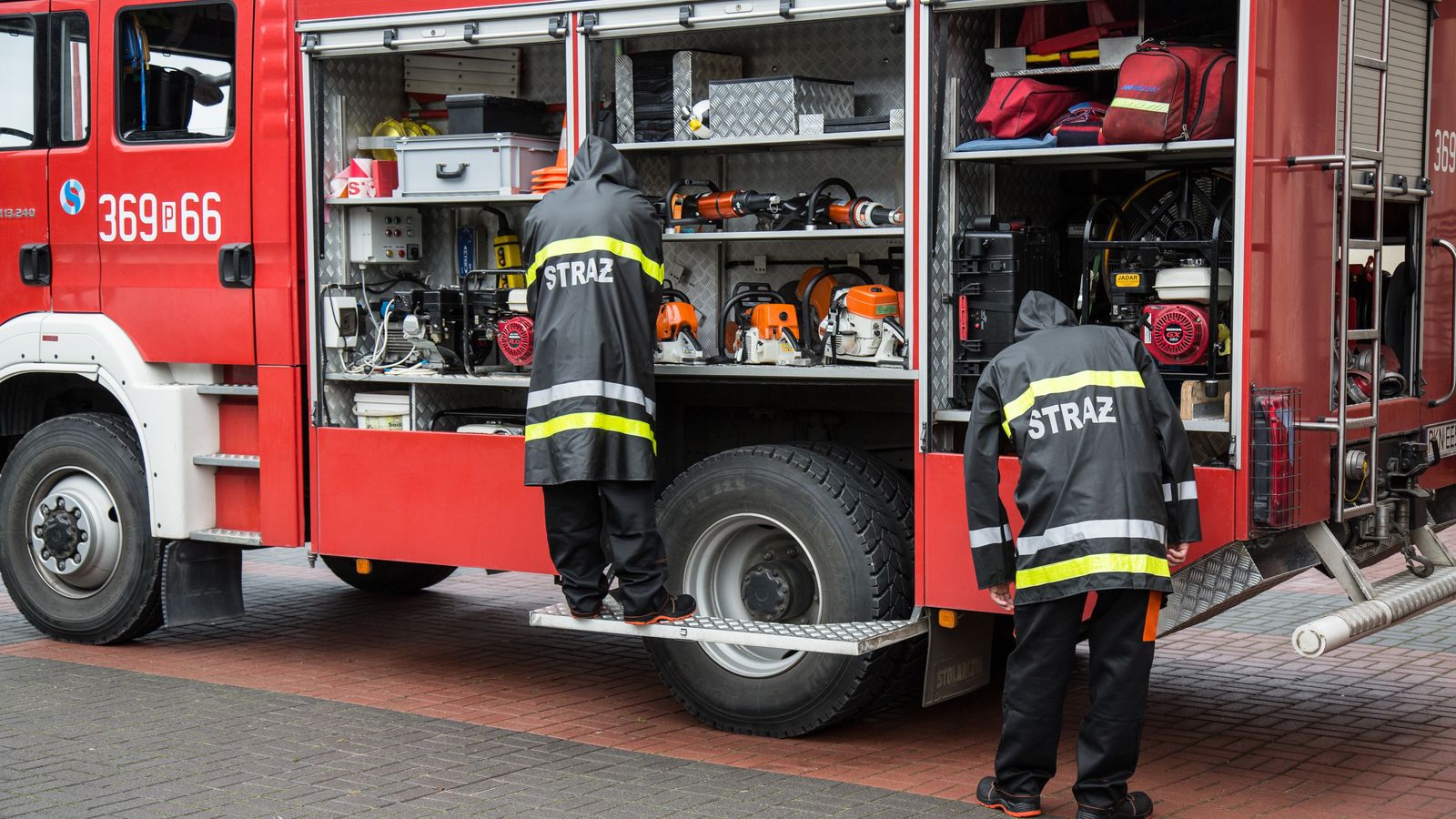
Good intentions alone can create more victims
When workers hear that someone has collapsed in a confined space, the nearest colleague may instinctively rush in first. The urge to pull the person out even a few seconds sooner is natural. Yet an oxygen-deficient atmosphere or toxic gases such as hydrogen sulfide and carbon monoxide cannot be seen, and smell alone cannot determine whether the air is safe. The atmosphere that incapacitated the first worker acts on the rescuer in exactly the same way. A chain reaction begins when a rescuer enters without protection and loses consciousness, and another person then enters to save that rescuer.
A NIOSH alert on preventing deaths in confined spaces warned that people attempting rescue accounted for a large share of the confined-space fatalities it investigated. Later investigations also identified failure to recognize hazards and inadequate emergency response as recurring factors. These statistics cannot be repurposed as a current incidence rate for Korean workplaces. They do, however, clearly show the mechanism by which one incident expands into multiple casualties when rescue begins impulsively. The objective is not to suppress a rescuer’s courage, but to control entry so that courage leads to a successful rescue.
The first rule for preventing rescuers from becoming 2nd victims is simple. An accident does not make the conditions for confined-space entry disappear. On the contrary, when someone has collapsed from an unknown cause, the space must be treated until verified otherwise as potentially containing an atmosphere immediately dangerous to life or health—an IDLH atmosphere. Rescue begins not with entry, but with notification, scene control, hazard identification, and an assessment of whether non-entry retrieval is possible.
1. There is no prearranged rule to stop impulsive entry
The first scene in which a rescuer becomes the second victim usually begins with emotion, not a written plan. If a collapsed colleague is visible near the entrance, or it seems possible to hold one’s breath and make a quick trip, risk assessment and putting on protective equipment can look like time-wasting procedures. But in an atmosphere with very low oxygen or a high concentration of toxic gas, there may be no time to recognize the danger and turn back. A person can lose physical capacity and consciousness before feeling the hazard, not after.
Site training must not end with “the area is dangerous, so be careful.” It must define in short, clear terms what the person who discovers the incident should actually do.
Do not enter the space; immediately stop the work and restrict access to the surrounding area.
Activate 119 and the workplace emergency contact network, and report the location, entrance, number of people, work being performed, and anticipated substances.
From a safe location outside the space, control additional hazard sources such as ventilation equipment, connected piping, agitators, and power supplies.
Guard the entrance until the attendant and rescue supervisor arrive, and prevent entry by anyone who is not qualified.
Determine whether a safe non-entry rescue can be performed with the retrieval system already installed.
These actions cannot be improvised for the first time when an accident occurs. The pre-job meeting must assign by name and role who makes the emergency call, who controls the entrance, and who operates the retrieval system. Regular drills should not merely practice how well a rescue team enters. They should verify that even when a colleague has collapsed, personnel can stop unauthorized entry and activate the established system.
2. An unverified atmosphere exposes rescuers to the same cause
If the reason the first victim collapsed is unknown, the rescuer does not know the cause either. Measuring only oxygen and declaring the space safe is not enough. Decomposition and fermentation may produce hydrogen sulfide or carbon dioxide, while welding and internal-combustion-engine exhaust may allow carbon monoxide to accumulate. Nitrogen purging, cleaning agents, paint, leaks from connected piping, and disturbed sludge can also change the atmosphere rapidly. When flammable vapor and an ignition source are present together, an asphyxiation rescue can turn into a fire or explosion incident.
From a safe position outside the space, the person taking measurements must use direct-reading equipment whose calibration status and functionality have been verified. Do not measure only one point at the entrance. Account for the space’s geometry and depth, the gas generation location, and ventilation flow, and test the upper, middle, and lower levels, the area around the victim, and the rescuer’s anticipated travel path. Evaluate oxygen, flammable gases and vapors, and anticipated toxic substances, and continue monitoring throughout the rescue. A substance for which the instrument has no sensor is not displayed as 0; it is not measured at all.
In a sewer-construction case described by NIOSH, carbon monoxide from nearby blasting traveled through soil into a manhole. After the first worker who entered collapsed, two colleagues descended to perform a rescue, and one of those rescuers also died. Carbon monoxide reappeared even after ventilation. The lesson is that an earlier reading or a familiar process name does not guarantee the present atmosphere. If ventilation, residues, the process, or weather conditions change while rescue is under way, measurements must be repeated and the incident commander informed immediately.
Ventilation is an important control, but it does not replace measurement. Clean air must reach the work and rescue location, while contaminated air must not be discharged toward people or ignition sources. Pure oxygen must not be used for ventilation. If ventilation cannot establish an acceptable atmosphere or the hazard may recur, no one should enter without a trained professional rescue team and suitable respiratory protection.
3. The rescue plan ends with “call 119”
A rescue plan is not complete merely because it lists the telephone number of an outside rescue service. The workplace must confirm whether that service knows the location of the space, the size of its entrance, its vertical depth, internal obstacles, and anticipated hazardous substances; whether it can arrive within the required time; and whether it has respiratory protection and rope and retrieval equipment suitable for the space. OSHA requires employers to evaluate the response time and equipment and technical capabilities of a designated rescue service, and to give it opportunities to practice rescue in actual or representative spaces.
At a minimum, a work-specific rescue plan must include the following:
Conditions for requesting rescue and criteria for immediate withdrawal
A diagram of the space, entrances and access routes, internal obstacles, and the victim’s anticipated location
Information on oxygen deficiency, toxic and flammable substances, flooding, engulfment, falls, and residual energy
Personnel responsible for isolating piping, lockout and tagout, ventilation, and atmospheric testing
Roles of entrants, attendants, the rescue team, medical support, and the incident commander
Required harnesses, retrieval lines, tripods and winches, respiratory protection, communications, and lighting
Methods for packaging the victim and passing through a narrow opening, and emergency retrieval methods for rescuers
Stop-work and withdrawal procedures for equipment failure, loss of air supply, or loss of communication
The plan must reflect the geometry and hazards of the particular space. A team that has trained only at a vertical manhole must not be assumed capable of immediately handling a bent duct, a tank with internal bulkheads, or a pit into which water is entering. When the rescue service arrives, the workplace must be able to hand over the safety data sheets, work permit, latest readings, isolation status, and information about personnel inside all at once.
4. When feasible, non-entry retrieval comes before entry rescue
Non-entry rescue retrieves a victim from outside without exposing the rescuer to the hazardous space. OSHA’s permit-required confined-space standard requires a retrieval system for non-entry rescue unless the equipment would increase the overall risk or would not contribute to rescue. A retrieval line must be properly attached to a full-body or chest harness and connected to an anchor point or mechanical device outside so that retrieval can begin as soon as a problem is detected. In a vertical space, a mechanical device such as a tripod, davit arm, or winch may be needed to lift a person’s weight safely.
Non-entry retrieval is not an improvised measure created by throwing in a rope after the accident. Before entering, workers must put on a harness and attach the retrieval line; an outside anchor and mechanical device must be installed; and the system must be function-tested along the actual retrieval path. While continuously tracking who has entered and each person’s condition, the attendant must be able to request rescue and begin retrieval without delay. Merely having someone hold the retrieval line by hand does not guarantee vertical lifting capacity, braking, or fall prevention.
However, a retrieval line must not be forced into use in every space. It can catch on piping and internal structures or become entangled with an air hose, creating more danger for both workers and rescuers. Dragging a victim through a narrow bend can also worsen serious injuries. These limitations do not mean retrieval equipment may simply be omitted. They mean the reason non-entry retrieval is impossible must be assessed in advance and a professional entry-rescue plan suited to the space must be prepared. If a victim near the entrance can be retrieved safely, the non-entry method that avoids exposing another rescuer to the hazardous atmosphere takes priority.
5. An air-purifying respirator does not produce oxygen
No one should enter an unverified atmosphere or a space where oxygen deficiency is possible while wearing a particulate respirator or a canister-type gas mask. Air-purifying respirators merely pass ambient air through a filter or canister; they do not supply oxygen. When the contaminant type and concentration are unknown or the conditions are IDLH, it is also impossible to determine whether a canister is suitable. Rescuers must receive breathing air that is independent of the workplace atmosphere.
Atmosphere-supplying respirators include self-contained breathing apparatus (SCBA), supplied-air respirators (SAR) connected by a hose to an external air source, and configurations that combine supplied air with an auxiliary escape cylinder. NIOSH explains that an SAR is relatively light and can be used for long periods, but hose length and snagging limit mobility. The victim, the shape of the space, travel distance, operating time, the possibility of hose damage, and how the rescuer will be retrieved must all be evaluated together.
A rescuer entering an IDLH atmosphere needs equipment appropriate to that hazard, such as positive-pressure SCBA or positive-pressure SAR with auxiliary SCBA. If only a supplied-air mask is connected, with no independent air source for escape if the supply fails, compressor shutdown or a cut hose immediately becomes an emergency for the rescuer. Before use, the rescue team must check air volume, cylinder pressure, alarms, facepiece seal, regulators, and hoses, and decide on rotation and withdrawal with a sufficient margin beyond the expected rescue time. For an extended rescue, replacement cylinders and air-supply management must also be included in the plan.
Putting on respiratory protection does not complete the task. Medical fitness, fit testing, equipment-specific instruction, and training in actual rescue movements are required. If rescuers enter, they too must be protected by harnesses and a retrieval system, an outside standby team, continuous communication, and atmospheric monitoring. Sending the entire rescue team deep inside until everyone reaches the limit of their remaining air to save one victim is not rescue; it creates a new entrapment situation.
6. Without incident command, everyone performs rescue but no one sees the whole scene
Many activities occur simultaneously during a technical rescue. Emergency notification and access control, atmospheric testing, piping and energy isolation, ventilation, rigging rope systems, deploying the entry team, preparing the standby team, medical care, and recordkeeping all affect one another. Without a command structure, even if every team begins its own task with good intentions, the ventilation direction can change or a lockout can be released, the personnel inside can be overlooked, and no one integrates the remaining air supply with elapsed rescue time to make decisions.
U.S. Fire Administration materials emphasize managing confined-space rescue through an incident command system and coordinating monitoring, ventilation, communications, air supply, ropes, and retrieval equipment before entry. The incident commander should not be the person directly holding one piece of equipment, but the person managing the overall hazards and resources. After the initial size-up, the commander establishes control zones, prevents unauthorized entry, communicates rescue objectives and stop conditions, and assigns a lead and communication channel for each function.
A standby rescue capability that can respond immediately must be maintained separately from the entry team. If every skilled responder is used in the initial entry, no team remains to rescue an entry rescuer who gets into trouble. The entry roster, entry and withdrawal times, remaining air, trends in atmospheric readings, and the status of ventilation and isolation must remain visible at the command post. If an alarm, communication loss, ventilation interruption, air-supply problem, unexpected substance release, or structural change occurs, the commander must immediately order withdrawal and revise the plan.
Work remains even after the rescue ends. Provide medical personnel with information on the substances to which people were exposed, isolate and inspect equipment, and preserve monitoring and command records. Then review why the initial incident occurred and which lines of defense worked or failed. A post-incident review that improves procedures and equipment instead of assigning blame prevents the next 2nd-victim incident.
Questions for checking rescue readiness at the worksite
Are roles assigned so that the person discovering the incident begins notification, control, and retrieval without entering?
When the cause affecting the first victim is unknown, does the response assume the possibility of an IDLH atmosphere?
Can oxygen, flammable substances, and anticipated toxic substances be measured at multiple points from outside the space and monitored continuously?
Where non-entry retrieval is possible, were a harness, retrieval line, anchor, and mechanical device installed before work began?
Has it been confirmed that the retrieval line will not increase danger by snagging on obstacles or sharp edges, or becoming entangled with an air hose?
Has the designated rescue team conducted actual retrieval drills under conditions similar to the target space?
Do entry rescuers have positive-pressure SCBA suitable for the hazard, or supplied-air equipment with auxiliary SCBA?
Is there a plan for rescuers’ remaining air, rotation, emergency retrieval, and a standby team?
Does a single incident commander integrate the management of personnel, atmosphere, isolation, ventilation, communications, and medical support?
When an alarm or equipment failure occurs, can anyone call for work to stop and can the commander order immediate withdrawal?
Rescue speed should be judged not by how quickly someone entered, but by the time required to complete the rescue without adding victims. A retrieval system installed before the incident, verified breathing air, a trained rescue team, and a unified command structure are far faster and safer than a few seconds of impulsive action.
References
Safe Work Guide for Preventing Asphyxiation in Confined Spaces — Korea Occupational Safety and Health Agency, accessed 2026-09-09
29 CFR 1910.146 Permit-required confined spaces — U.S. Occupational Safety and Health Administration, accessed 2026-09-09
Permit-Required Confined Space Entry Requirements for IDLH and Non-IDLH Spaces — U.S. Occupational Safety and Health Administration, accessed 2026-09-09
Preventing Occupational Fatalities in Confined Spaces, DHHS (NIOSH) 86-110 — U.S. National Institute for Occupational Safety and Health, accessed 2026-09-09
Carbon Monoxide Poisoning and Death After the Use of Explosives in a Sewer Construction Project — U.S. National Institute for Occupational Safety and Health, accessed 2026-09-09
Atmosphere-Supplying Respirators — U.S. National Institute for Occupational Safety and Health, accessed 2026-09-09
Confined Space Rescue for the Birmingham Fire Department — U.S. Fire Administration, accessed 2026-09-09