
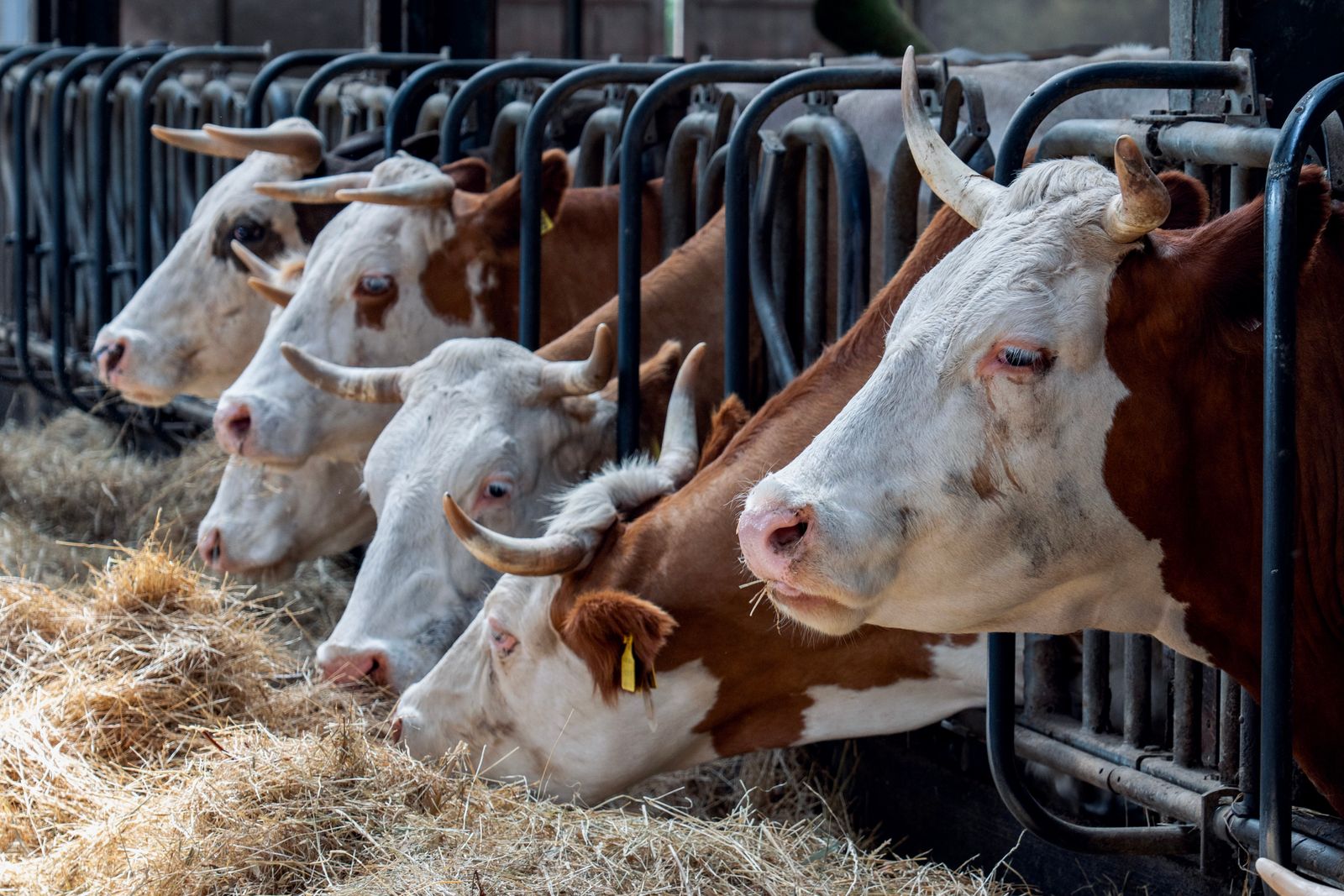
It is tempting to expect cattle to grow better when less energy is lost as methane. But whether that expectation holds on actual farms needs a closer look. Chapters 6 and 19 of Technology and Solutions for Demonstrating Carbon Reduction consider feed efficiency and productivity alongside methane reduction. Evidence is needed to connect changes in energy with farm income.
What the Book First Helps Us Distinguish
When looking at productivity data, let’s check what was measured directly. Intake, weight gain, and the rearing period are connected, but an improvement in one does not automatically guarantee an improvement in another. We should also record the species and stage to which each value applies. The same principle applies when calculating economic benefits. Let’s look separately at the evidence that feed was saved and the evidence that sales revenue increased. Avoiding double counting the same change makes it easier to understand the effect that remains for the farm.
3-NOP is a feed-additive approach that inhibits an enzymatic reaction involved in methane production. We should distinguish explaining its mechanism of action from confirming the effects under actual feeding conditions. Results may vary with dosage, feed composition, intake, and production stage, so let’s read the trial conditions alongside the results. We should determine the scope of application after reviewing permitted conditions of use and the evidence on safety and productivity.
Productivity: weight gain, feed efficiency, milk yield, and reproduction rates. As we saw in Chapter 5, energy that would otherwise be lost as methane may instead be converted into production, potentially improving these measures; but they can worsen if fermentation is inhibited. We need measurements, not theoretical expectations.
When Korea develops its own methodology, this sequence matters for more than obtaining international approval. These requirements are also the minimum conditions for keeping a reduction claim from falling apart.
Introducing low-methane feed and additives can bring additional purchase costs, labor for feeding and recordkeeping, and management costs. But additional expenditure and net cost are not the same. We need to calculate productivity changes, costs saved, and contractual payments together to determine whether the farm’s net benefit is positive or negative.
We can compare farm profits and losses before and after support, and government spending, but we should not simply add the two and call the sum a net social benefit. A subsidy is government expenditure and farm income—a transfer—and society as a whole assesses the resources actually used and the benefits obtained. The climate value of physical reductions and revenue from credit sales are not the same item either.
Even if less energy is emitted as methane, that energy is not necessarily converted directly into weight gain or feed-cost savings. We need to observe fermentation pathways, hydrogen disposition, intake, and changes in productivity together. Improved feed efficiency is a potential benefit to verify under specific conditions; it cannot be calculated as a substitute for the additive’s reduction rate.
For domestic application, let’s prioritize data that match the species, growth stage, feed composition, and feeding period. We should include cases where improvement is small or absent and productivity worsens. We should not extend the average from favorable trials directly into annual returns.
How to Examine This in the Field
Suppose a trial showing methane reduction also measured weight gain and intake. We should look at whether both results moved in the same direction, and how feed costs and the rearing period changed. We cannot assume in advance that productivity must improve just because rumen fermentation changed, can we? We should also check for unexpected effects on health and productivity.
Let’s assess the benefits of adaptation investments separately from those of low-methane feed. An adaptation measure may reduce damage even when the reduction effect is small, but its benefits also depend on whether the facility actually works, exposure to disasters, and the comparison baseline. Even if support is provided through an integrated program, each measure’s contribution should be distinguished in budgeting and performance evaluation.
The value of expanding subsidies also extends beyond farms’ profit-and-loss statements. If support leads to additional reductions, the climate benefits do not accrue only to participating farms. When assessing these benefits, we should consider both damage avoided over the long term and the actual resources used to achieve reductions. The IPCC assessed that, in most of the literature it reviewed, the global economic and social benefits of limiting warming to 2° C exceed mitigation costs, while also explaining that cost-benefit analysis has limits in capturing all avoided damages. This is not evidence of the return on an individual subsidy program or of fiscal savings for Korea.
Questions to Ask Alongside the Investment Review
When investment materials present productivity benefits alongside reduction revenue, let’s check the evidence for each. Was the change actually measured, is it an assumption for illustrative purposes, or is it a literature value from a different species? It also matters whether the same effect was counted twice as both cost savings and increased revenue.
For a project evaluation, first estimate the additional net reductions compared with what would have happened without increased support. If these are assigned a monetary value, the evidence must fit the target gas, timing of emissions, geographic scope of the resulting damages, evaluation period, and discount rate. We should not mechanically multiply a methane value converted using GWP100 by a social cost of CO2 from a different source. Distinguish global climate benefits, domestic benefits, and actual reductions in government spending; do not count the same avoided damage repeatedly as both lower recovery costs and another climate-benefit item. If suitable evidence is lacking, present the additional reductions and costs, but leave avoided damages unquantified.
We assess the farm’s net benefit through additional costs and actual benefits, and the government’s fiscal effect through spending and actual avoided expenditure. A social evaluation considers resource costs and environmental benefits without double-counting transfer payments. Verification of the estimates and institutional recognition provide evidence needed for this judgment; they do not guarantee that all three perspectives will show a surplus at once.
Questions to Keep in Mind Before Closing the Book
It is helpful to observe reduction effects and productivity together while assessing each separately. The benefits a farm actually receives should be confirmed through its feed costs and production results in the field. Let’s start by turning expectations into specific things to measure.
About the Author
Bongjun Lee graduated from the Graduate School of Management of Technology (MOT) at Sogang University. He spent seven years at Infitron Co., Ltd. and 20 years at Honeywell, working for a total of 27 years in gas measurement in service engineering, technical sales, and channel management. He is now the founder of AI Safety Korea Co., Ltd., where he is researching livestock methane monitoring and measurement, reporting, and verification (MRV) systems using sensors, AI, and data analytics.