
Before reading the numbers, distinguish the unit of aggregation
Statistics on confined-space asphyxiation accidents are easy to quote as a single number. But the number of accidents, injured persons, and deaths are different units. Because several people can collapse in one accident, one accident does not mean one injured person. An injured person is a person-level count that includes deaths and injuries, while deaths count only those who died. When the reporting period also differs by source, simple calculations of increase or decrease become still more hazardous.
Data released by the Ministry of Employment and Labor in May 2022 cover the 10 years from 2012 through 2021. During that period, there were 196 asphyxiation accidents, 348 injured persons, and 165 deaths. The fatality rate obtained by dividing 165 by 348 is 47.4%. Here, 47.4% is neither deaths per 100 accidents nor the share of all industrial accidents accounted for by asphyxiation accidents. It is the share of people injured in an asphyxiation accident who died.
The Korea Occupational Safety and Health Agency’s July 2024 data cover a different rolling 10-year period, from 2014 through 2023. They report 174 asphyxiation accidents, 338 injured persons, and 136 deaths. The share of injured persons who died is 40.2%. The two sources have different start and end years and overlap only from 2014 through 2021. It is therefore not possible to immediately conclude that accidents fell from 196 to 174 or that deaths declined from 165 to 136. Without reconstructing the same annual source data using the same criteria, these are simply two different 10-year summaries.
What the last 10 years of figures show is severity rather than frequency
In the 2014–2023 data, 338 people were injured in 174 accidents. The average is about 1.94 injured persons per accident, but this average should not be mistaken for the typical scale of an accident. It includes both incidents in which only one person is harmed while working alone and incidents in which colleagues attempting rescue are harmed in succession. An average shows the overall burden; it does not define the range of risk at an individual site.
The more important signal is that 136 of the 338 injured persons died. The same source explains that the 40.2% fatality rate for asphyxiation injuries is about 41 times the 0.98% mortality rate for general accidental injuries in the same period. In both cases, the comparison is the share of injured persons who died. In other words, the statistic does not say that asphyxiation accidents occur most often among all accidents; it says that once someone is harmed, they form an accident group with a very high likelihood of leading to death.
The conclusion is the same in the 2012–2021 compilation. At that time, 165 of 348 injured persons died, for a fatality rate of 47.4%. This was 44 times the 1.1% fatality rate for general accidental injuries used in the published material. Because the comparison period and the basis for general accidental injuries differ from the 2024 data, the difference between 41 and 44 times cannot be interpreted as a trend. Still, across different rolling periods, the direction is consistent: asphyxiation injuries are exceptionally fatal.
Summer risk is clear, but these are not accidents limited to one season
In the Korea Occupational Safety and Health Agency’s 2014–2023 compilation, 52 of 174 accidents occurred in summer, or about 29.9%. As temperatures rise, decomposition of organic material such as sewage, wastewater, and manure, along with microbial activity, can intensify and increase the risk of hydrogen sulfide generation. Septic tanks, sewage and wastewater treatment facilities, livestock-manure treatment facilities, manholes, and sump pits therefore require particular attention in summer.
But the fact that the remaining roughly 70% occurred outside summer must be read alongside it. In winter concrete curing spaces, carbon monoxide can accumulate from the combustion of lignite or charcoal briquettes. In tanks, piping, and reactors, inert gases such as nitrogen or argon can displace oxygen. Strengthening seasonal measures alone misses hazards that newly arise in the work process. More important than the calendar is identifying which gases may be generated, enter, or remain before work begins.
A confined space does not mean only a room enclosed on all sides
Article 618 of the Occupational Safety and Health Standards Regulations, in force on 2 March 2026, defines a confined space as a place specified in Attached Table 18 among places where oxygen deficiency or hazardous gases create a risk of asphyxiation, fire, or explosion. The key is not how the space looks but whether hazardous conditions can form. Even with an open top, a pit or sedimentation basin with insufficient airflow where heavy hazardous gas can collect may be a confined space.
The same article defines suitable air as oxygen at least 18% and below 23.5%, carbon dioxide below 1.5%, carbon monoxide below 30 ppm, and hydrogen sulfide below 10 ppm. These four numbers are not a universal safety line covering every hazardous factor. If other toxic substances or flammable gases can arise in the work, those substances must also be assessed. A meter that displays only oxygen does not make the hazards of hydrogen sulfide or carbon monoxide disappear.
Attached Table 18 lists, among others, wells left unused for a long time; underground culverts, manholes, and pits; septic tanks, sedimentation basins, sump pits, tanks, and pipes containing readily decomposable materials such as sewage or wastewater; equipment that contained inert gases; and concrete curing locations. A workplace should not look only for equipment named “confined space”; it should compare this list with actual processes and first create a map of hazardous spaces.
The measurement gap does not arise because standards are absent
Under current Article 619, employers must establish a confined-space work program and, before work begins, verify work information and workers; oxygen and hazardous-gas measurement results; the possibility of gas leakage, ingress, or generation during work; protective equipment; and emergency communications. Article 619-2 requires designating a person with knowledge and practical experience, providing measuring equipment, and having oxygen and hazardous-gas concentrations measured and evaluated before work begins. This includes work resumed after a temporary suspension. The current provisions, reflecting the December 2025 amendment, expressly include remote measurement using wireless equipment or wireless communications.
Accordingly, domestic statistics alone provide no basis for saying that “a certain percentage of accidents occurred because a meter was unavailable.” Official 10-year summary statistics show accidents, injured persons, and deaths, but do not disclose in a common format for every accident whether a meter was available, its calibration status, measurement time and location, or whether continuous monitoring occurred during work. The measurement gap discussed here is not a made-up expression for such a causal percentage. It refers to the operational gap in which measurements do not lead to actual work controls amid high fatality, legal measurement duties, and the temporal and spatial variation of site air.
One normal reading does not guarantee the entire job
Air in a confined space may not be uniform. Hydrogen sulfide may remain low down, and concentrations can change abruptly when piping is opened or sludge is stepped on and stirred. Conditions also change when ventilation stops or when a worker briefly leaves and re-enters. If only a single reading at the entrance is recorded and differences by internal depth and changes during work are not seen, risk can be missed even though a record exists.
The Korea Occupational Safety and Health Agency’s measurement guidance calls for measuring throughout the inside of a confined space in consideration of its area and depth, and for using a sampling tube in deep locations. It also says to check again when conditions change, including work resumption or abnormalities in worker condition or ventilation equipment. The reason current law includes restarting work after a temporary suspension within “the start of work” is that air conditions are not fixed values.
In practice, at a minimum, the following questions should be answerable.
What was measured: Did it include not only oxygen but also hydrogen sulfide, carbon monoxide, carbon dioxide, flammable gases, and other gases expected from the process?
Where was it measured: Were readings at the entrance, upper, middle, and lower levels, and at the work point distinguished?
When was it measured: Were the necessary times recorded—before initial entry, before re-entry, after a change in work conditions, and during work?
Who made the judgment: Did a designated person with the knowledge and experience needed to operate the equipment and evaluate the results verify it?
What was done when a value was outside the standard: Were access control, ventilation, remeasurement, respiratory protective equipment, and work-stoppage criteria linked?
Priorities and limits shown by sensor research
A study of advanced sensor measurement devices by the Occupational Safety and Health Research Institute analyzed asphyxiation injuries from 2011 to 2018 and reported that 136 of 256 injured persons died. The fatality rate for that study period was 53.1%. The priority order of causal substances was presented as oxygen deficiency, hydrogen sulfide, and carbon monoxide; by season, hydrogen sulfide was the principal cause in summer and carbon monoxide in winter. These figures also cover a different period from the 2012–2021 and 2014–2023 compilations and should not be compared directly for increases or decreases.
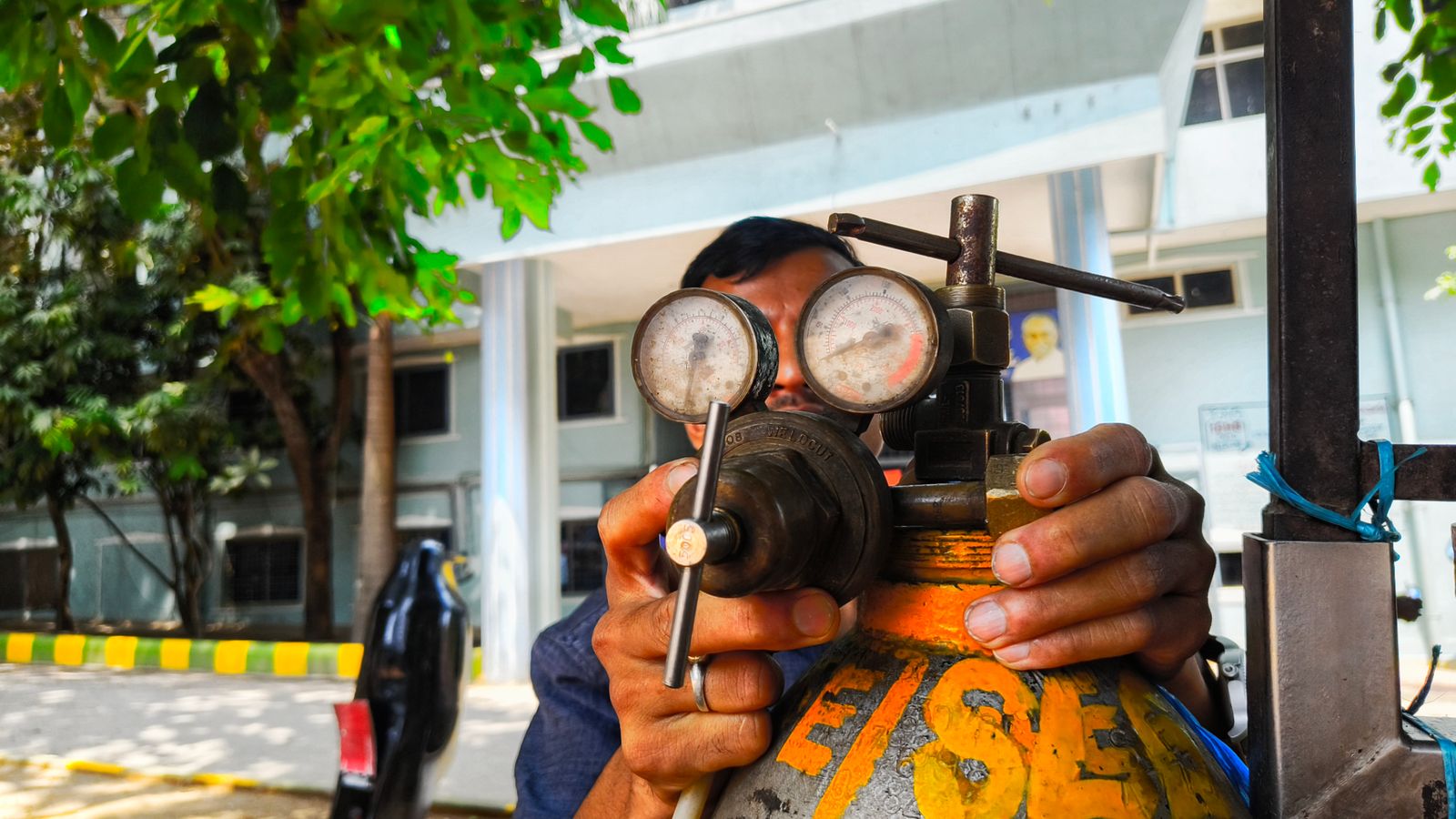
The research supports the need for multi-component measurement. But installing sensors alone does not complete a work permit. Sensor measurement range and response time, delay caused by the hose length of aspirated equipment, calibration and bump testing, alarm settings, data-communications failures, and battery condition must all be managed. Remote sensors can reduce the danger of sending someone in first to measure and can preserve trends, but a procedure is needed to move to a safe state on failure so that a communications outage or sensor contamination is not mistaken for a “safe” signal.
National industrial-accident statistics and asphyxiation-accident summaries do not use the same clock
The Ministry of Employment and Labor’s 2024 industrial accident status covers statistics from January through December 2024, but it is compiled based not on the date of injury but on the Workers’ Compensation and Welfare Service’s approval date for industrial-accident compensation. For example, if an accident that occurred in December 2023 was approved in December 2024, it is included in the 2024 statistics. By contrast, the 10-year asphyxiation-accident analysis materials are summaries that state the period when accidents occurred.
This difference also matters when designing a site dashboard. If the accident date, reporting date, industrial-accident approval date, and date of death are combined into one date, it becomes difficult to compare government publications with internal records. Accident counts and victim counts should also be separate fields. If a worker and rescuer are harmed in one accident, there is one accident identifier but multiple person records. Measurement records should link the equipment identifier, measurement location and height, time, reading, pre- and post-ventilation status, and alarm and action history. Only then do they become decision material during work rather than documents after an accident.
Four measurement gaps workplaces should reduce
The first is a space gap. Sump pits, pits, temporary tents, and the interior of equipment that are not on the confined-space list are also omitted from the measurement plan. A complete review should be based not on equipment names but on materials, processes, ventilation, and patterns of entry and exit.
The second is a time gap. If a morning reading is reused for afternoon work or not checked upon re-entry after a break, changes are not recorded. Events that change conditions—stopping ventilation, disturbing sludge, opening piping, welding, and using cleaning agents—should be defined as conditions requiring remeasurement.
The third is a substance gap. An oxygen meter alone cannot assess hydrogen sulfide, carbon monoxide, or flammable gases. The sensor combination and measurement range required should be determined through a task-specific risk assessment, and cross-sensitivity and sensor life should also be checked.
The fourth is an action gap. Even when readings exist, an alarm will not lead to action unless it is decided who stops work and who approves re-entry after ventilation. Suitable-air criteria, internal alarm criteria, evacuation criteria, and actions for communications failures must be written in the same terms in the work permit and training.
A minimum action plan for turning statistics into a prevention system
The conclusion from the statistics is simple. There is no need to exaggerate the absolute number of asphyxiation accidents: the fact that, when they occur, they can harm several people and are highly likely to lead to death is enough to require prior controls. The smallest unit of action is not buying a meter, but connecting the data flow for one high-risk job from beginning to end.
From the workplace’s confined-space list, select one job scheduled within the next 30 days.
Identify the anticipated gases and causes of oxygen deficiency, and record the required sensors, measurement locations, times, and responsible person on the work permit.
Measure and distinguish readings before and after ventilation before entry; if conditions may change during work, specify continuous or periodic monitoring.
Designate who is responsible for stopping work and evacuating people when standards are exceeded, equipment malfunctions, or communications are lost.
After the job ends, review missing measurements, alarms, remeasurements, and work stoppages, and revise the criteria for the next job.
It is better not to use accident count alone as a performance indicator. Also review the share of scheduled confined-space jobs with valid measurement records linked; the compliance rate for remeasurement before re-entry; the share of equipment with valid calibration and bump tests; the time from alarm to work stoppage; and failed items in drills for unauthorized rescue entry. These indicators check whether the system actually stopped when it detected danger, rather than merely showing that no accident occurred.
Official domestic materials repeatedly show that even if confined-space asphyxiation injuries appear infrequent, their consequences are never slight. At the same time, published 10-year summaries alone cannot calculate the rate of measurement failures in individual accidents. What is needed is therefore not exaggerated causal statistics but traceable field data. Only when every space is identified, required gases are measured at the right locations and times, and results are connected to entry, ventilation, and evacuation decisions does the measurement gap narrow.